Machu Pichu, Peru🥾

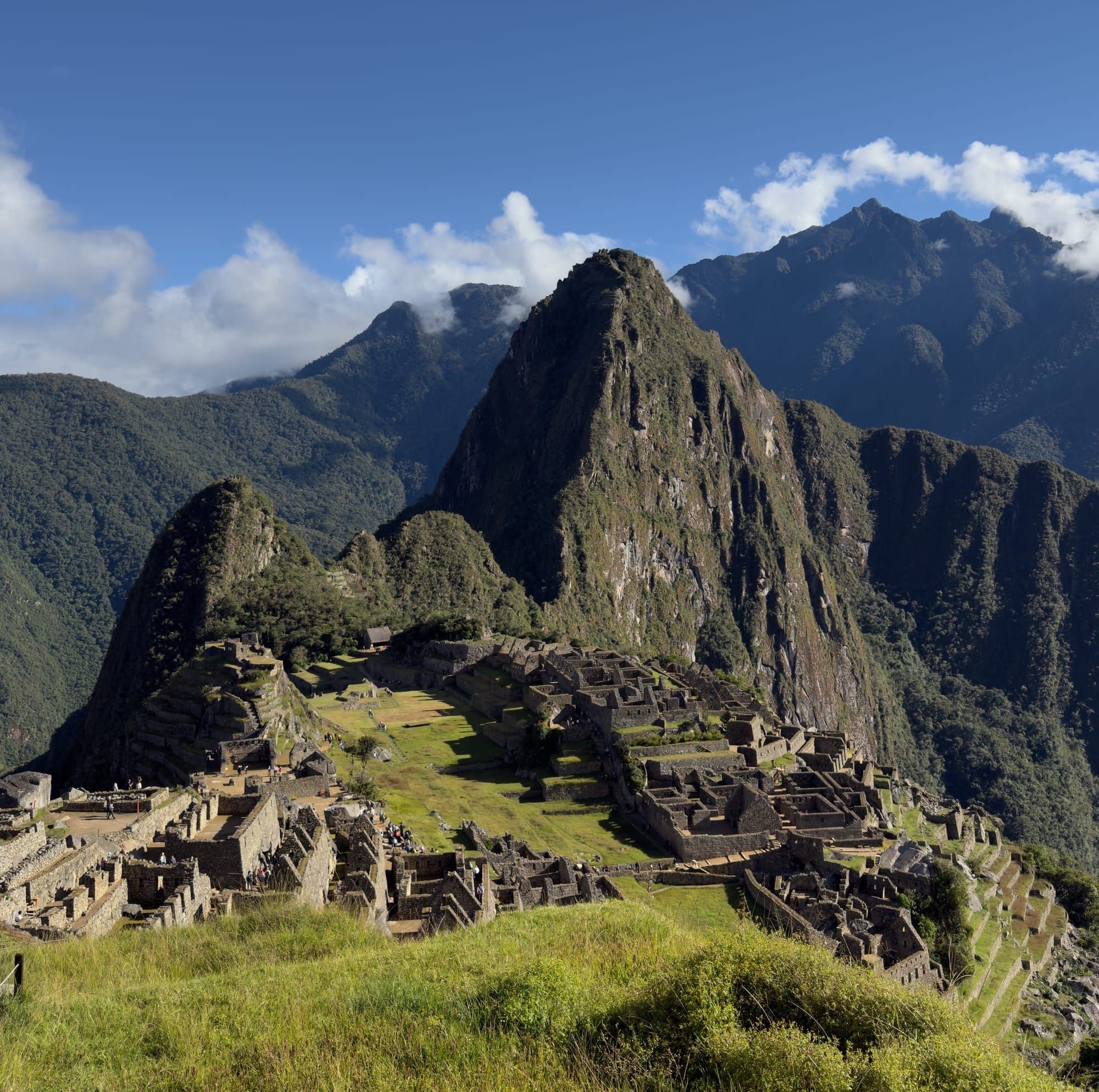
Machu Picchu, wow, where do I actually begin?! It is one of the top things to do and see in South America. You cannot go to Peru and not see one of the Wonders of the World! Located nearby Cusco, it can either be a one or two day trip or a four or more day trek across the Peruvian mountains.
Tour Route
There are two main hiking trails to Machu Picchu, you can do the Inca Trail or the Salkantay Trail. We opted with the Salkantay Trail and booked it with Alpaca Expeditions and it was honestly incredible! I will go into more detail on the tour company we went with in the next section. Alpaca Expeditions also host the Inca Trail, which is just as good, but not as intense as the Salkantay. The main differences between the trails are:
- The Inca Trail is to do more with the history of the trail and you learn about the Incas and visit around six or more different ruins. Their accommodation is also all camping and no proper beds. This is because the National Park does not allow buildings within the area, so everyone has to camp! There is also a strict limit of only 500 people who can enter a day, which includes staff, so requires booking quite far in advance.
- The Salkantay on the other hand, is more to do with the hikes, which are more challenging and take you through the mountain glaciers and jungle. The views you see are incredible along the way. It also doesn’t require that far in advance of a booking, maybe two months or so. The accommodation for the Salkantay also varies but you do get proper beds and a sleeping bag each night.
I personally didn’t know this and wish I did know beforehand, but there is a third option, which is to combine both hiking trails. We met another group who were doing three days Inca Trail and then four days Salkantay Trail, which would have been seven days all together, mixing both the hiking views and history. If you are wanting to do both trails and love hiking, this option would be perfect for you. It might depend on the tour company you go with, so definitely ask if you are interested, I believe Alpaca Expeditions offers this as well!
Tour Company
When looking at which company to go with, even though all the prices are very similar, we did choose a more expensive tour as a whole. This is because we wanted to make sure the tour was the best, as it was such a high activity on all of our lists!
We went with Alpaca Expeditions and booked the Salkantay four nights, five days trail and they were excellent. They were voted the number 1 tour company in Peru and they did not disappoint! You can check out their website and the packages they offer here. They offer day trips and multi-day trips for Machu Picchu as well as other tours, to Rainbow Mountain or Sacred Valley etc. The total cost of our trek for both Ned and I was $1,588 USD, which included all transport, all accommodation, three meals a day and snacks, equipment and National Park and permit fees. Not too bad if you think about it!
As a whole, we were very impressed with Alpaca Expeditions, we had Sergio as our main tour guide and he was honestly the best! He always checked in with us throughout the hikes, taught us a lot about the history of the trails and made us feel like a proper family over the five days. We then had a Super Chef, Juan Carlos and two porters, who made all our meals and helped us with anything that we needed. The food overall, was very impressive, none of us were expecting to have such a delicious variety of meals. We were even treated with a homemade cake for breakfast on our last day with them, they obviously knew they had big eaters in the group!
If you decide that you don’t want to do the five day trek, you can opt to do a day tour instead. This can also be booked through Alpaca Expeditions or you can book and plan it yourself! If you decide to do it yourself, again make sure to purchase the permits to Machu Picchu first. I have explained the different Circuits around Machu Picchu in another section below, but for us, we had another guide, called Javier take us around our Circuit. He is a freelancer guide, hired by Alpaca Adventures when they have groups who have different Circuits on the fifth day. Javier was really good, passionate and taught us a lot of Inca and Machu Picchu history. If you decide to only do a day trip to Machu Picchu and not the five day trek, I would definitely recommend Javier as a tour guide to go with for your tour!
Best Time To Go
The best time to do the trek to Machu Picchu is during the dry season, which is between May and October. They are often considered ideal months to go, offering a mixture of sunny days, greener scenery and fewer crowds than the popular months of June to August. We went in the second week of April and had gorgeous weather for a majority of the trek. There were a few moments here and there of rain, but nothing too crazy! We know of some friends who went in March and both experienced completely different weather to one another! The wettest months are from January to March, however, the weather can be unpredictable and cannot be guaranteed even in the good months, so take this into account when booking your trip!
From what I have heard, the Inca Trail is closed in February for safety reasons, such as heavy rainfall, potential landslides and to allow essential maintenance and conservation work. If you want to do a combination of both trails, it would be best to look at months after February.
Tipping
For a big tour like Machu Picchu, tipping is expected but definitely not mandatory! You may be thinking, I’m already spending a lot of money on this tour, why do I need to tip? But after you see how hard the guides, porters, chefs work, you will definitely start to think otherwise! The tour guides work their absolute hardest to make sure you are safe, teach you as much as they can about the history and overall want you to have the best experience. The Super Chef makes all your food; you are waking up between 4-5am and they will have breakfast ready for you, they work throughout the day to have lunch and then dinner ready, whilst also preparing all the food for the next day. The porters not only help the chef with the food, but do room service every morning (bar the last day) at 4 or 5am, bringing you hot coca leaves or tea. They also hike days two and three carrying kitchen equipment and some food for the hikes. Lastly, the horse guide who looks after your duffle bags, which have all your clothes in it, makes sure they get to your camp each night, sometimes having to carry them over landslides. This section is not to make you feel guilty if you don’t want to tip, it is just trying to explain why they deserve it!
For us it was recommended to bring around an extra 350 SOLS cash for tipping. It is completely your decision on what you want to tip, but for each person, this is what we were recommended: 15 SOLS per person for the horse guide, 50 SOLS per person for the Super Chef and then 50 SOLS for the porters, which is split between the two of them at 25 SOLS each. We then were recommended tipping our guide 100 SOLS or more each. When we gave them their tips, everyone was so appreciative! The porters, one of them was their first time ever doing the Salkantay Trail, were so happy and honestly did not expect it, it was really lovely to see! Overall, there is nothing wrong with whatever you decide to do in regards to tipping!
Additional Money
On a side note, if you want to buy snacks and drinks along the way bring even more extra cash. It is also recommended to bring additional cash for back up. If you are not the best at hiking, or you end up falling sick or the altitude is really hard on your chest. There is an option to take a mule on day two and the train on day four, all of which is at an additional cost. The mule can be between 200 to 250 SOLS, which is pretty expensive, but it will be taking you up hill for four hours! The train on day four is from Central Hidroelectrica to Machu Picchu and can cost up to 20 USD for a one way ticket.
Cheaper Option
For a much cheaper option, you can do the Salkantay Trail completely by yourself and not with a tour! If you are on a tight budget and love hiking, this is a good option for you. However, you would have to make sure you booked the permits and transport there and back to Machu Picchu first before they sell out. We bumped into a few people doing this, either by themselves or with friends. This can definitely be done, but I would recommend going with a tour company instead. For ease, guidance, safety and the overall fun of it, socialising with different people of all ages and backgrounds, a tour is a much more fun way to hike to Machu Picchu.
Machu Picchu Circuits
After a mistake with our dates (we had accidentally booked it for March instead of April, silly us!!), which we only spotted two weeks before we were meant to do the trek. We had to stressfully change the dates in hopes that they had availability on the correct dates. We were also currently in the middle of Brazil and there was a 20% chance we could make the date in March, if they wouldn’t allow us to change/no availability or refund! I recommend booking your tour at least a couple of months in advance as the permits into Machu Picchu sold out pretty quickly this year and this is the most important part of the trip. Without the permit you will not be allowed into Machu Picchu. We went with Circuit 2, which is the best one to go on and I’ll explain why below.
There are three main circuits around Machu Picchu, 1, 2 and 3, which take you on different paths and viewpoints around the ruins.
- Circuit 1 is where you see the postcard view of Machu Picchu from above.
- Circuit 2 is a combination or Circuit 1 and Circuit 3, you get to see the postcard view from the top as well as get to walk through the different paths of the ruins learning about the history of it.
- Circuit 3 is where you can only go through the ruins, you sadly don’t get the iconic postcard view from the top. You do however, get the chance to hike to the top of the hill, which overlooks Machu Picchu from the opposite side. This hike can take between forty minutes to an hour to get to the top but once you are there, you can see the view of Machu Picchu.
This additional trek is normally included in Circuit 3, but can also be added on to your ticket if you have a different Circuit. You can also request for more than one Circuit permit if you want and if there is availability. Some people have done all three Circuits for the full experience and spend the morning going through the different trails.
Circuit 2 is the best to book and what all guides recommend doing, but it is very popular so make sure to confirm this as soon as possible. If you are unable to get this specific Circuit, let your tour guide know as you might be able to get last minute tickets from the office in Aguas Calientes. On the day before your intended trip to Machu Picchu, which is day four of the trek, once you arrive to your accommodation, you have the chance to get tickets. A friend of ours on the tour did this and he was able to get the last ticket for the next morning. If you want to do this, you will have to look for early morning tickets either 6am or 7am, because, firstly the weather tends to be the best in the morning (but it is unpredictable), and secondly, the transport back to Cusco, which Alpaca Expedition arranges will be in afternoon.
Tour Itinerary
This section will explain our tour itinerary! The day before you start the trek, you will have an induction about the tour. This induction starts at 6pm at their office, where you can also pay the remaining balance if you haven’t paid in full already. You will then meet your tour group and guides, who will explain the route, the different stops you make and are given your duffle bags. These duffle bags are what you pack your clothes into, it needs to be around 5kg as the mules will carry them up to camp for us on days two and three.
Ned and I shared his small Osprey Backpack for our clothes/snacks during the hike, then I had the important documents and electronics in my small Patagonia Sling Bag. All our other clothes were in our duffle bags. A recommended packing list is below:
- Passports (A MUST)
- Electronics (phone, camera, portable charger, plugs)
- Clothes (4 sports tops, thermal, down jacket, rain jacket, leggings/hiking trousers, waterproof trousers, 5 hiking socks, hiking shoes, comfy shoes (flip flops/crocs), gloves, cap/beanie, sunglasses, towels)
- Toiletries (shampoo, conditioner, body wash, toothbrush and toothpaste, deodorant, toilet paper/wipes, hand sanitiser, blister covers/plasters)
- Food (cereal bars/sweets/chocolates/biscuits, electrolytes)
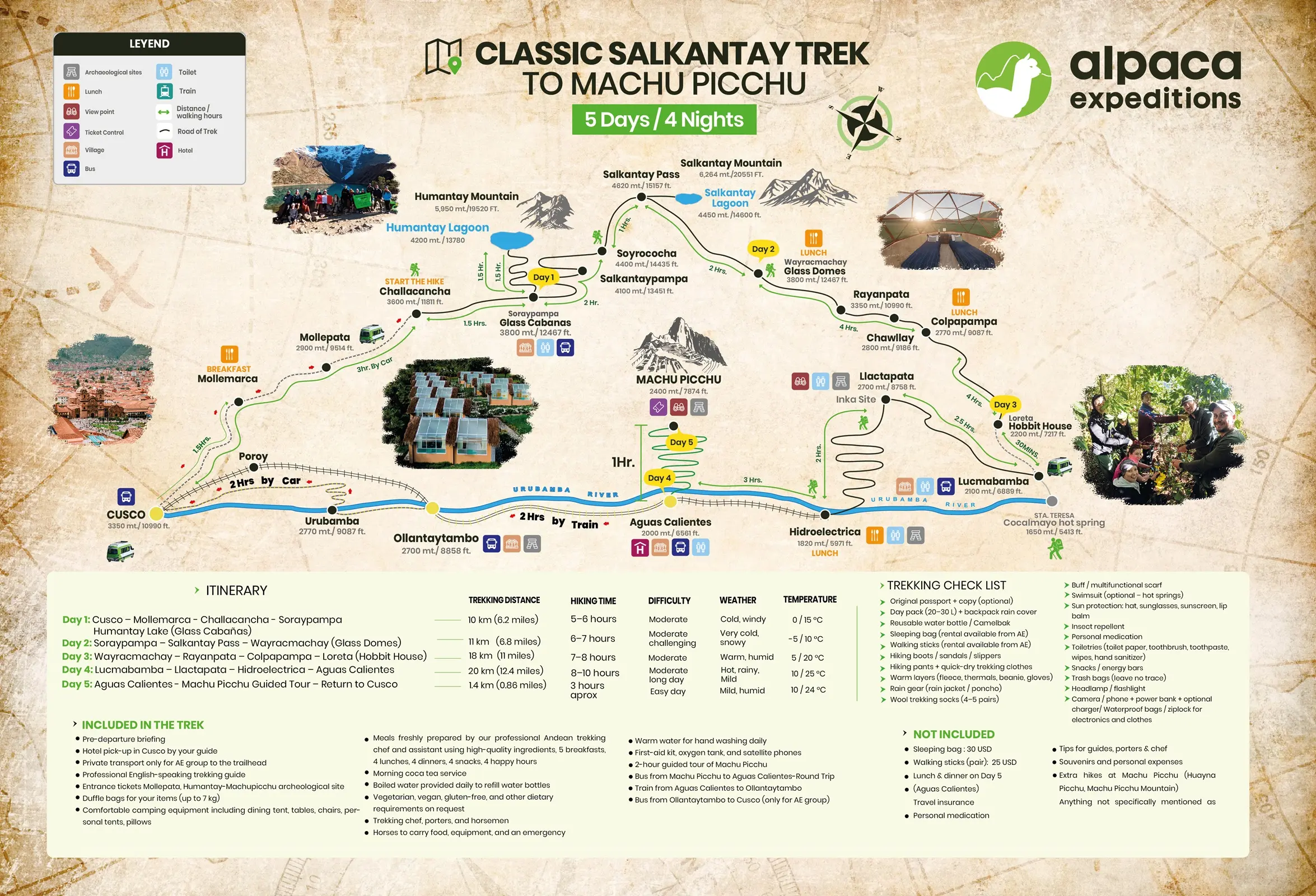
The map above is what we get given with Alpaca Expeditions, its pretty similar but not 100% the same. I will go into detail what we did day to day below.
Day 1
Day one started with a very early 4-4:30am pick up from our accommodation in Cusco, before dropping our big backpacks off at the tour office to lock them away. We then drove around an hour and a half to breakfast in Mollemarca, which was an absolute feast, that we weren’t expecting! Breakfast is outdoors here, so make sure to wrap up warm and enjoy getting to know the rest of your tour group. If you need the toilet, it is 1 SOL here, as Alpaca are renting the area from a local family. Every morning after breakfast, we were provided with snacks from Alpaca, which were normally a pack of surprisingly delicious biscuits and different pieces of fruit.
From breakfast, we drove another two hours or so to the starting point of the trek at Challacancha, where we got our day bags and belongings ready. We then started the hike around 10am. As a group you go quite slowly to start with to make sure you can acclimatise properly. The first day is the easiest day in my opinion, with only an hour and half to camp, where we have lunch and then another three hour return hike to Laguna Humantay.
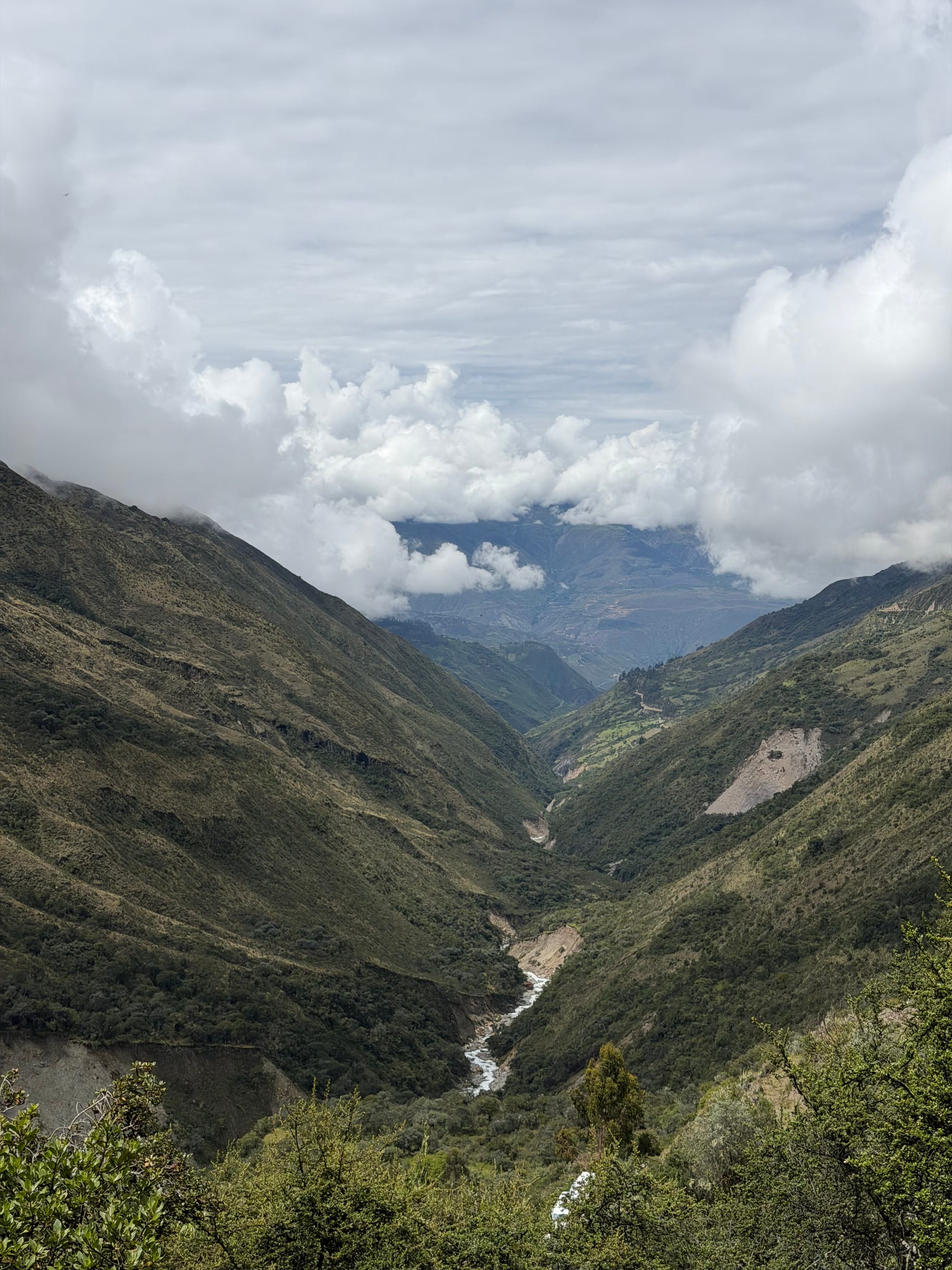
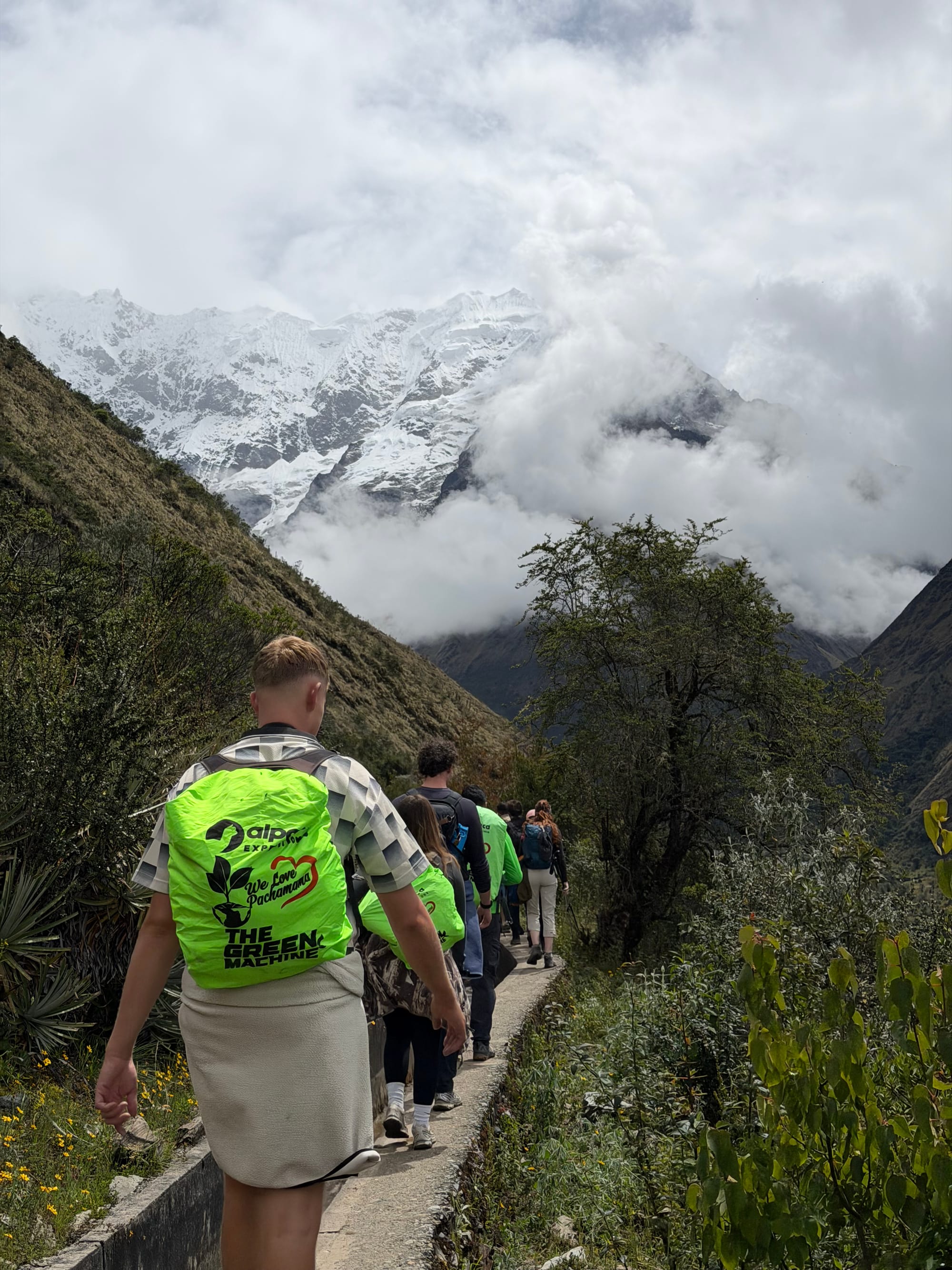
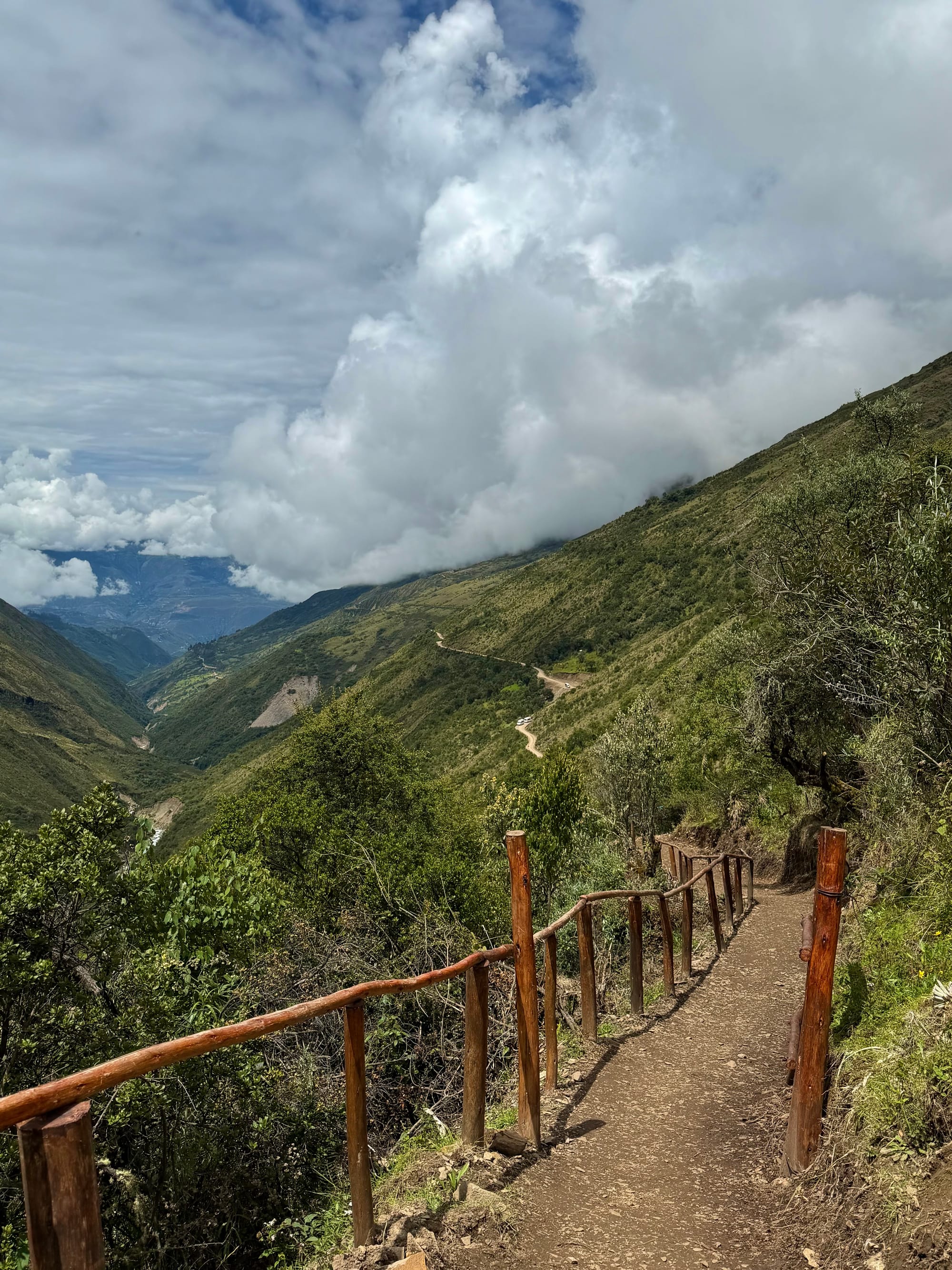
The first half hour of the hike is up hill but not the steepest we’ve ever done. You can feel the tightness in your chest from the altitude but if you go slowly it doesn’t feel so bad. Once at the top it is then flat the rest of the way until you get to camp, which is where we paused for a moment and took the photos below. If you are lucky, you might get a glimpse of Humantay Mountain.
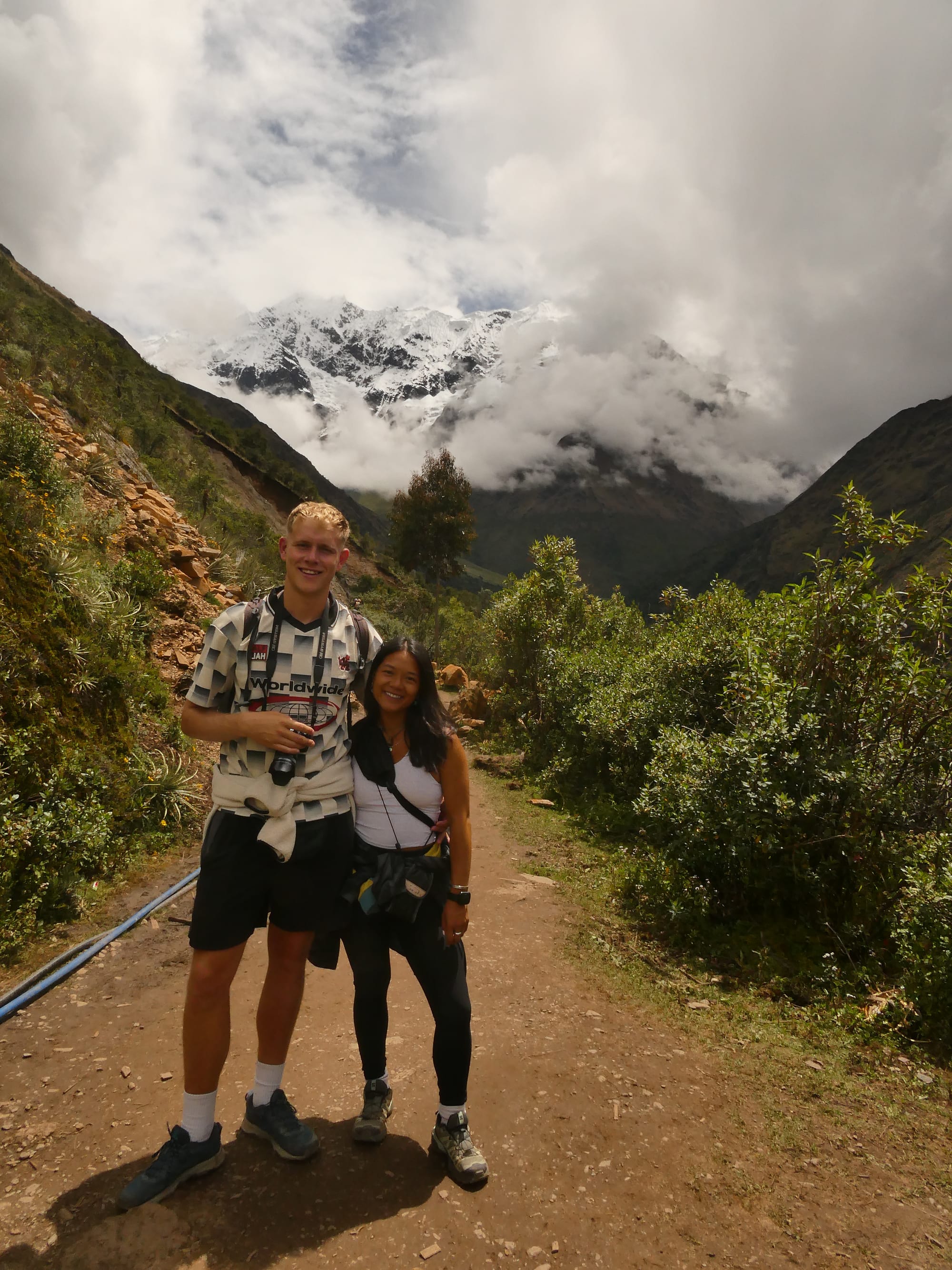
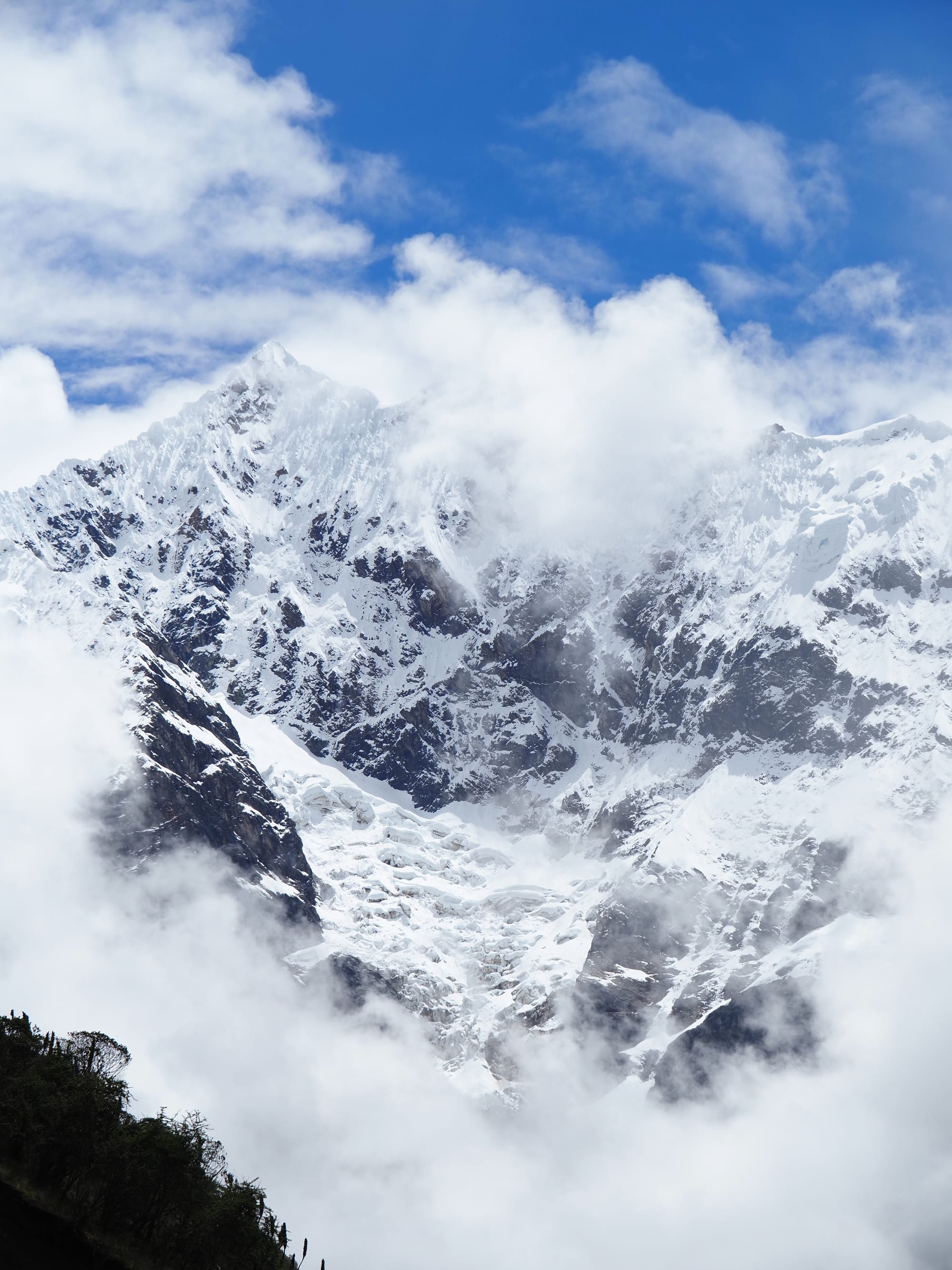
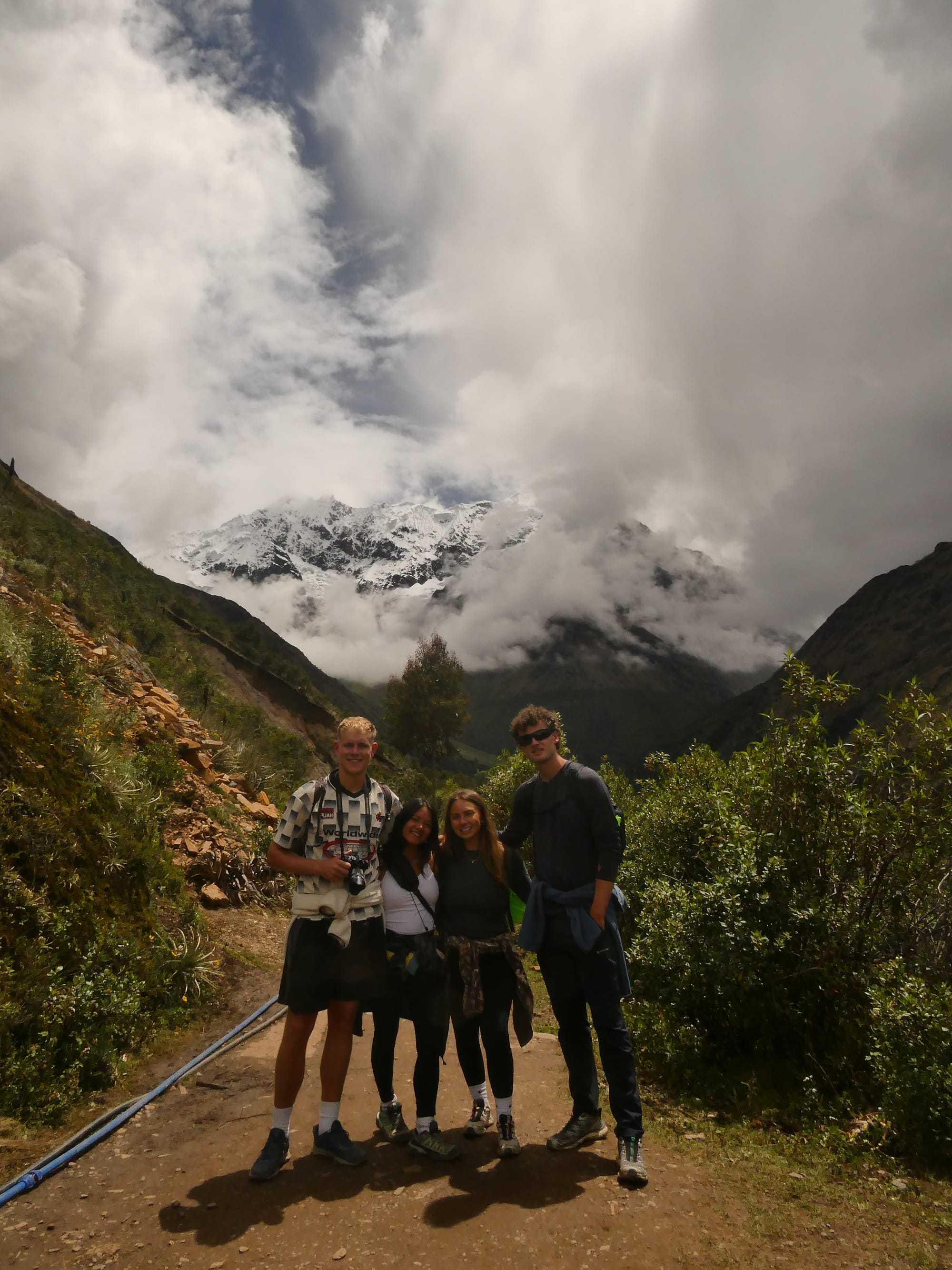
Our first nights accommodation is in Glass Cabãnas, where on a clear night you potentially can see the stars and Milky Way! Once at camp, we have a group lunch together, which was another feast. Don’t make the same mistake as us and fill your bellies up because a lot of us struggled with the afternoon hike because we were so full! Lunch is around an hour and then you have about thirty minutes to chill and get your things ready before leaving for Laguna Humantay.
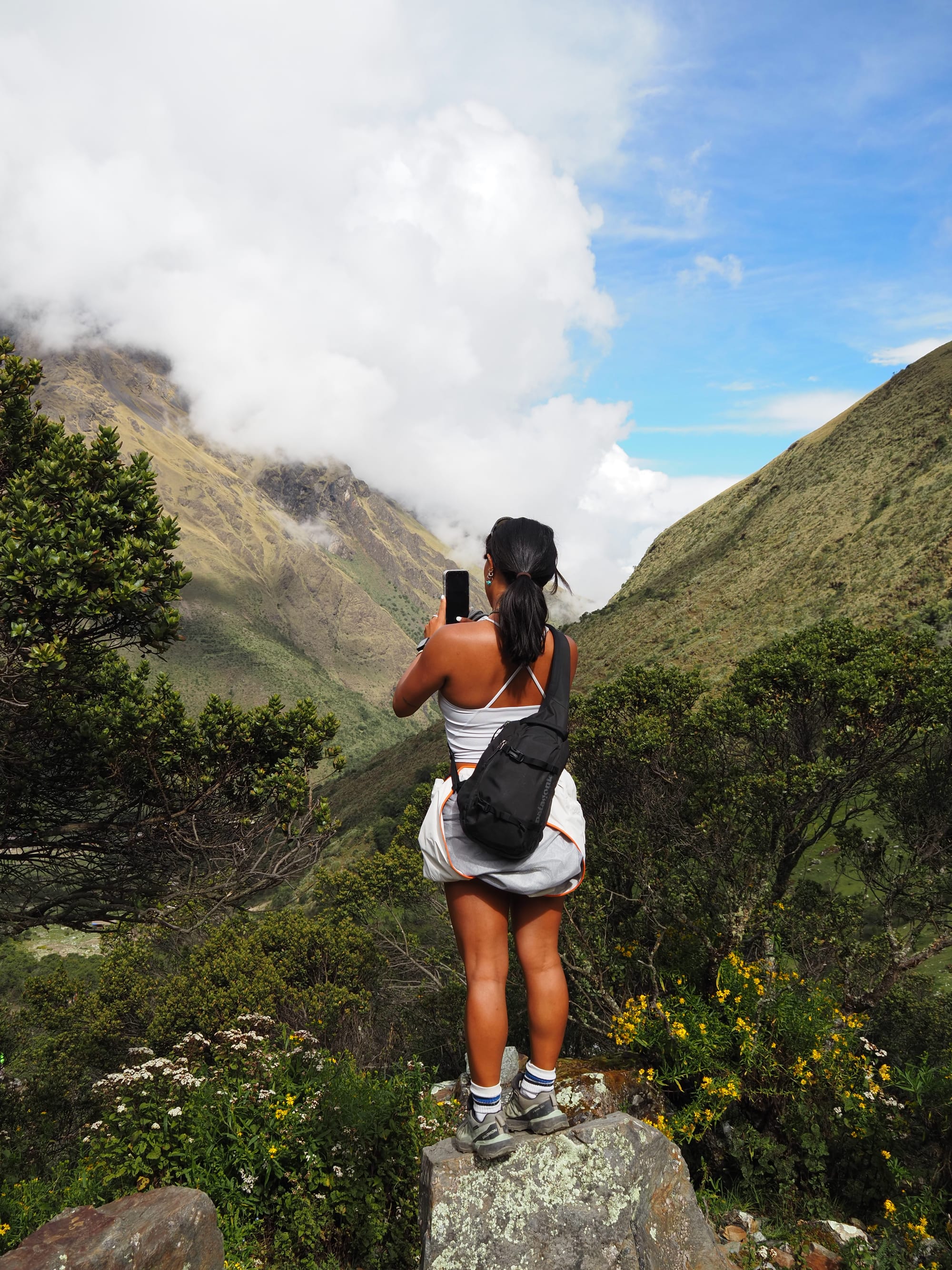
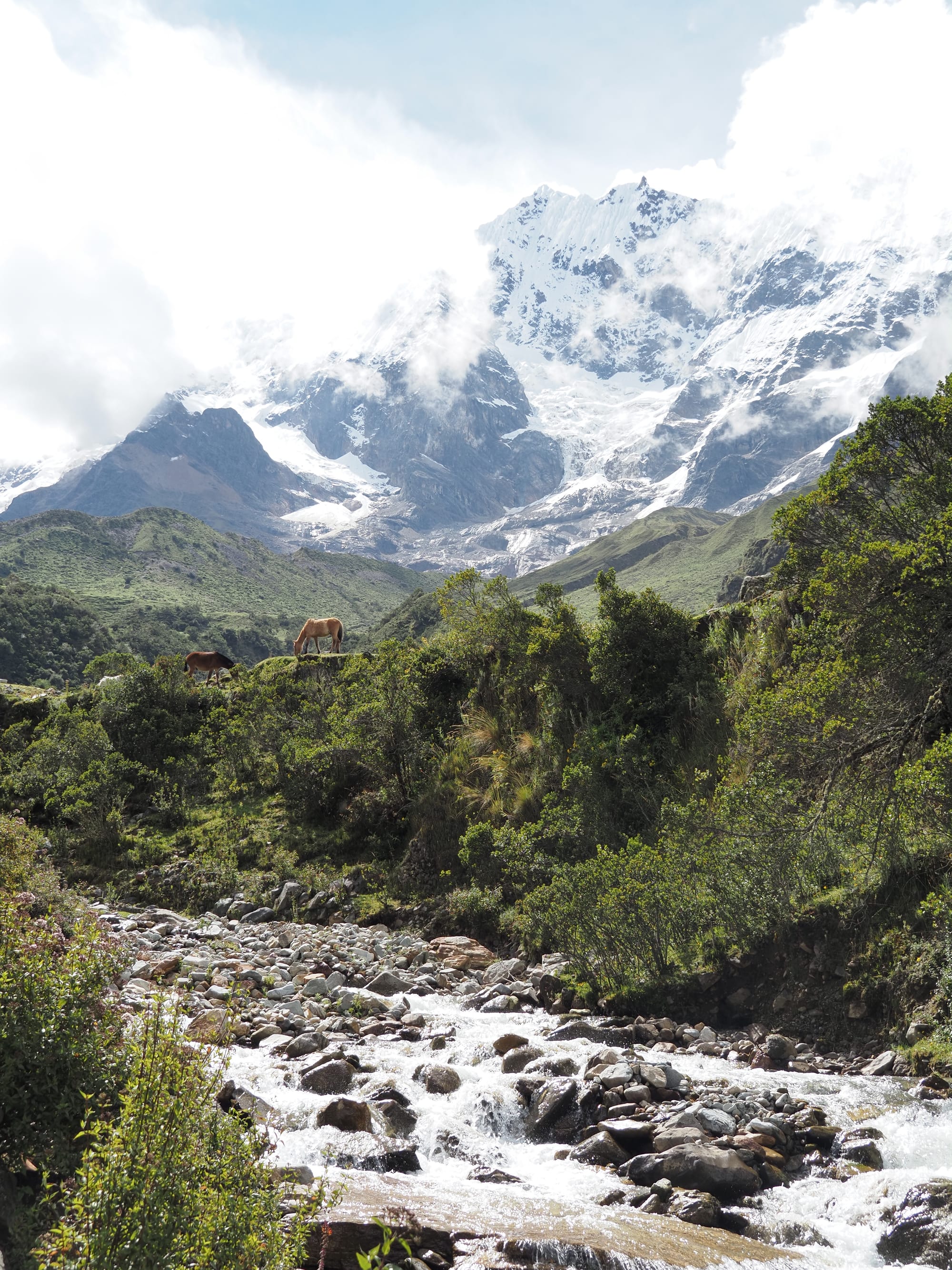
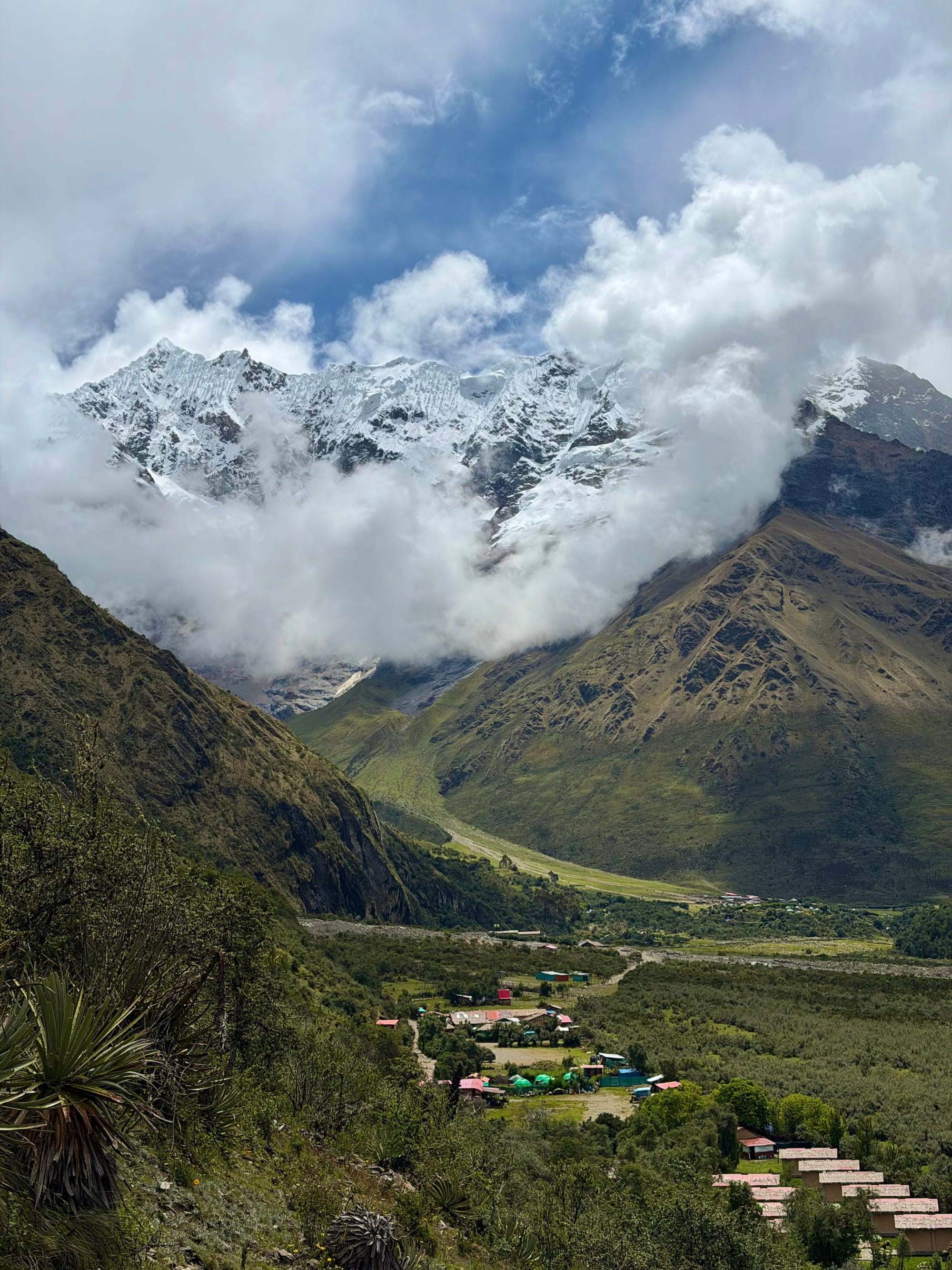
This hike is roughly a three hour return hike, with it being quite steep a majority of the way. As you walk to the starting point, you can see the incredible surroundings of mountains and glaciers in the distance, it was honestly insane! As you ascend the steep part, you can take however long you want to go and it’s honestly not so bad! As steep as it was, I think Ned and I acclimatised really well and hiking Colca Canyon definitely helped prepare us for this trek!
At the top take in the incredible blue waters of the lagoon and the glacier behind it! Get your photos here before making your way to the left path, which takes you up another part of the mountain to overlook the lagoon from up high! It’ll take roughly five minutes to do, depending on how much energy you have left in the tank and then at the top you have the choice to walk along the path towards the glacier! This was a must do and the views overlooking the lagoon and the distant mountains were incredible.
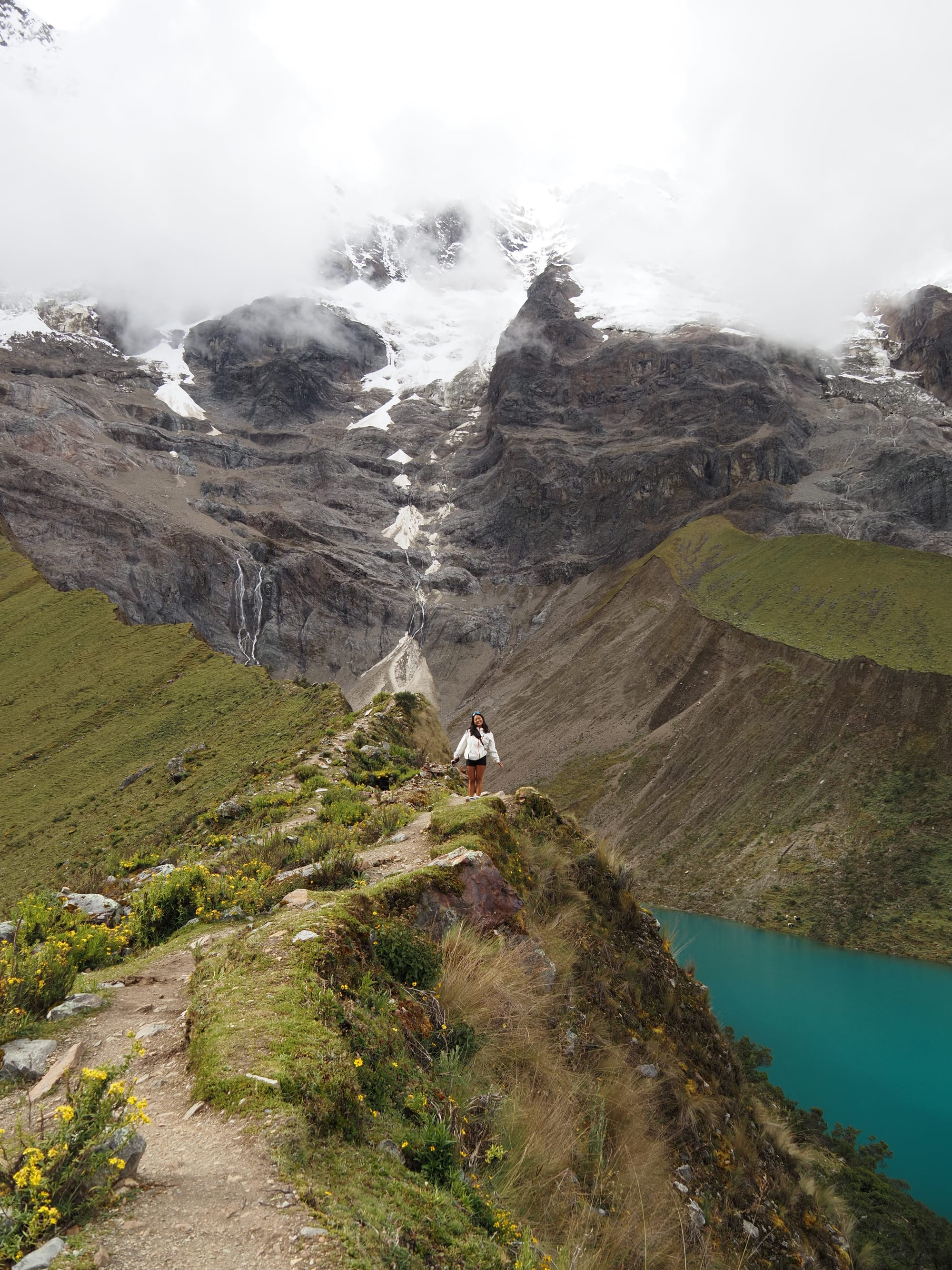
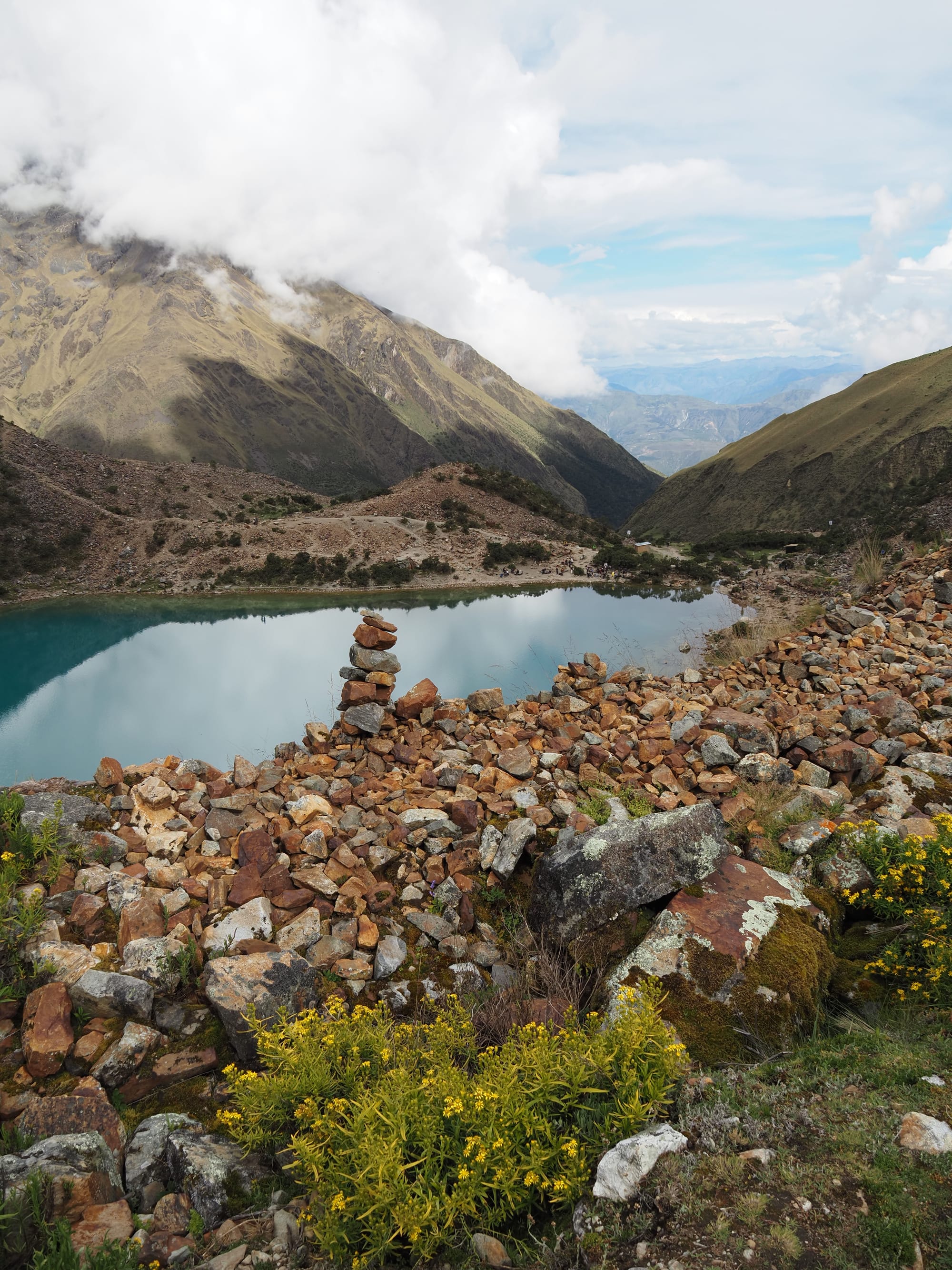
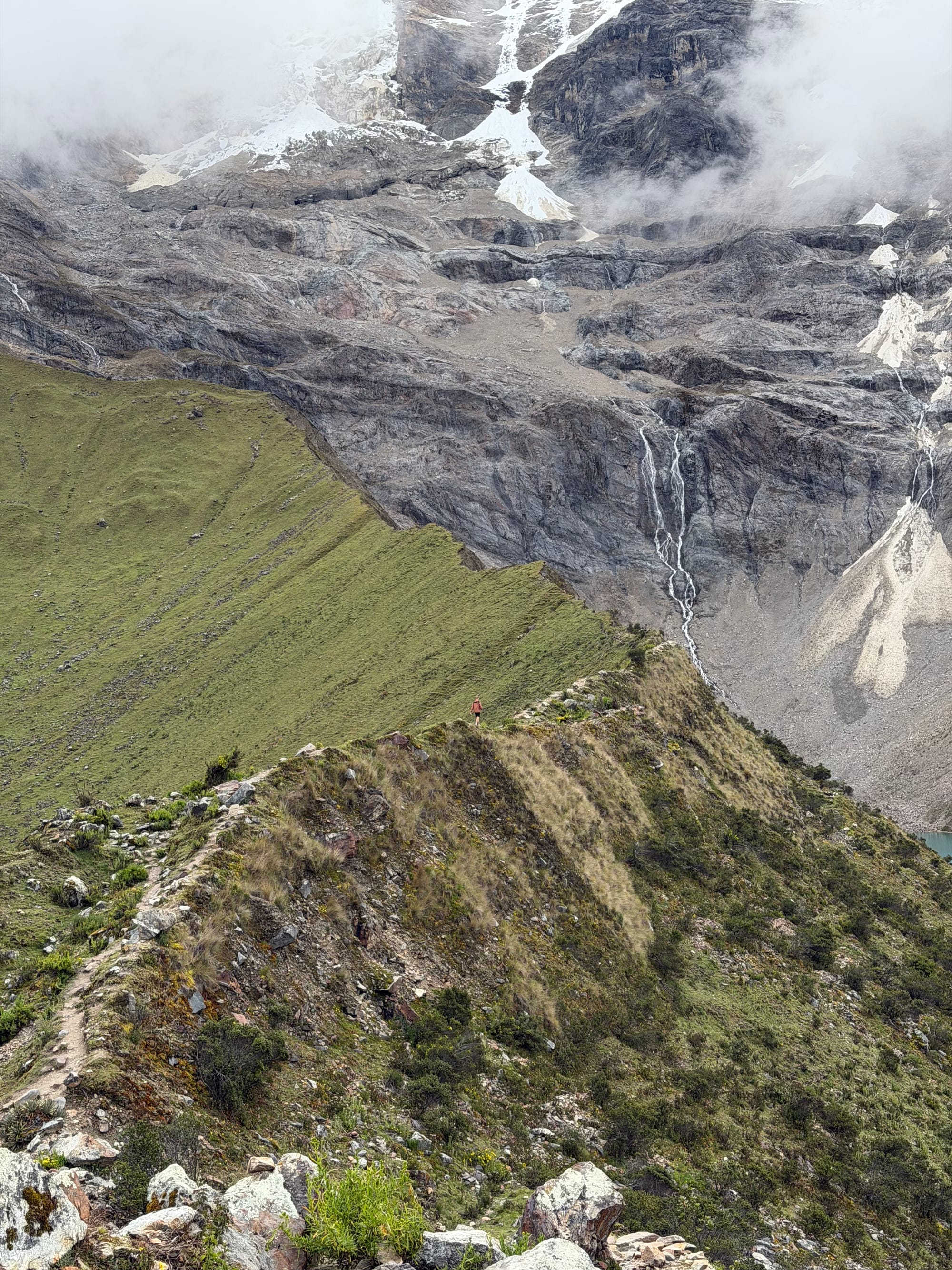
We spent roughly forty minutes here before making our way back down! There are also loads of different spots to get your photos, so make the most of the sunshine whilst you can. The weather can also be very temperamental, so bring warm layers as it quickly started to rain as we made our way down!
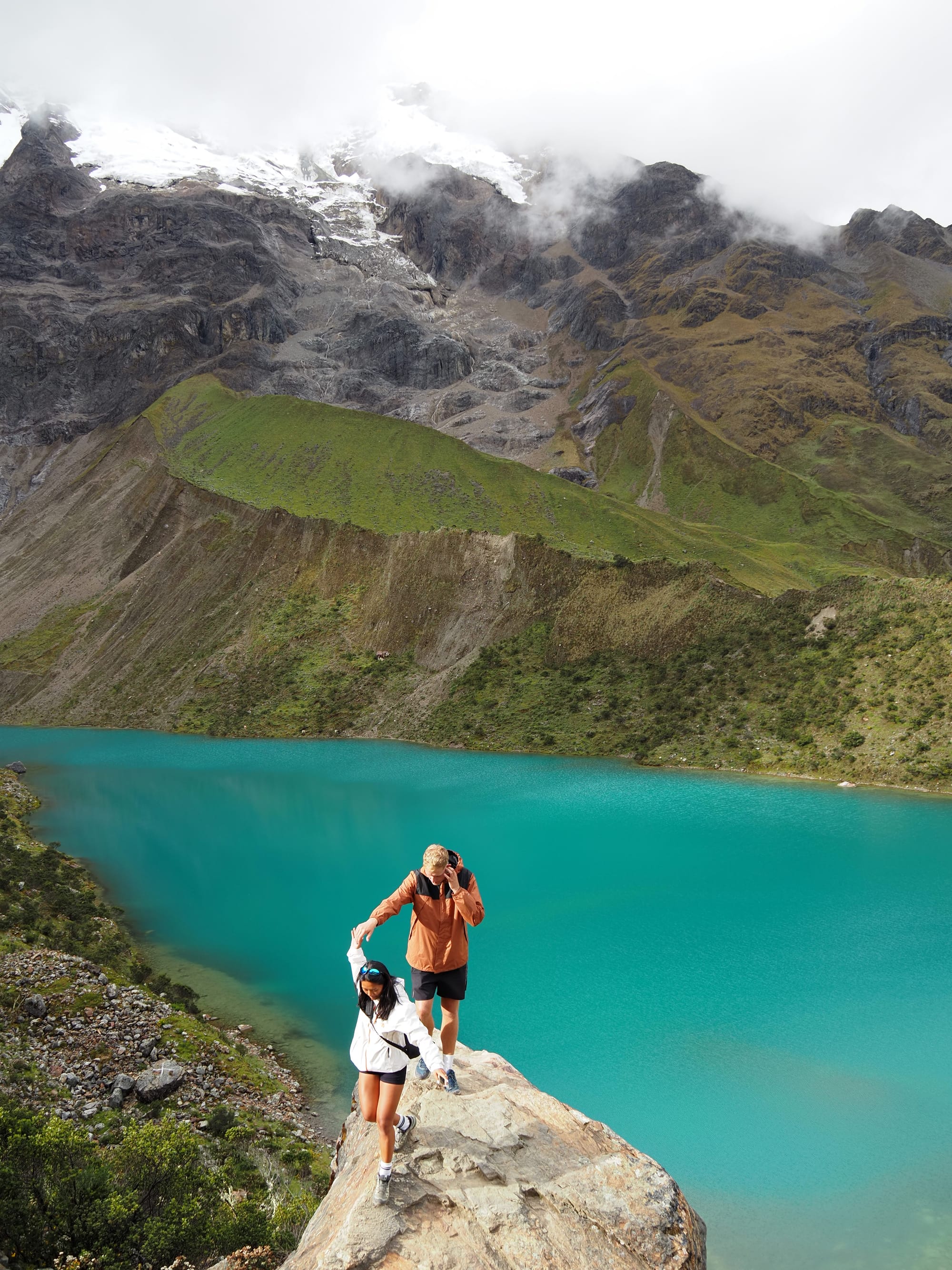
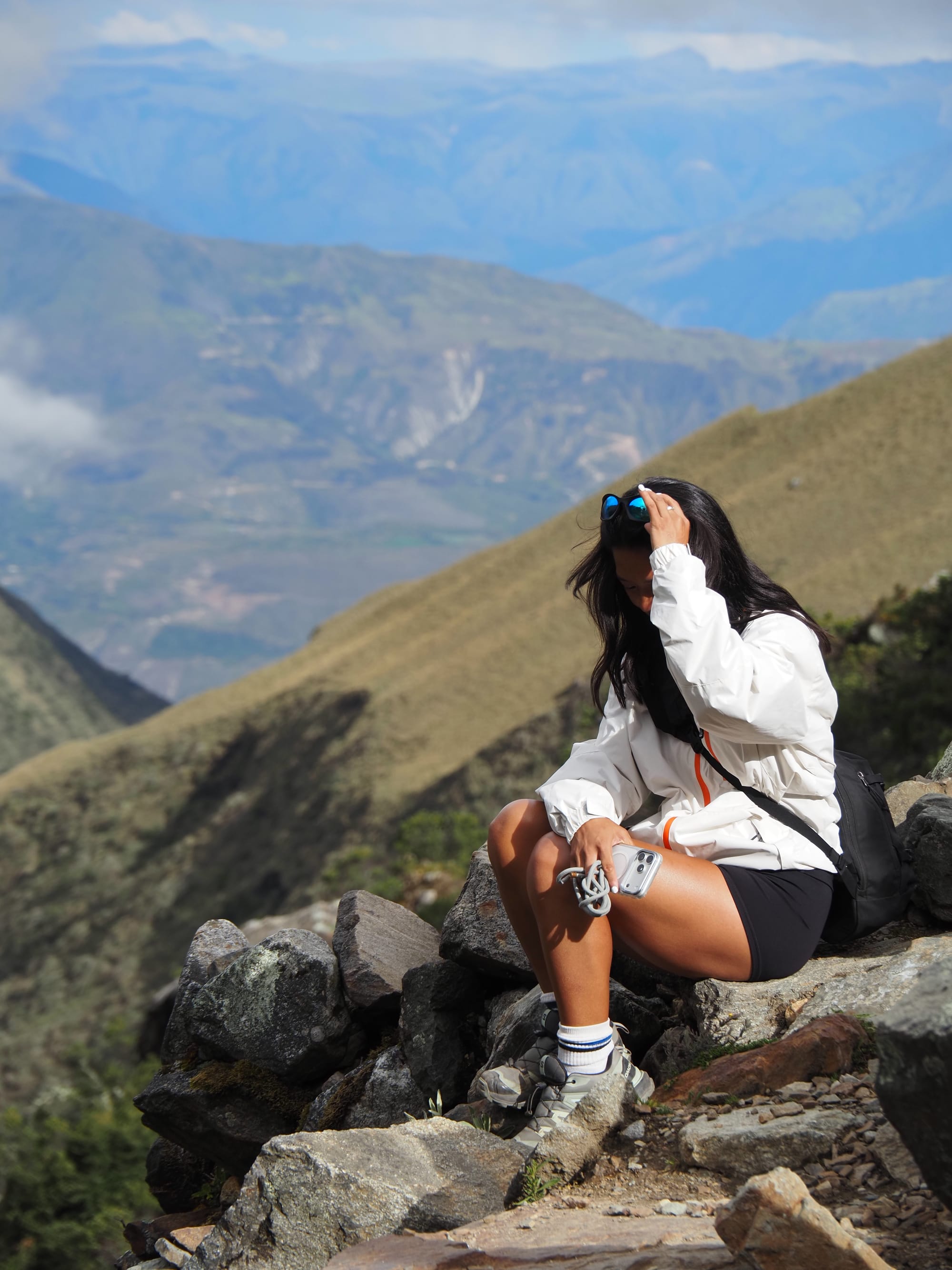
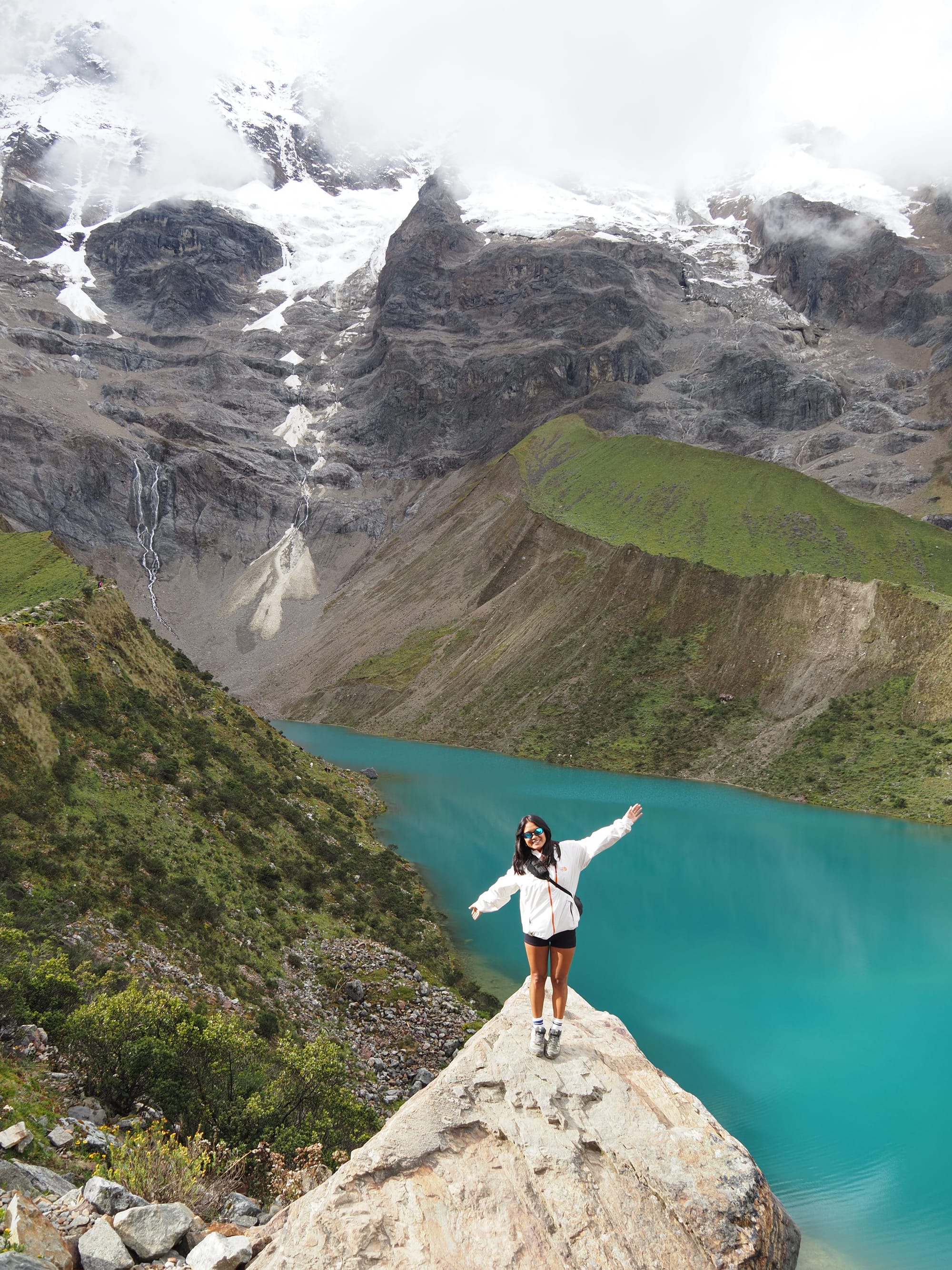
Once back at camp, we changed into our comfies, had tea and hot chocolate to warm ourselves up, before having dinner at 6:30pm. Another huge, delicious feast for us, the perfect way to end our first night! Sadly there are only cold showers here, so if you can brave it freshen up here, but if not, we were given bowls of warm water and a flannel for a self wash. By then we were all so tired and in bed by 8pm for an early night.
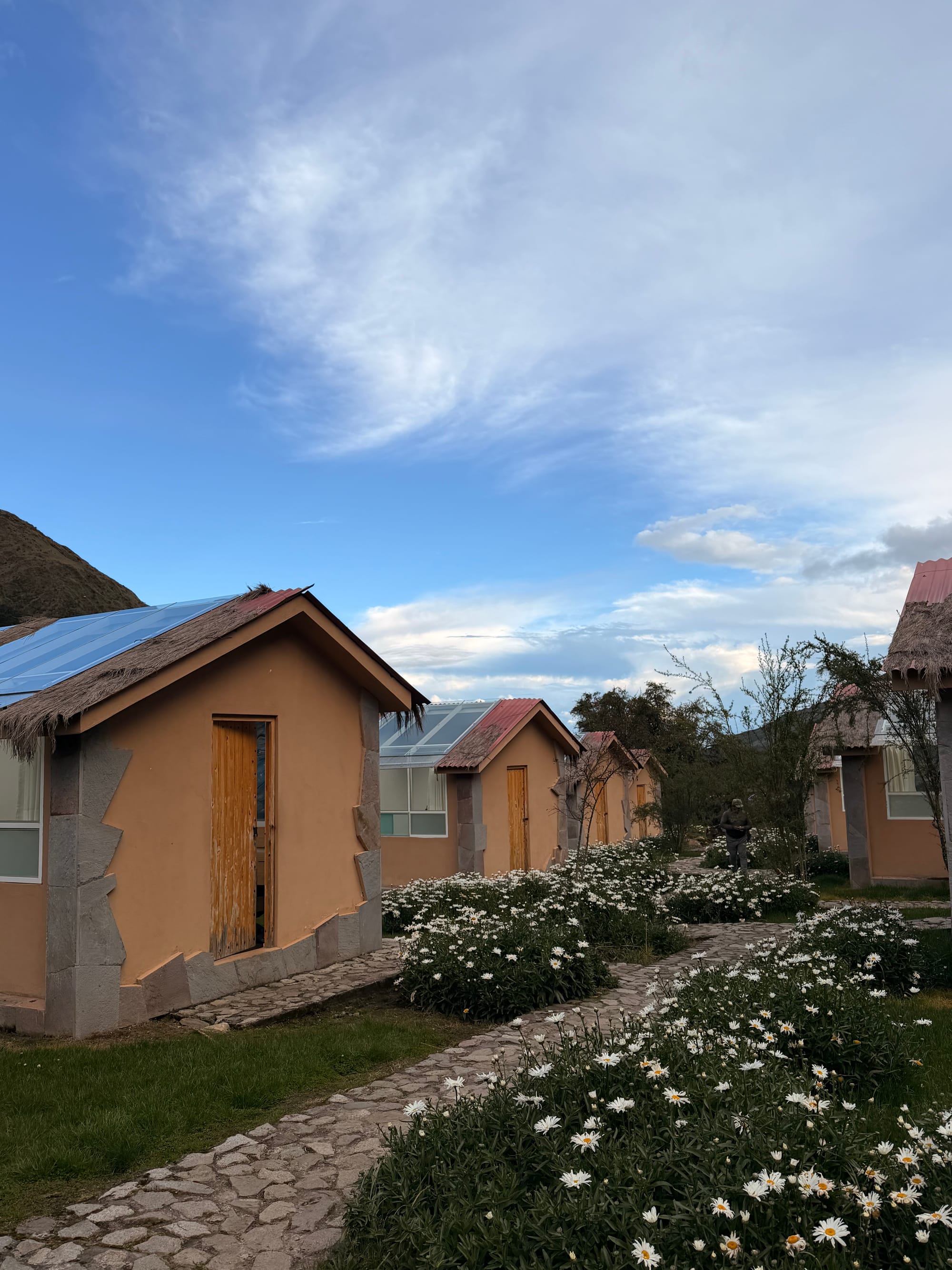
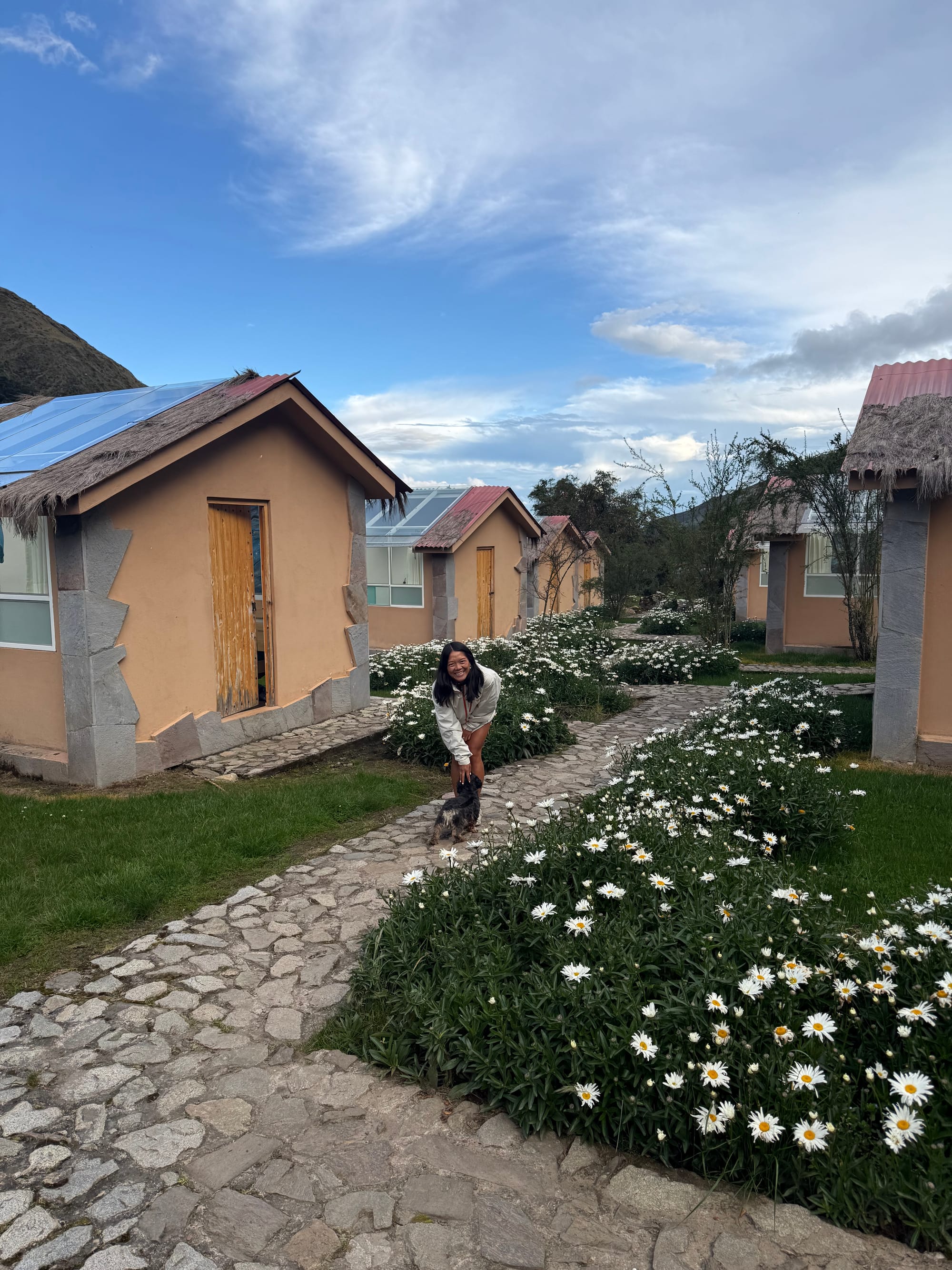
Glass Cabañas
Day 2
Day two started with a 5am wake up call and room service. After getting up, our things packed and ready, we had breakfast thirty minutes later. Breakfast again was a delicious spread of hot drinks, bread and butter, omelettes and fruit. After fuelling our bodies up, we then had twenty minutes to finish getting ready for our hike of the day, a long 24km! Make sure to bring extra layers, as the weather over the Salkantay Pass can be really unpredictable. As we began our hike, we were treated with a beautiful clear morning and got to see the Nevado Humantay Glacier start to shine.
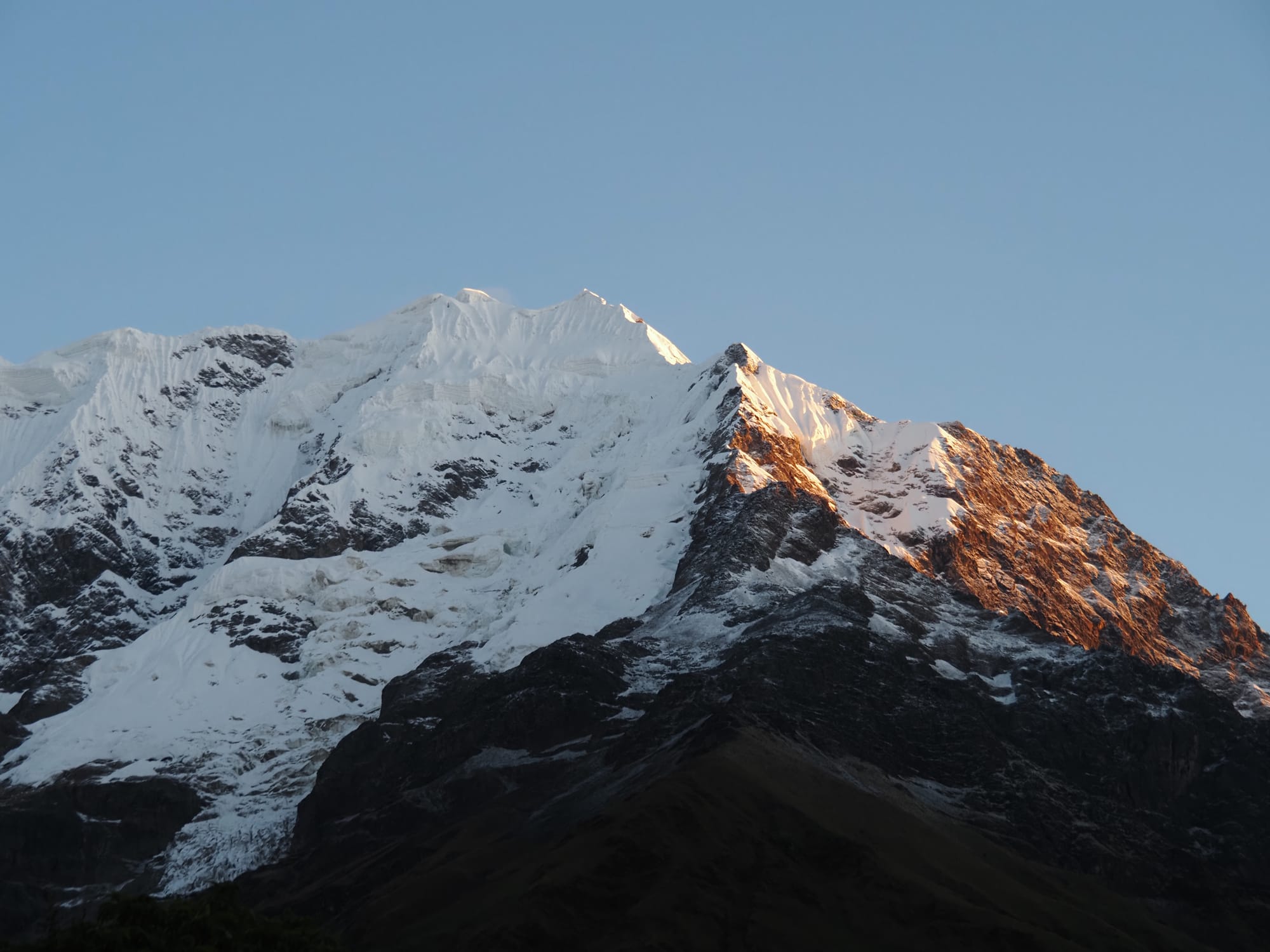
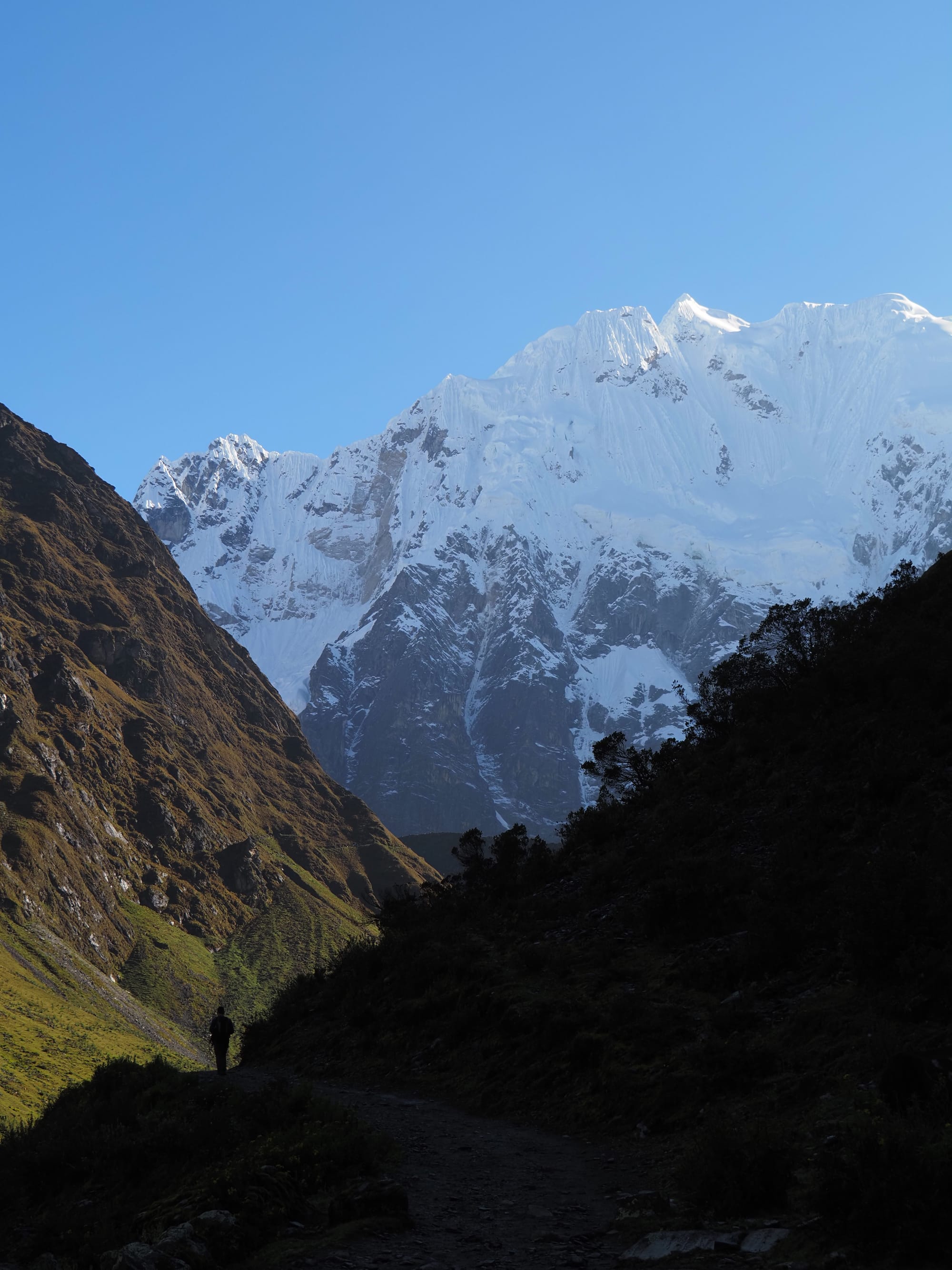
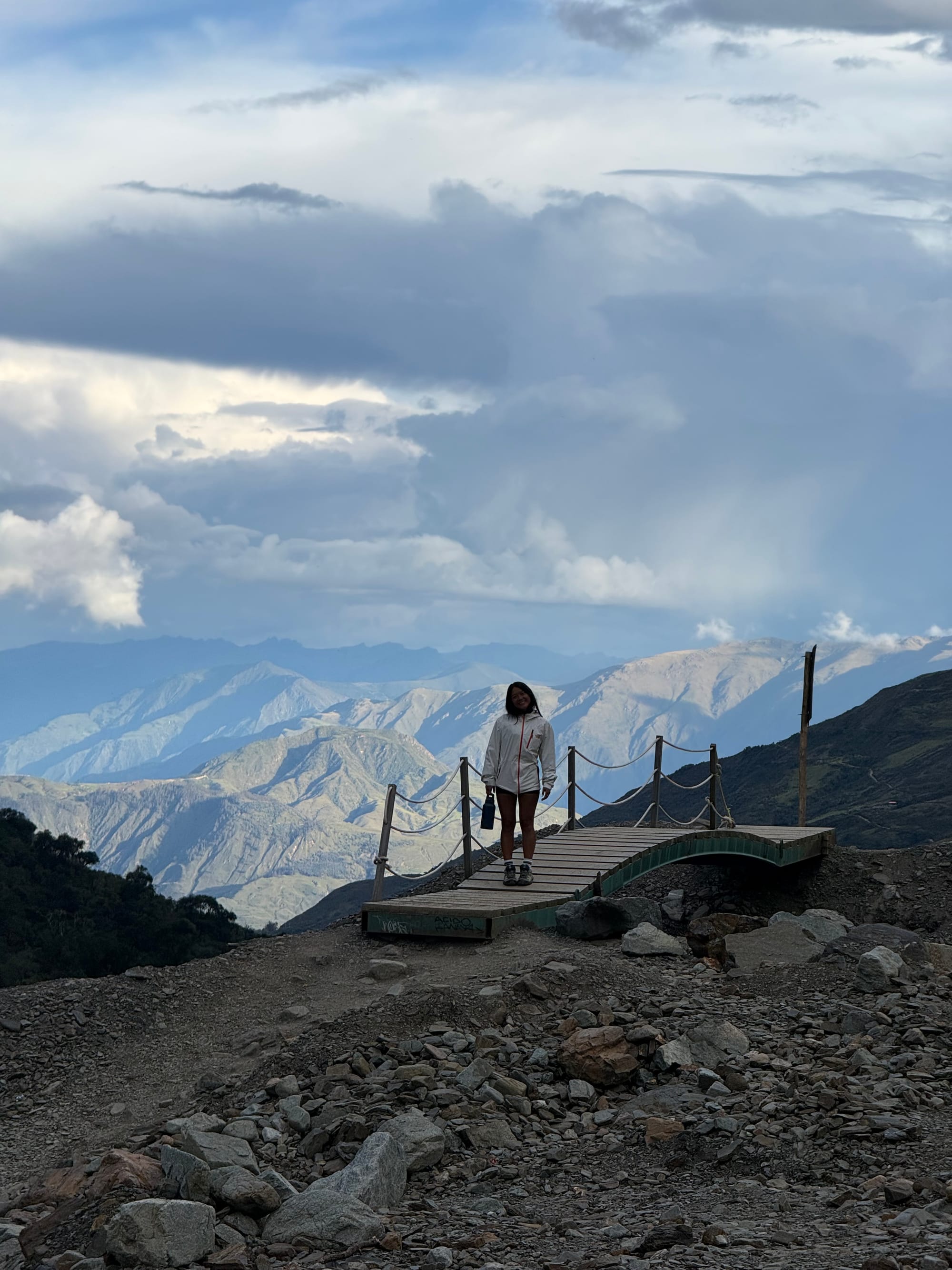
For the first thirty minutes of the hike we did as a group, but when we got to the crossroads, this is where you can hire a mule to take you up the mountain if you don’t want to hike. A couple of our tour group decided to do this and they really enjoyed themselves! If you are struggling with the hike or altitude, taking a mule is recommended as you don’t want to get worse throughout the trek, altitude sickness is no joke!
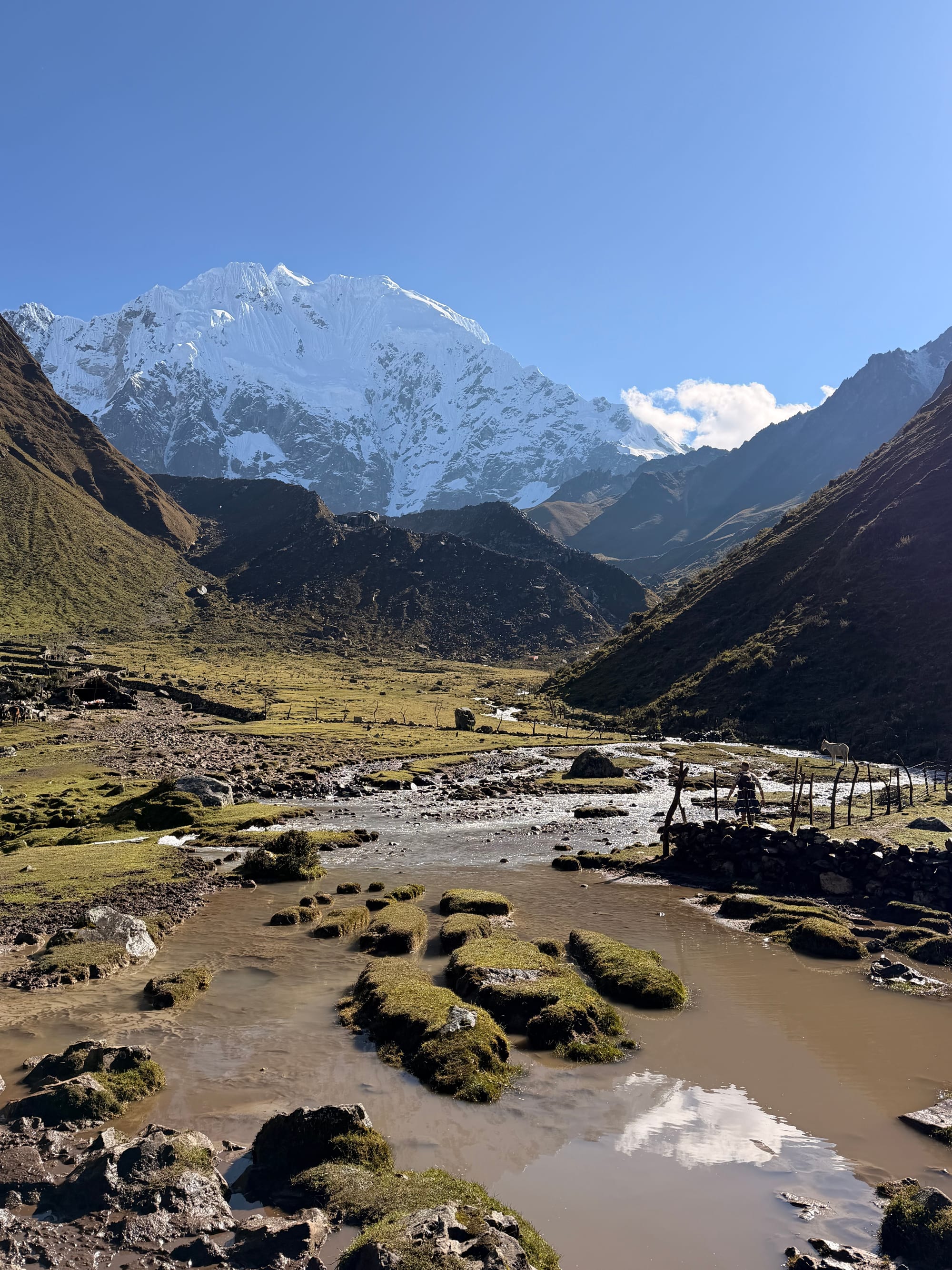
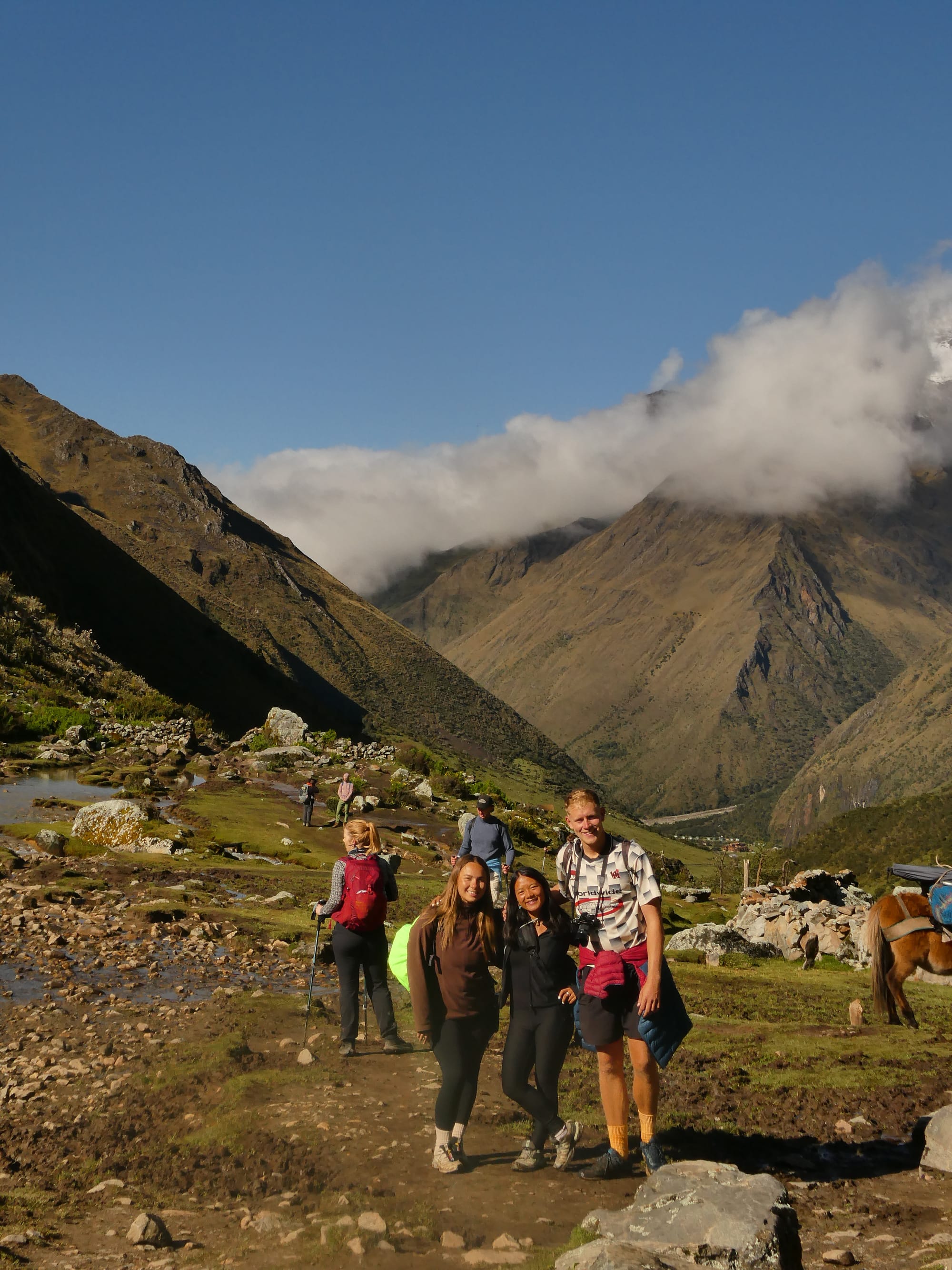
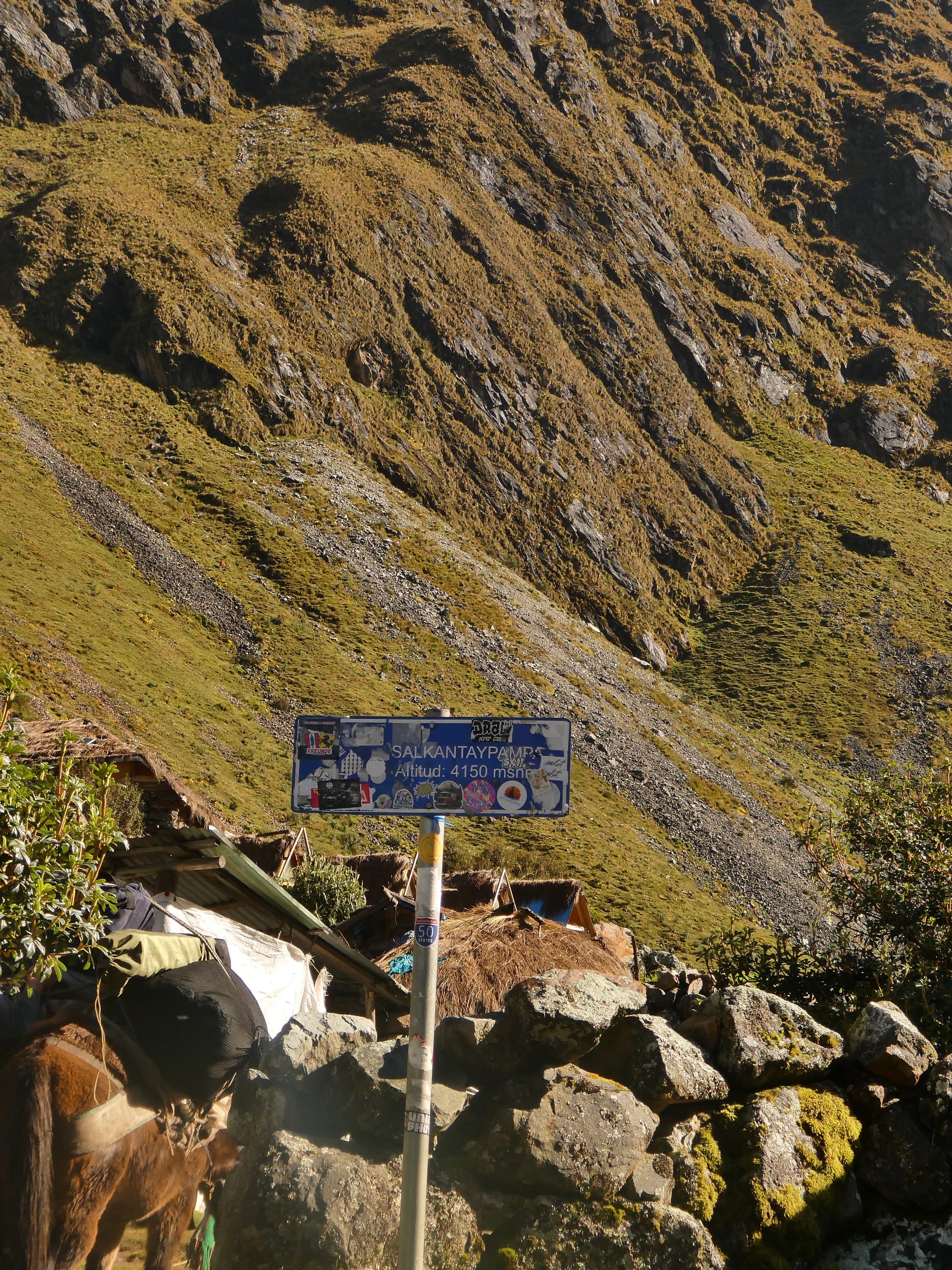
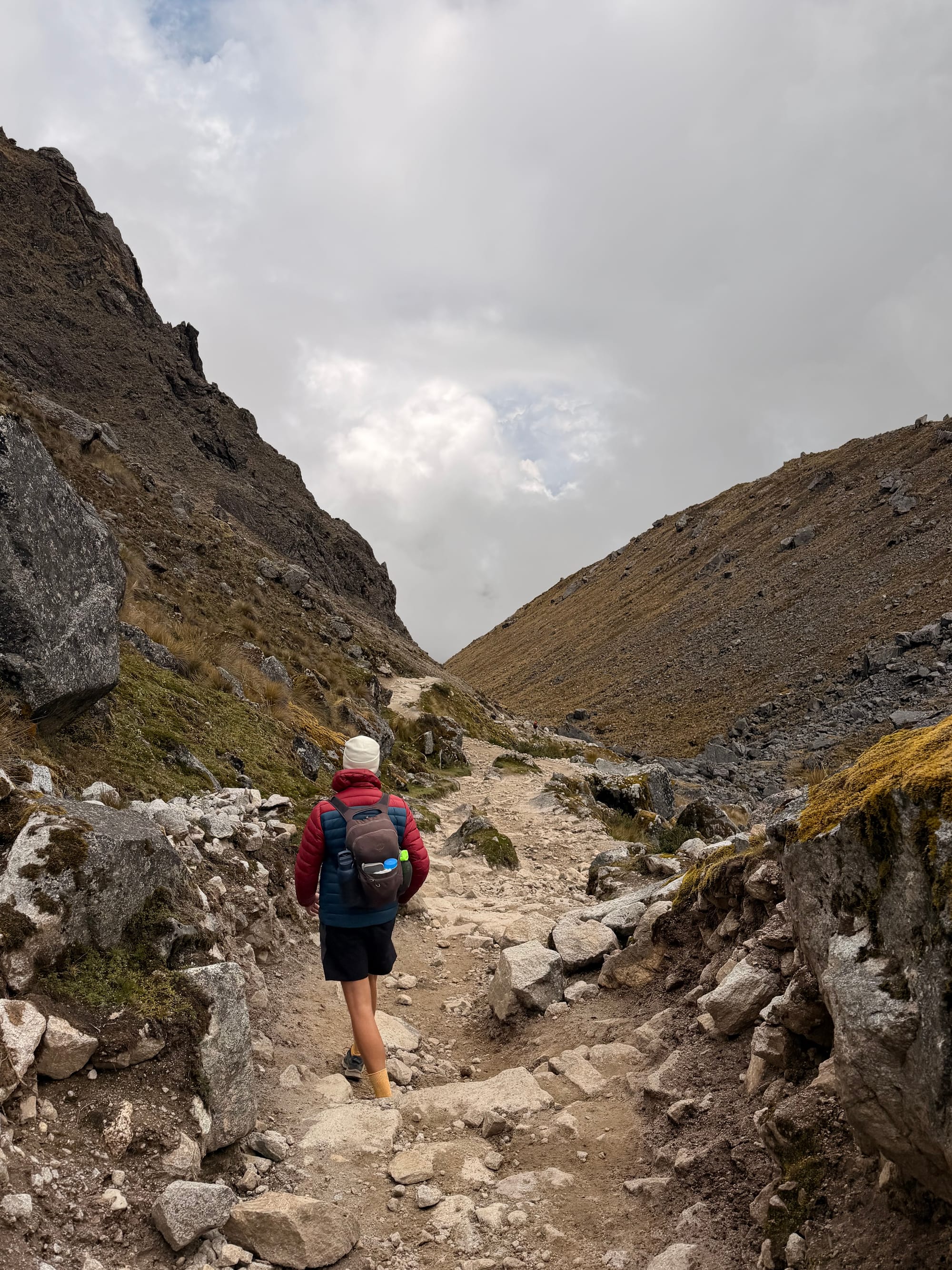
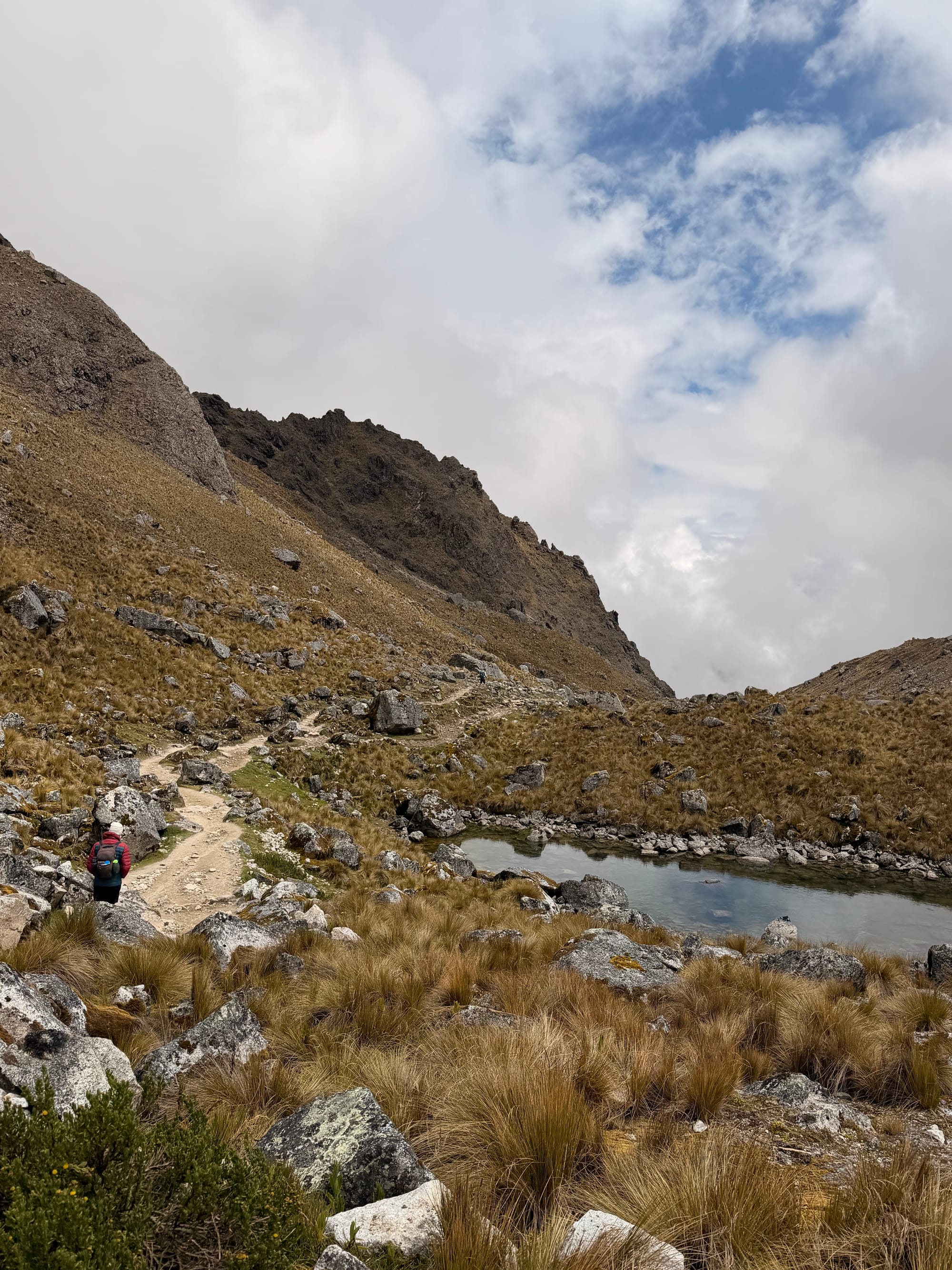
From then on it’s a pretty steep hike to Salkantay Pass, which is the main viewpoint of the day. You can go as quickly as you want until you reach the pass, which is where you meet up with your tour for a little snack. For day two, you don’t get lunch until you reach the second nights camp, at the end of the trek, so definitely pack some energy bars and sweets. As we started the climb up, the views around us were insane, we were really lucky to have clear weather for the beginning of this hike, as we got to see all the surrounding mountains and views a lot clearer than the previous day.
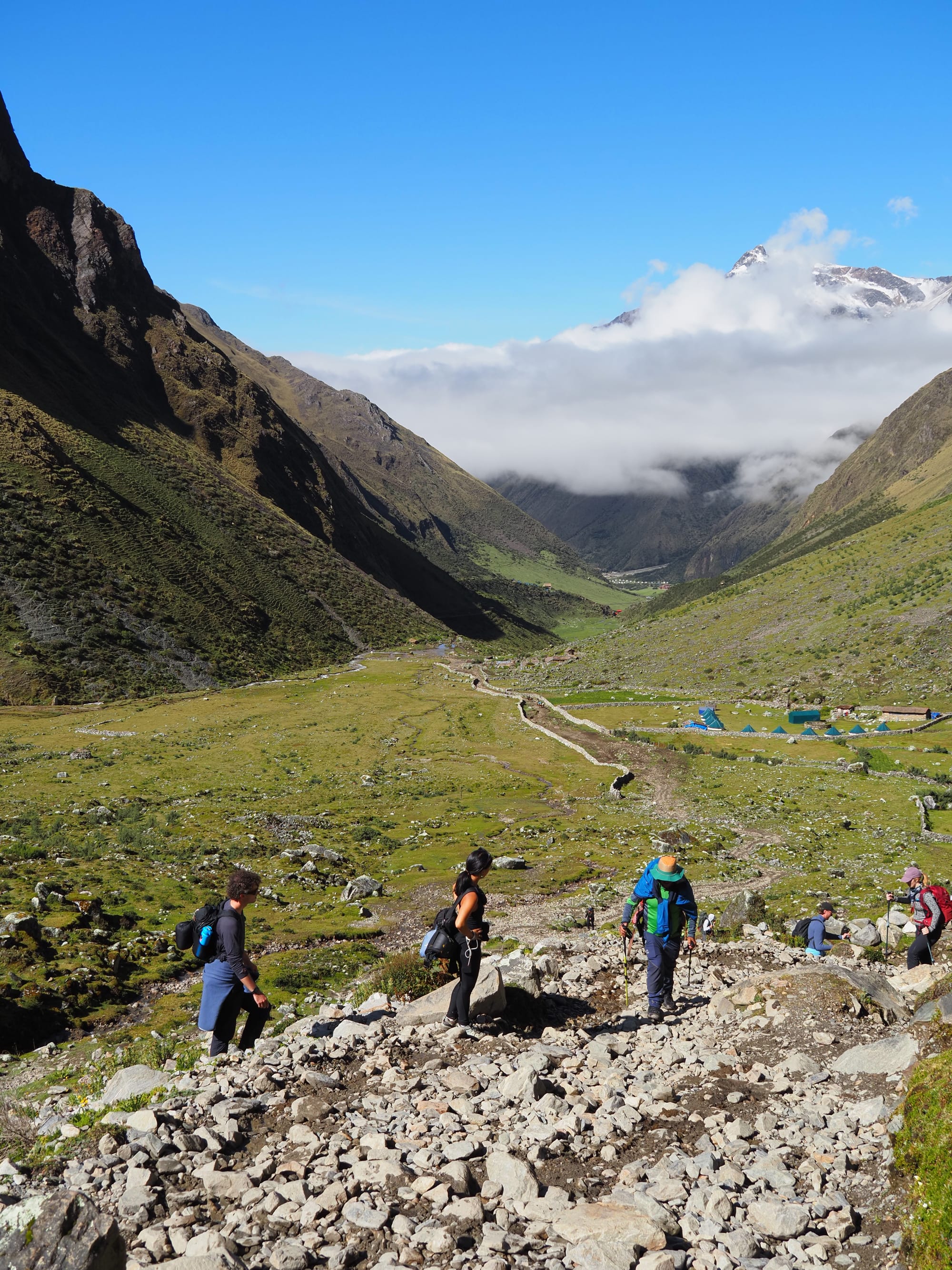
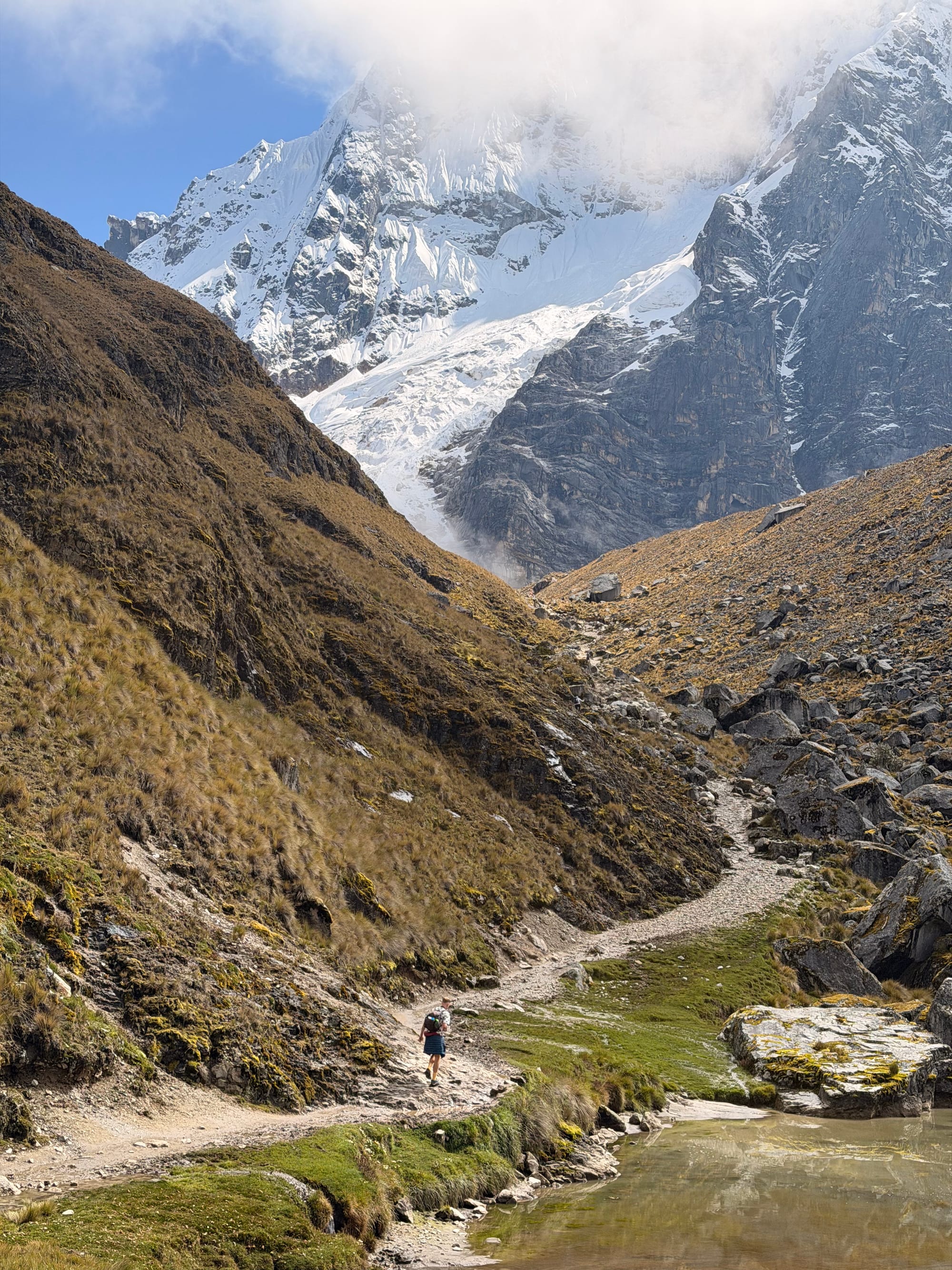
At the bottom of the Salkantay Pass, there is a huge open, muddy field, with a small pool of water where you can have a quick break. This stop, on a clear day will probably be your favourite part of the hike as you will see the surrounding Andes mountains and Nevado Salkantay, as shown below.
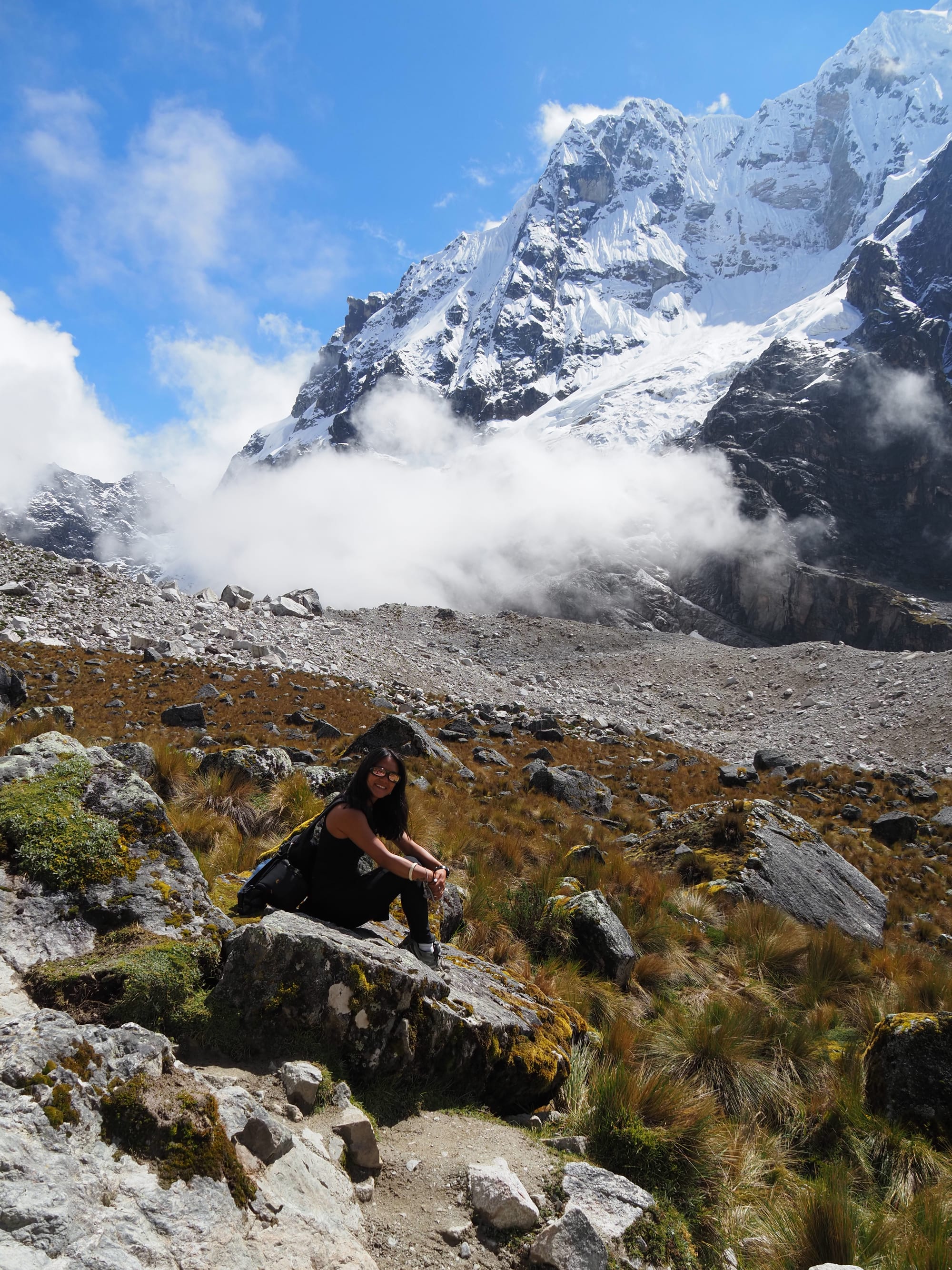
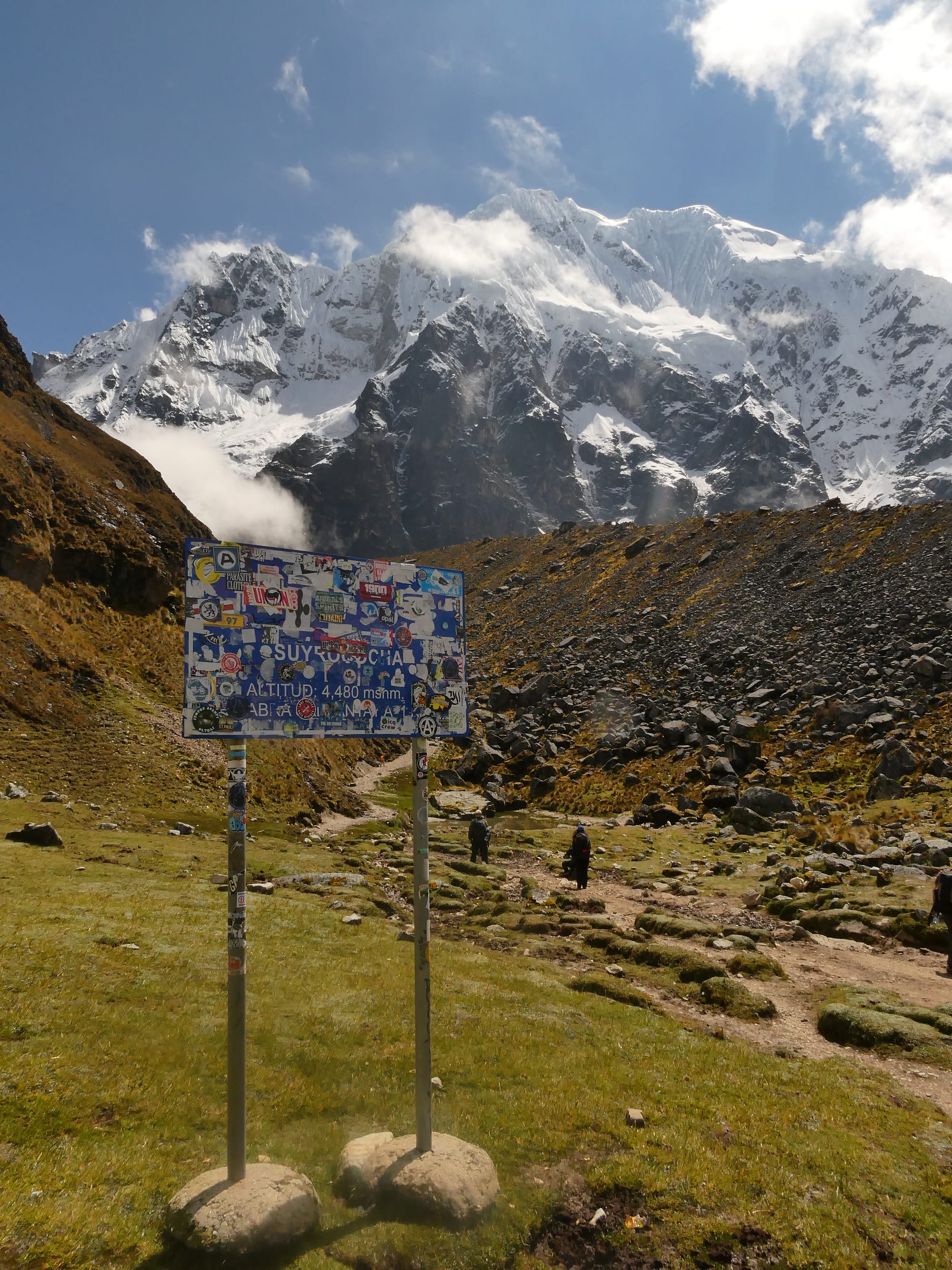
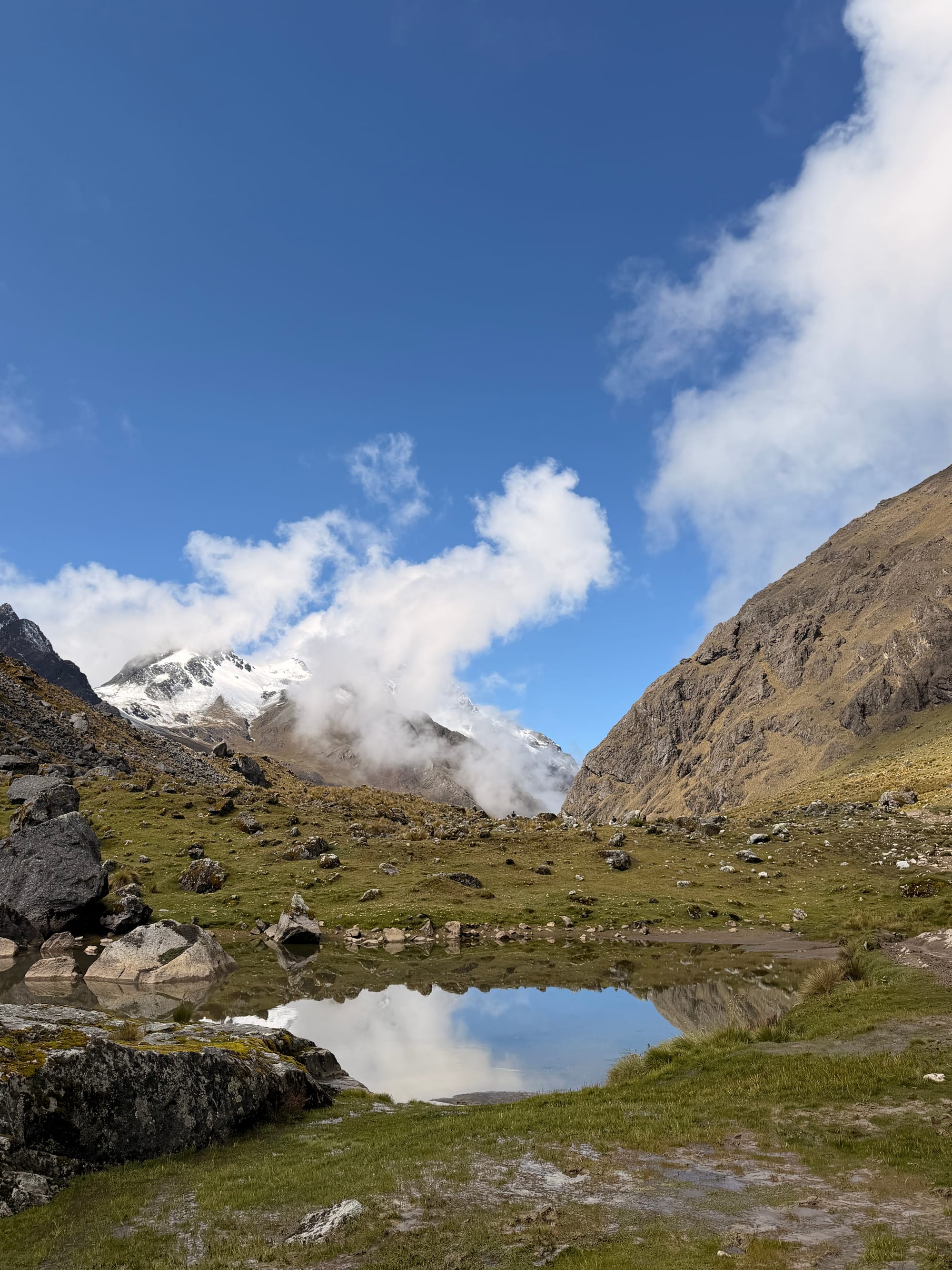
At the top of Salkantay Pass, there use to be a walking path, which took you to Laguna Salkantay. This path was sadly disrupted from an landslide so the tours don’t take you there anymore. However, if you have time, you can choose to make the extra thirty minutes walk there and back. As we were quick to the top, Ned and I decided to go see if we could spot the lagoon. As it had rained quite a bit recently, we thought we would have a chance to see it and we did, a lot smaller than Humantay Lagoon but was still pretty cool to see!
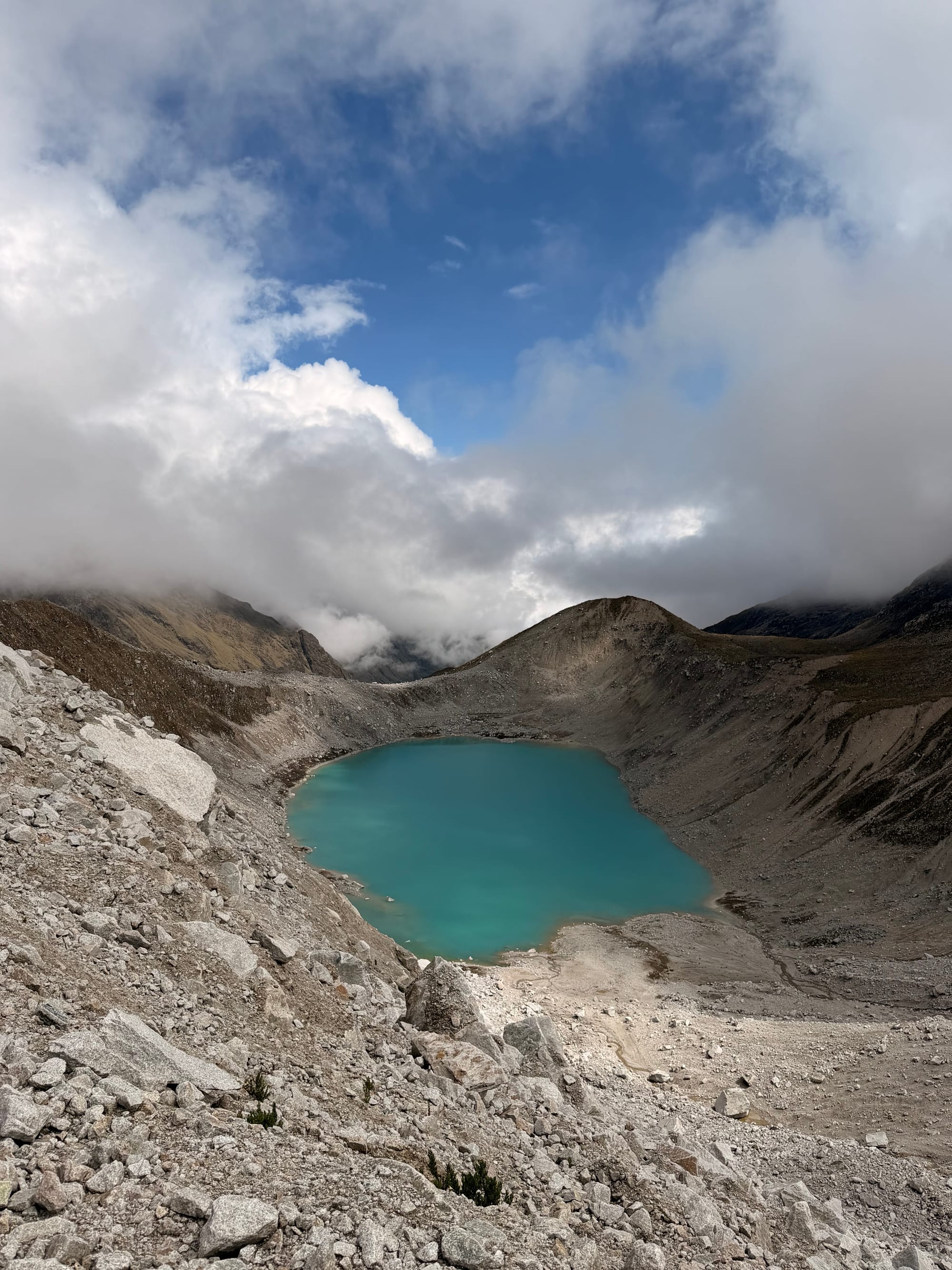
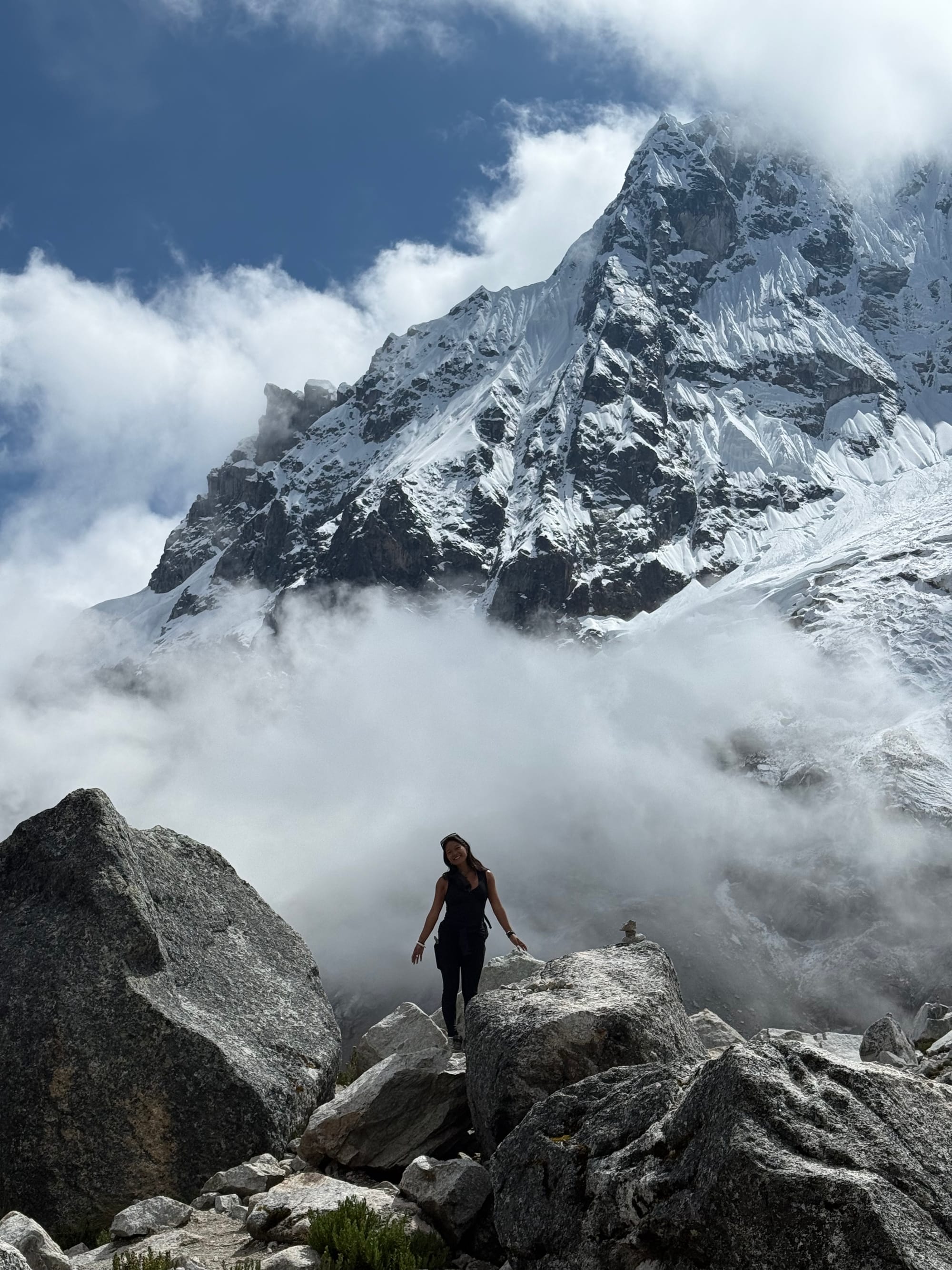
Once we got back to the top of Salkantay Pass to wait for our tour group, we were treated with homemade sandwiches and some coca leaves from our porters, who carried it all the way from camp for us! That with some extra snacks of biscuits and sweets, we stocked up for the second half of the hike. Sadly, the weather changed dramatically, the clouds rolled in and covered the mountains, making it pretty cold! We were sad that we couldn’t see the amazing views whilst we were at the top, however, we were very lucky we were able to see them earlier.
After we all had a bite and some rest, Sergio performed the Pachamama (Mother Earth) coca leaf ritual, which is an ancient Andean tradition used to connect with nature to request protection and express gratitude. Normally, you offer k’intus (three different sized sacred leaves), during high-altitude sections, like the Salkantay Pass, to show respect to the mountains. Sergio handed three leaves to each of us, told us to close our eyes and pay our respects to Pachamama. Whilst we did this, Sergio played this amazing melody on a recorder. It was really moving and emotional and we all paid our respects for a couple of minutes. At the end of the song, we slowly let our leaves blow away with the wind. This is to symbolise the act of reciprocation, for a safe journey through the rest of the challenging, high-altitude trek. We then all hugged one another, making sure we hugged to the left, where our hearts could meet.
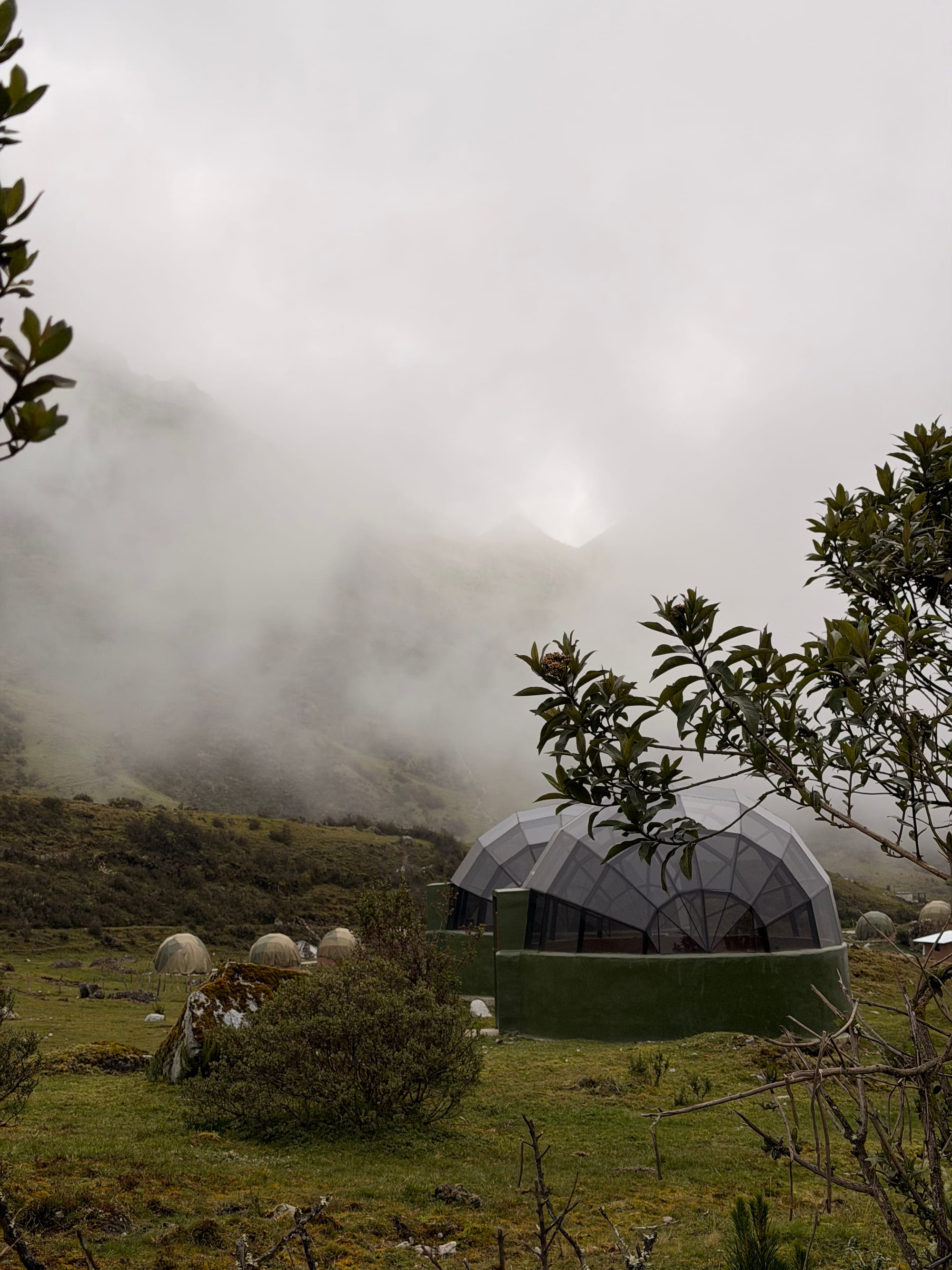
After this ceremony, we all started the descent down to our camp for the night. This descent was all down hill and took around two hours or so to do. As we went down, the weather sadly didn’t change, so it was pretty bleak and cold when we got to camp. Our second nights accommodation were Glass Domes, which would have looked pretty cool with better weather!
At camp we had a much needed feast for lunch! For day two, once you get to lunch you are done with walking for the day. This allowed us to relax and rest in our Glass Domes till dinner time. We spent the couple of hours watching a downloaded movie and playing some cards! This accommodation, as a whole is fairly new, so there is currently no electricity or any proper facilities, only toilets. So again, we had to have a self-wash with bowls of warm water and flannels.
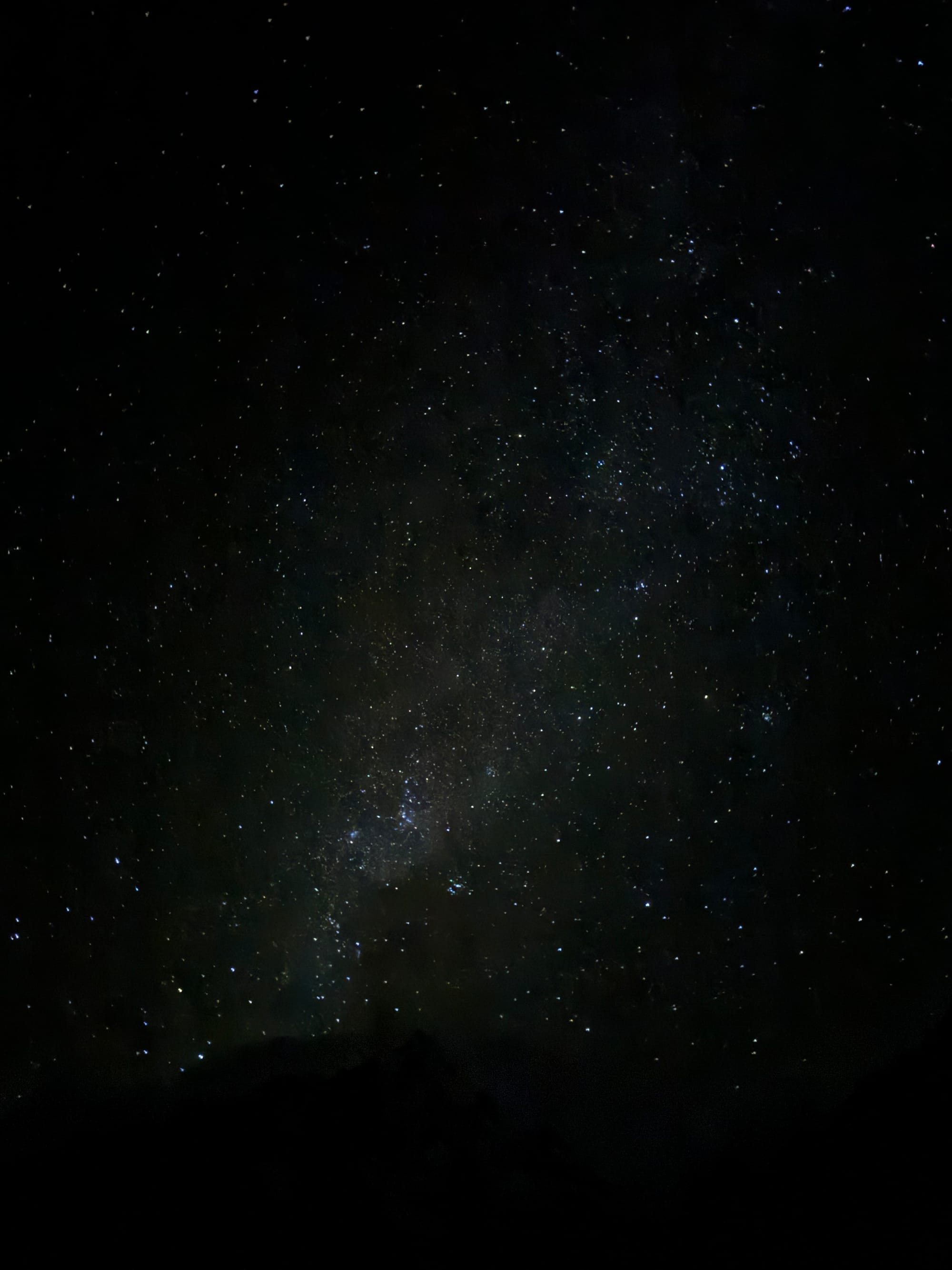
After having dinner at 6:30pm, we did some stargazing, where we saw the clearest sky and the Milky Way, it was the perfect way to end the day!
Glass Domes
Day 3
Day three was probably our least favourite day out of the five days, not because of anything bad, it was just a long day of walking and the weather was pretty average.
The day started with another early wake up call, breakfast and getting our things ready, before starting our descent down! A majority of the hike on day three is a gradual decline, so it isn’t too hard on the knees. As we hiked down, we saw some views of the surrounding mountains, but they weren’t as special as the first two days. It took around four hours to get to our lunch spot, where we had another huge feast.
From this lunch spot, the van is here to collect our duffles to take them to our next nights accommodation, so you get the chance to leave anything you don’t want to carry with them. The hike after lunch is a lot more humid, so you don’t need any warm layers, just a raincoat. We left our small osprey backpack and just had our ponchos.
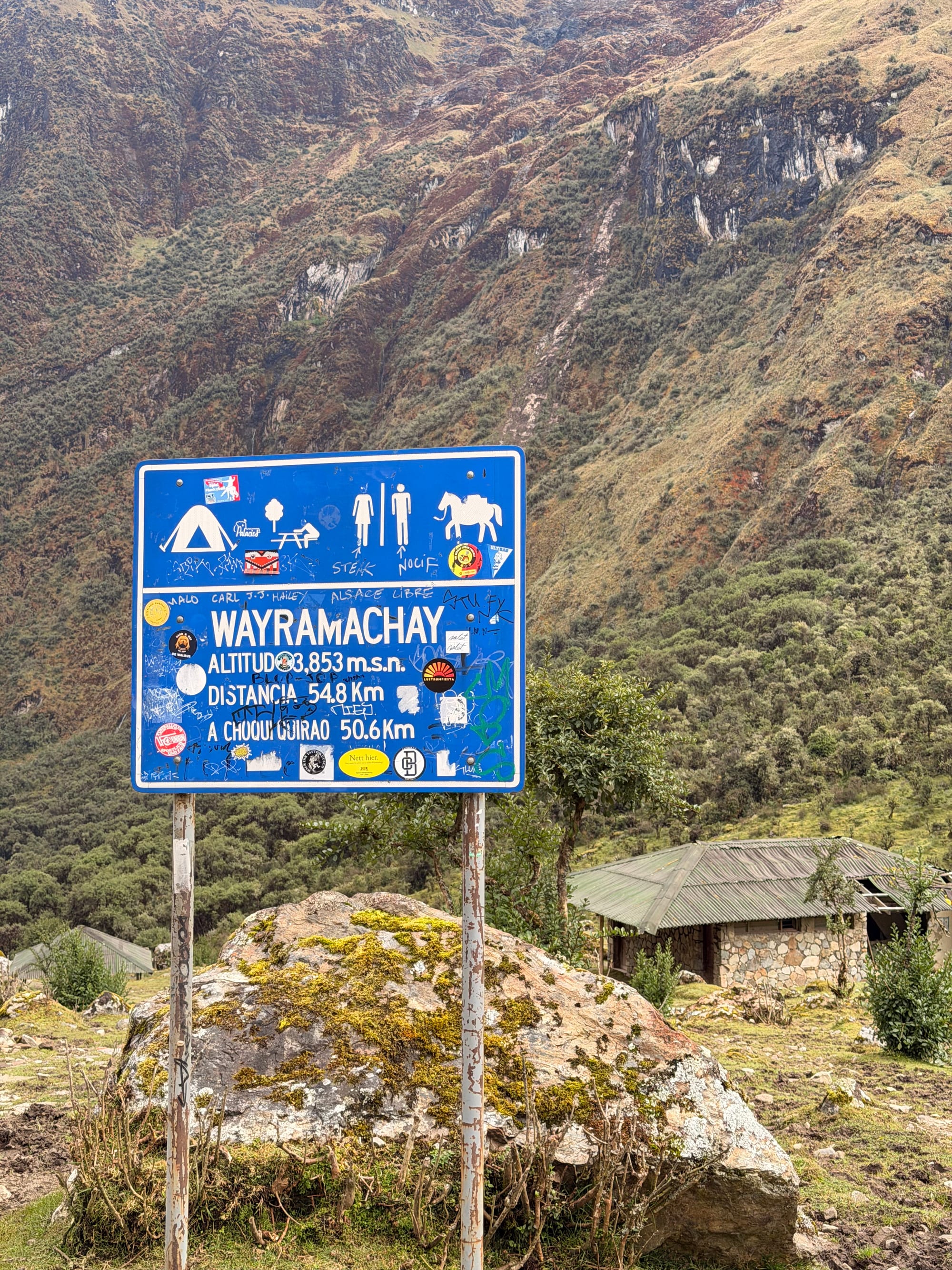
Once we finished lunch, we set off for the remaining hike, which was probably another four hours. As we continued, we had different weather conditions, crossed a few worrying landslides and streams before getting to our camp for the night. It was a pretty easy four hours, but we were all absolutely knackered!
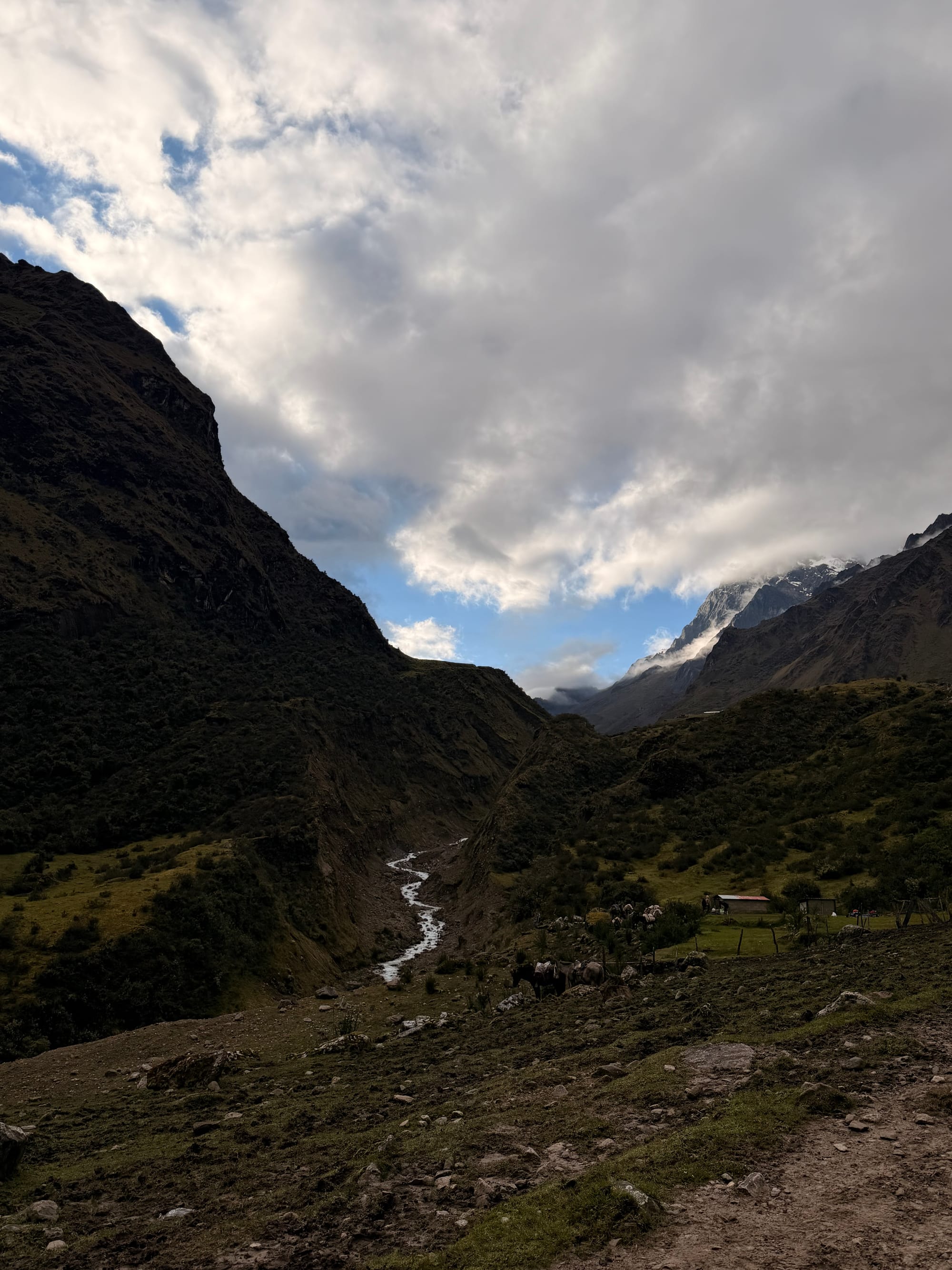
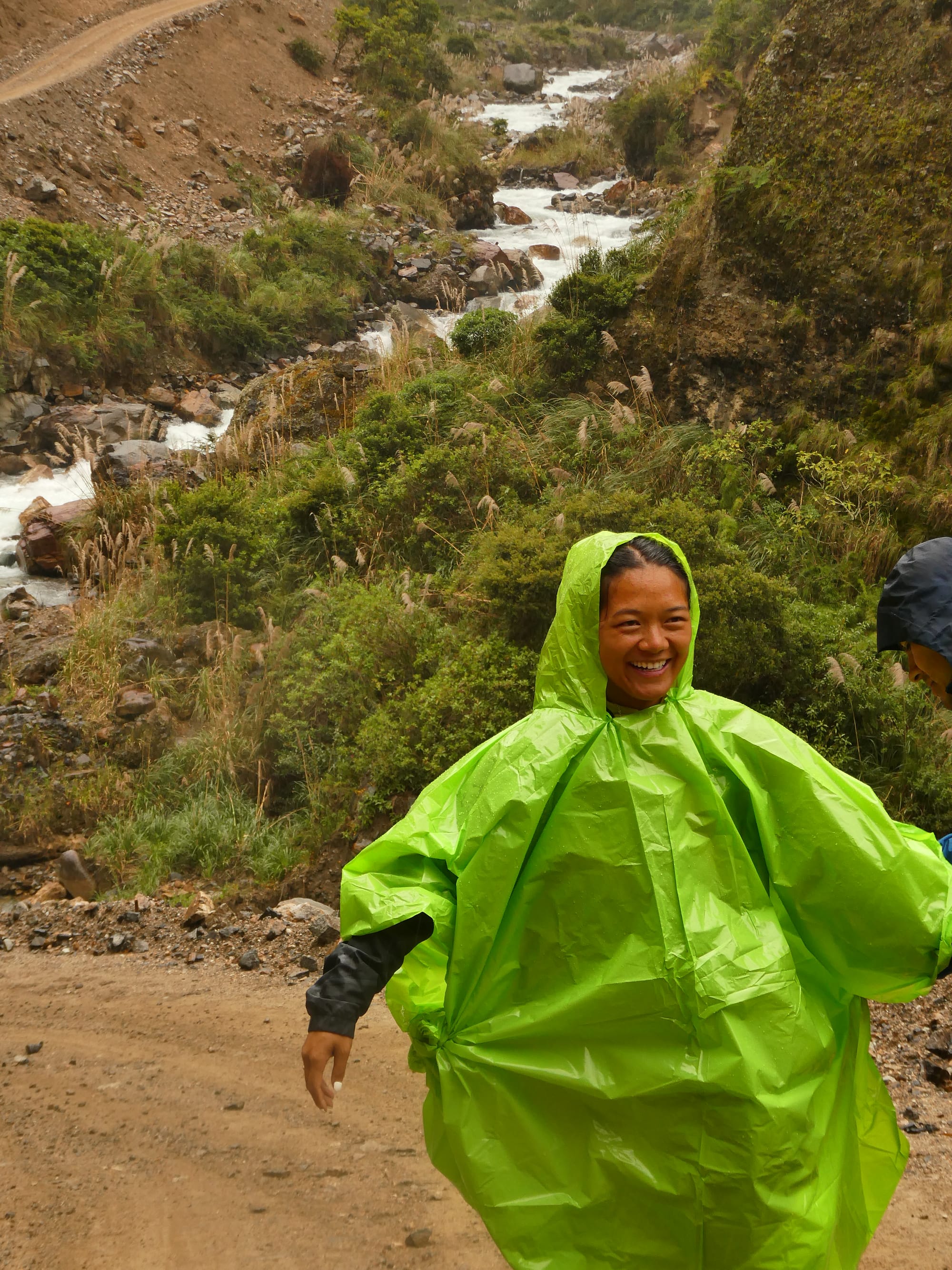
Our accommodation for the third night were Hobbit Houses! This accommodation is by far the best of the trip, we had a cabin to ourselves, had hot showers and amazing facilities with WiFi if you want to pay an extra 10 SOLS for it. Not only that, but they were all gorgeous, 10/10!
After we all had the best showers of the trip, we had some snacks and hot chocolate before feasting on one last dinner made by our Super Chef! We then all had another early night, relaxing in our cabins.
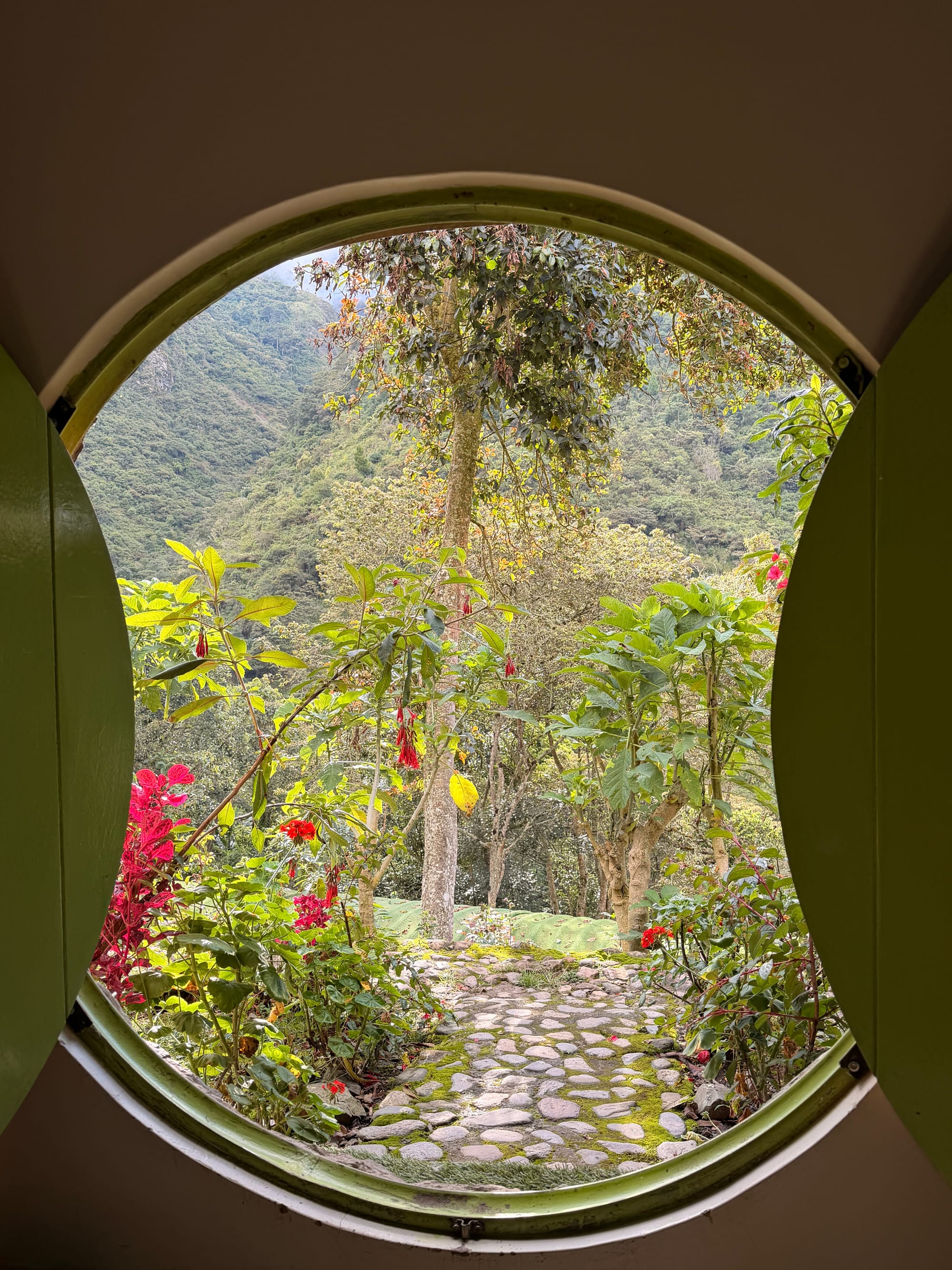
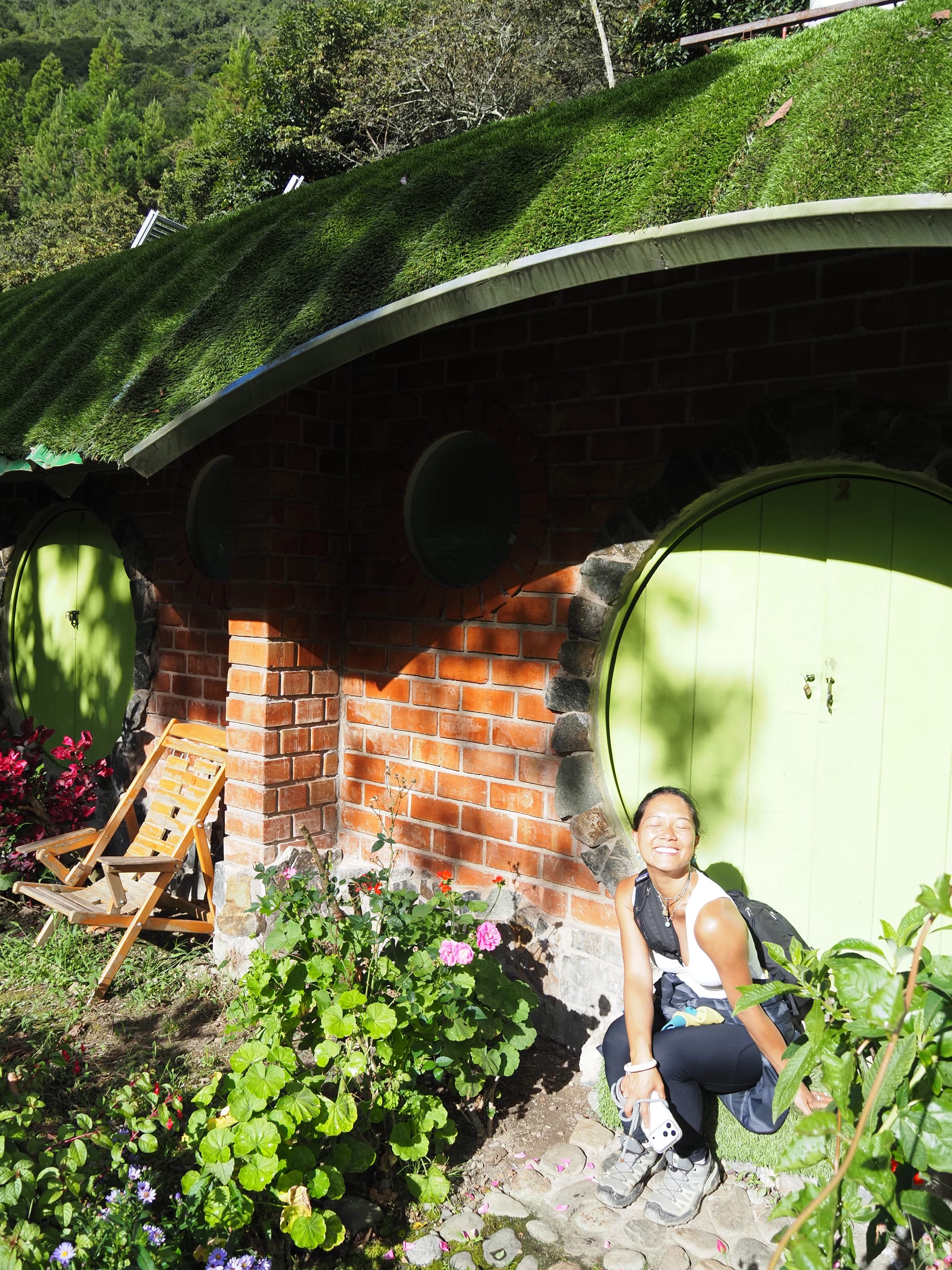
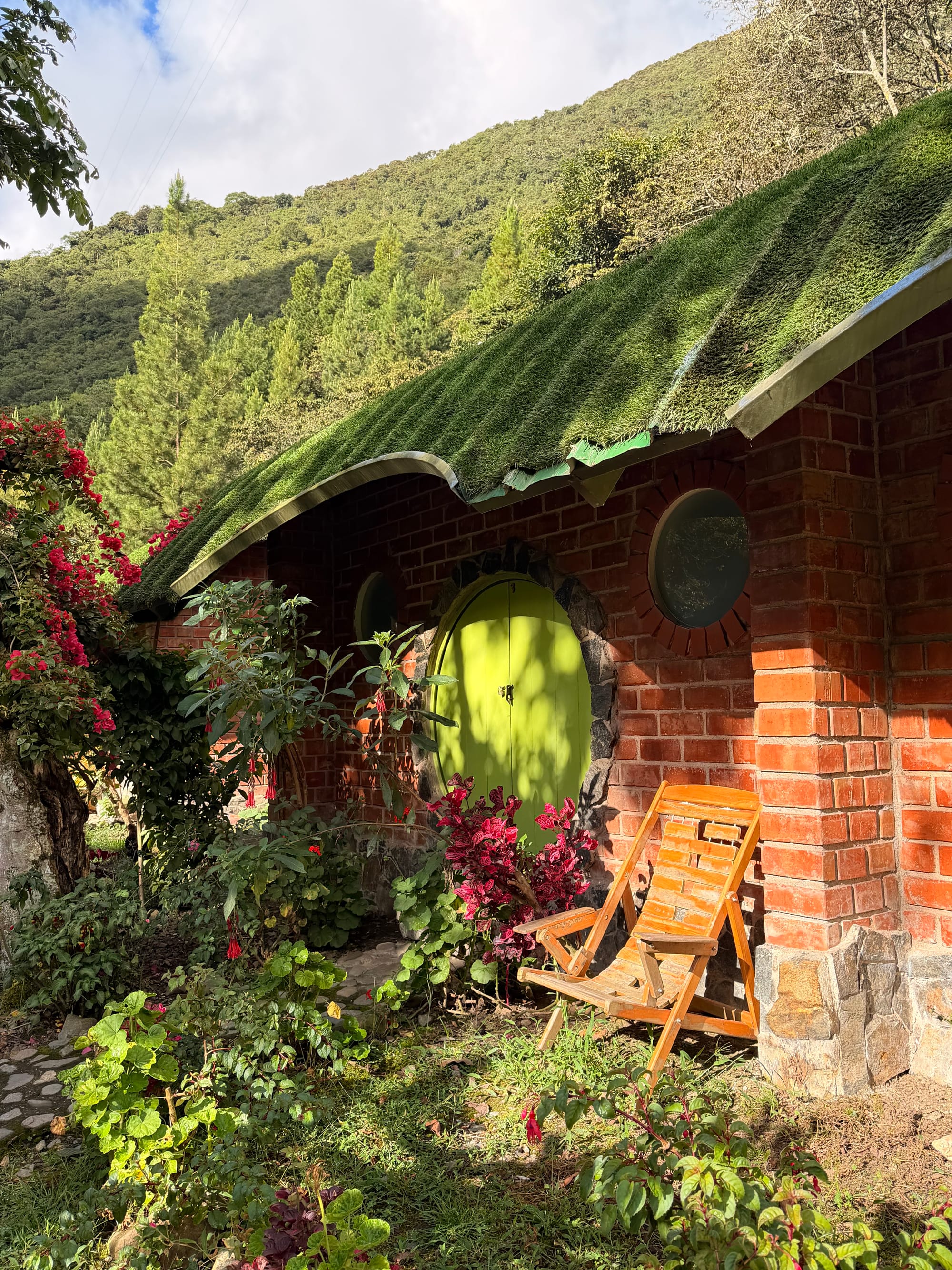
Hobbit Houses
Day 4
Day four was a very early wake up call at 4am, and we were treated with a huge homemade cake to celebrate nearly finishing the Salkantay Trail! This cake, the Super Chef was whipping up the previous night and it was delicious!
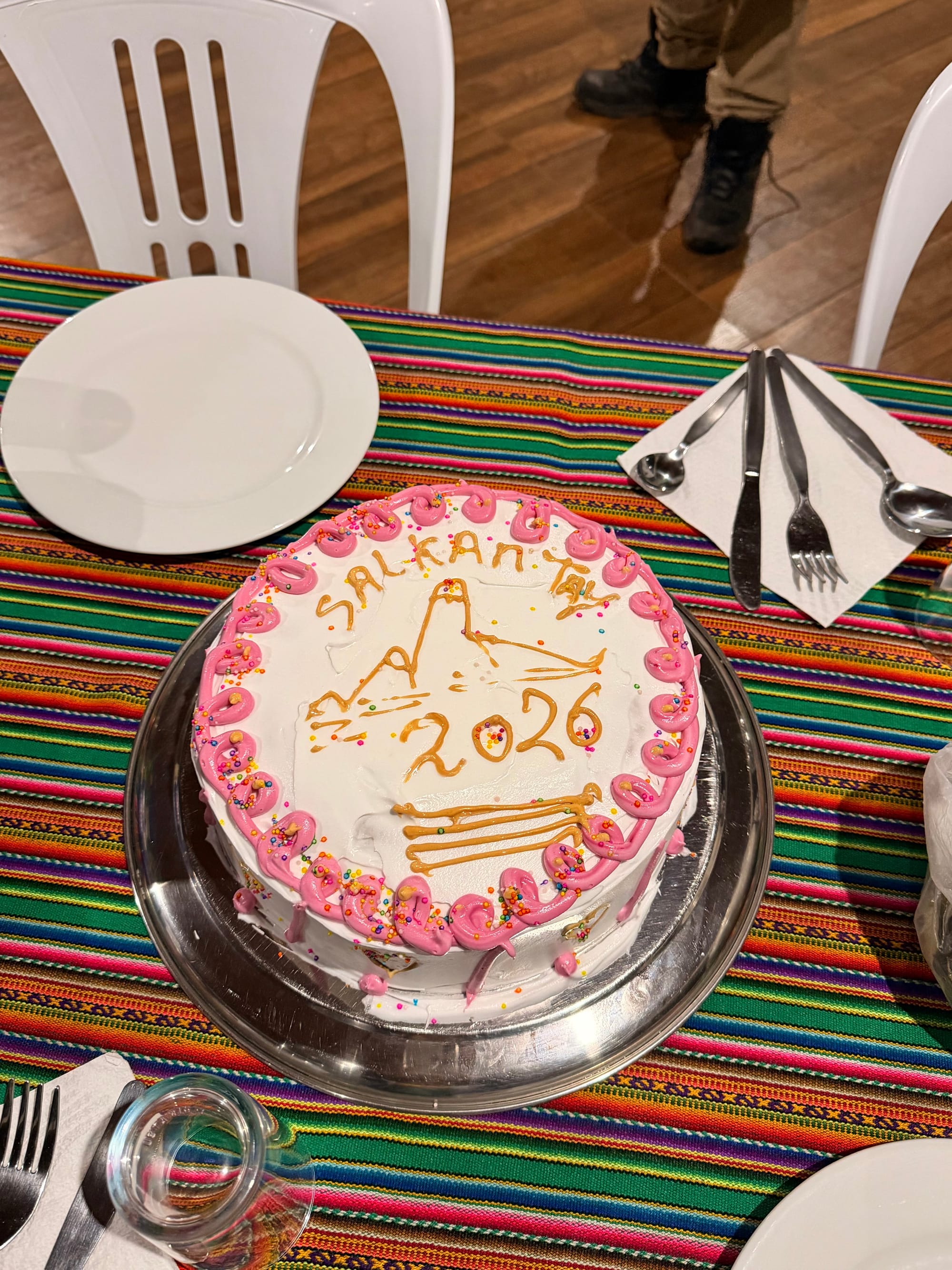
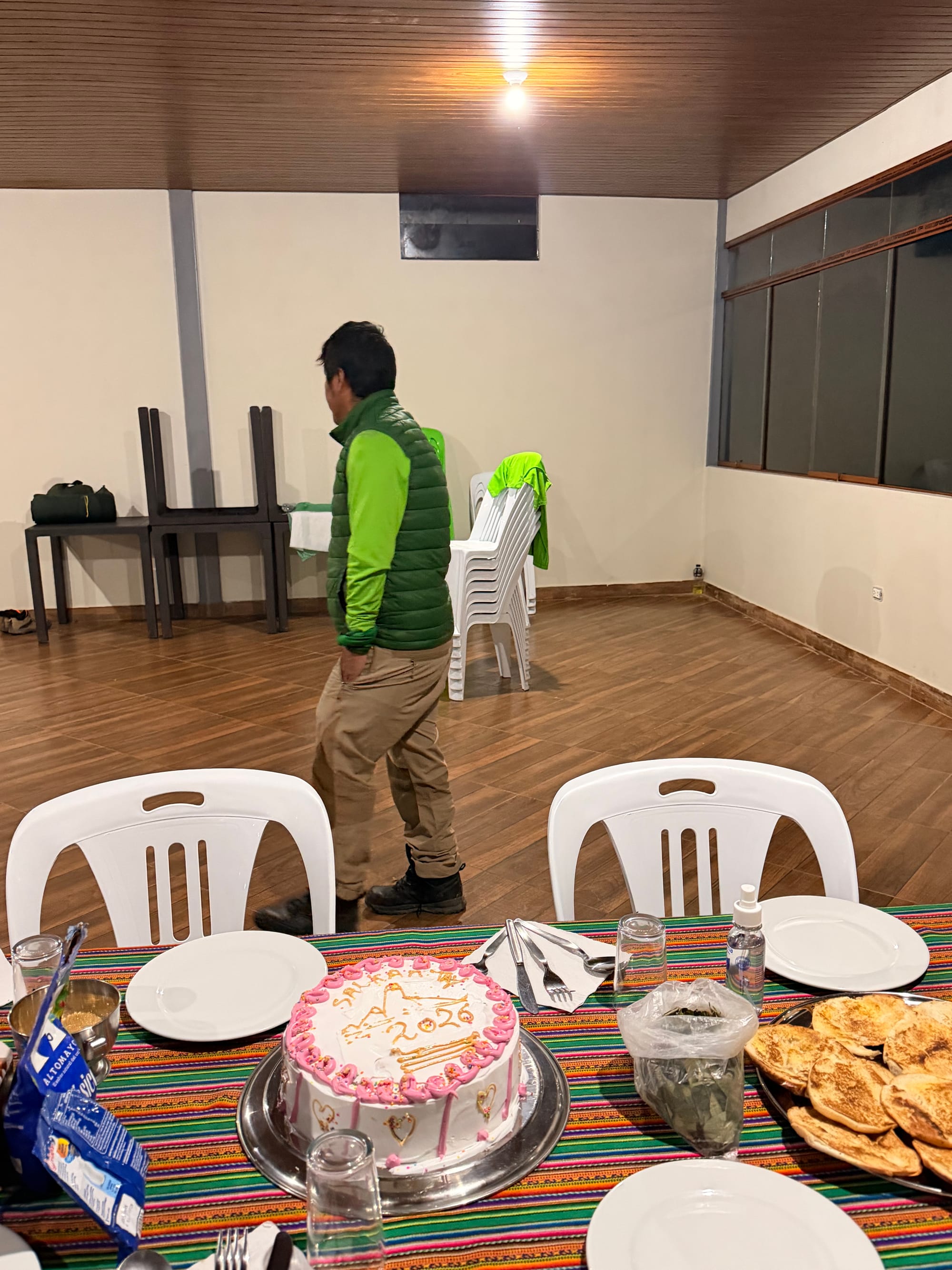
We then got our things ready and packed everything into the van before heading to our starting point. Normally, the car journey is about twenty minutes to the Coffee Shop, but because there were landslides during the night it was too dangerous to drive. We ended up having to walk an extra thirty minutes instead, but I think we were all pretty happy to do this instead of driving, as the sharp drops from the landslides were dangerously high and pretty scary!
Once at the Coffee Shop, we were taught how to make Peruvian Coffee from scratch. The red beans (below) are what come off the coffee trees, they start off green and then turn red when they are ready to be picked. The browner beans are what is inside the red beans and the yellower beans are what the beans looked like after being peeled. These yellow beans are the ones that are roasted until they turn black like normal coffee beans. We took turns roasting the coffee beans until they all blackened, before taking turns to grind the beans into powder. This powder we then filtered to make rich, strong, black coffee for us all. We each got a small espresso to try, with some honey roasted banana on the side as a little treat.
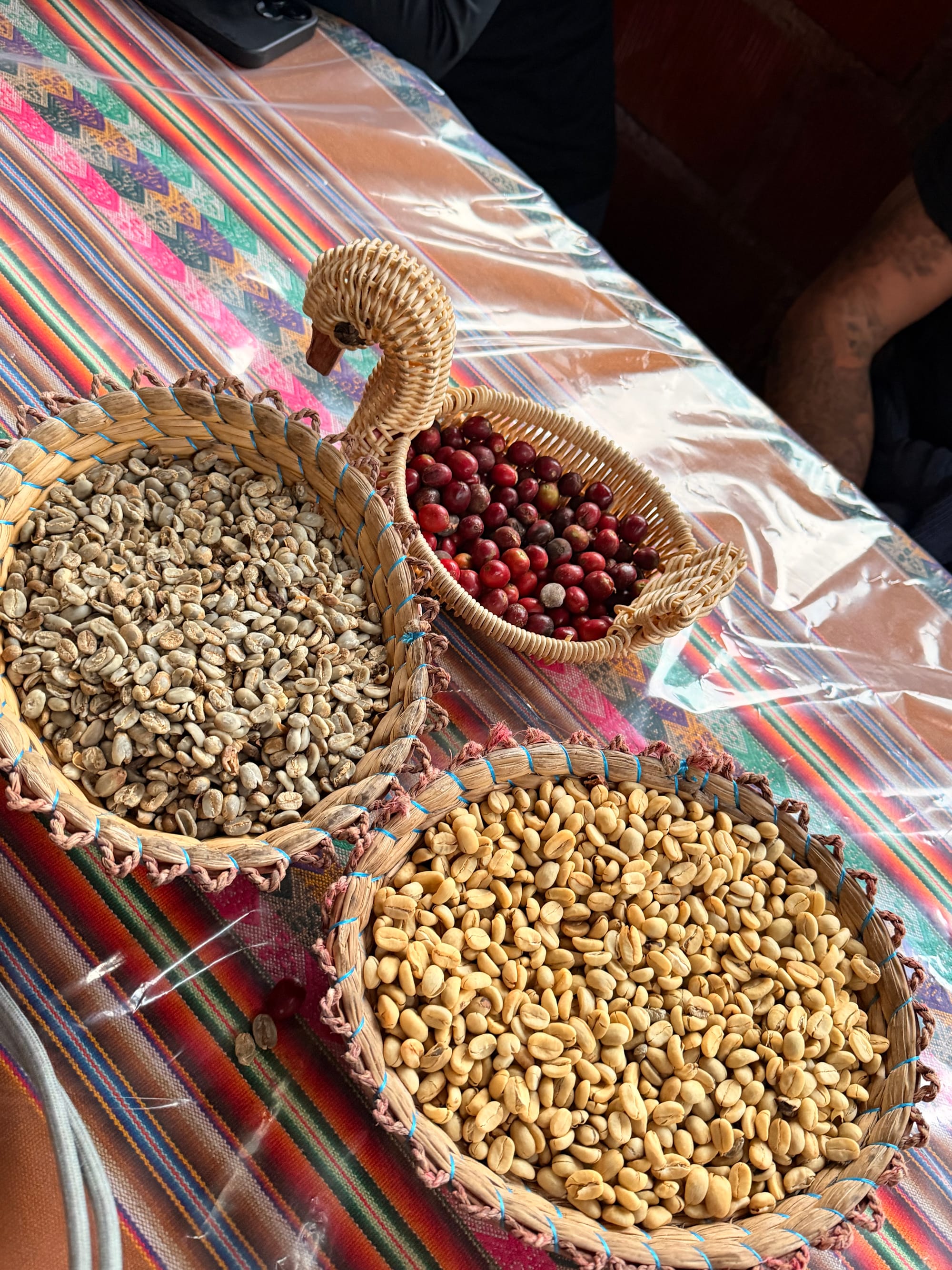
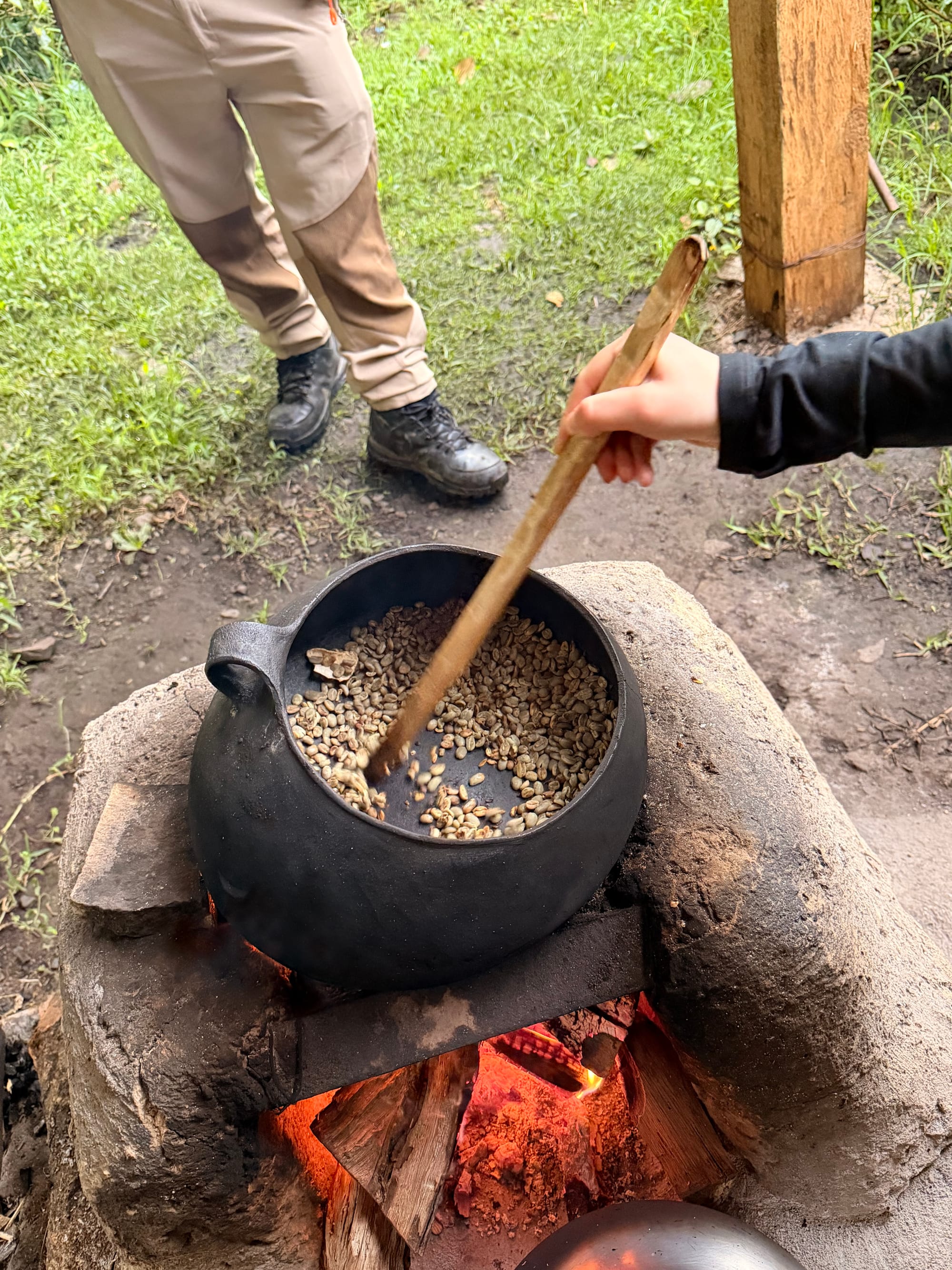
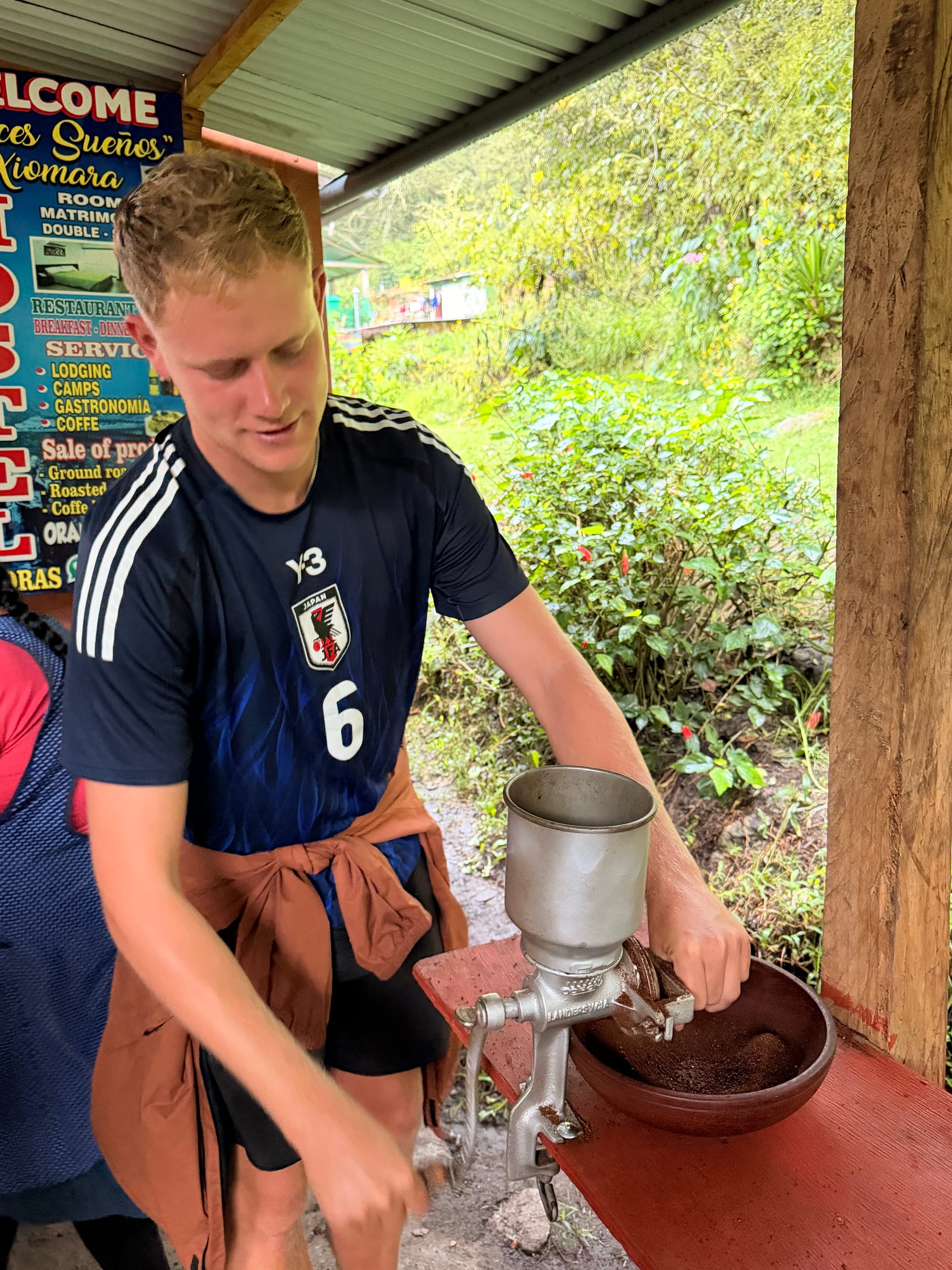
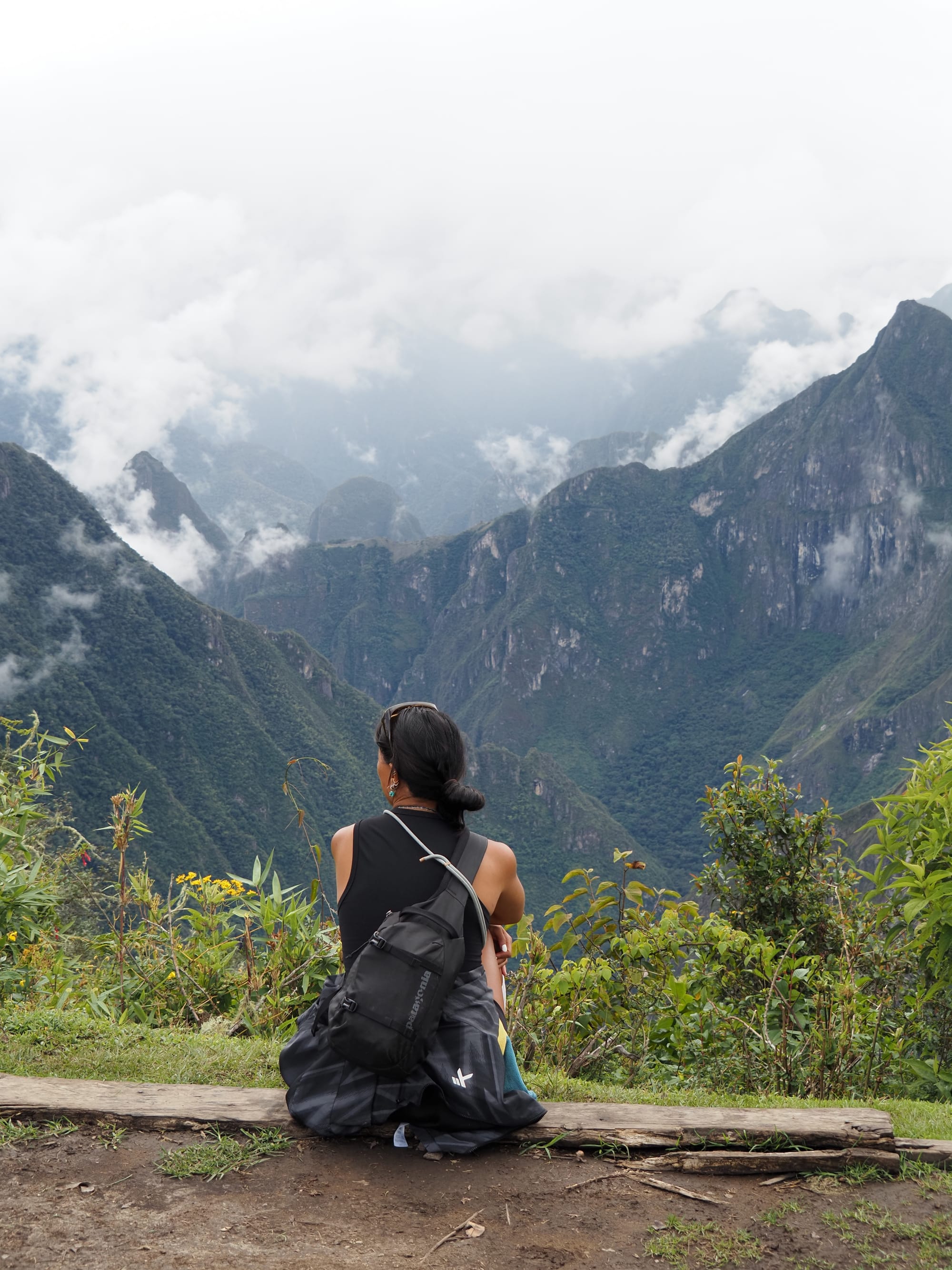
After the Coffee Shop we continued our hike up. Thanks to the strong coffee, it made us whiz up the first part of the hike, which was pretty steep and tough on the chest! Our first proper stop was at the viewpoint below, where there is a raised hut overlooking the valley of the surrounding hills!
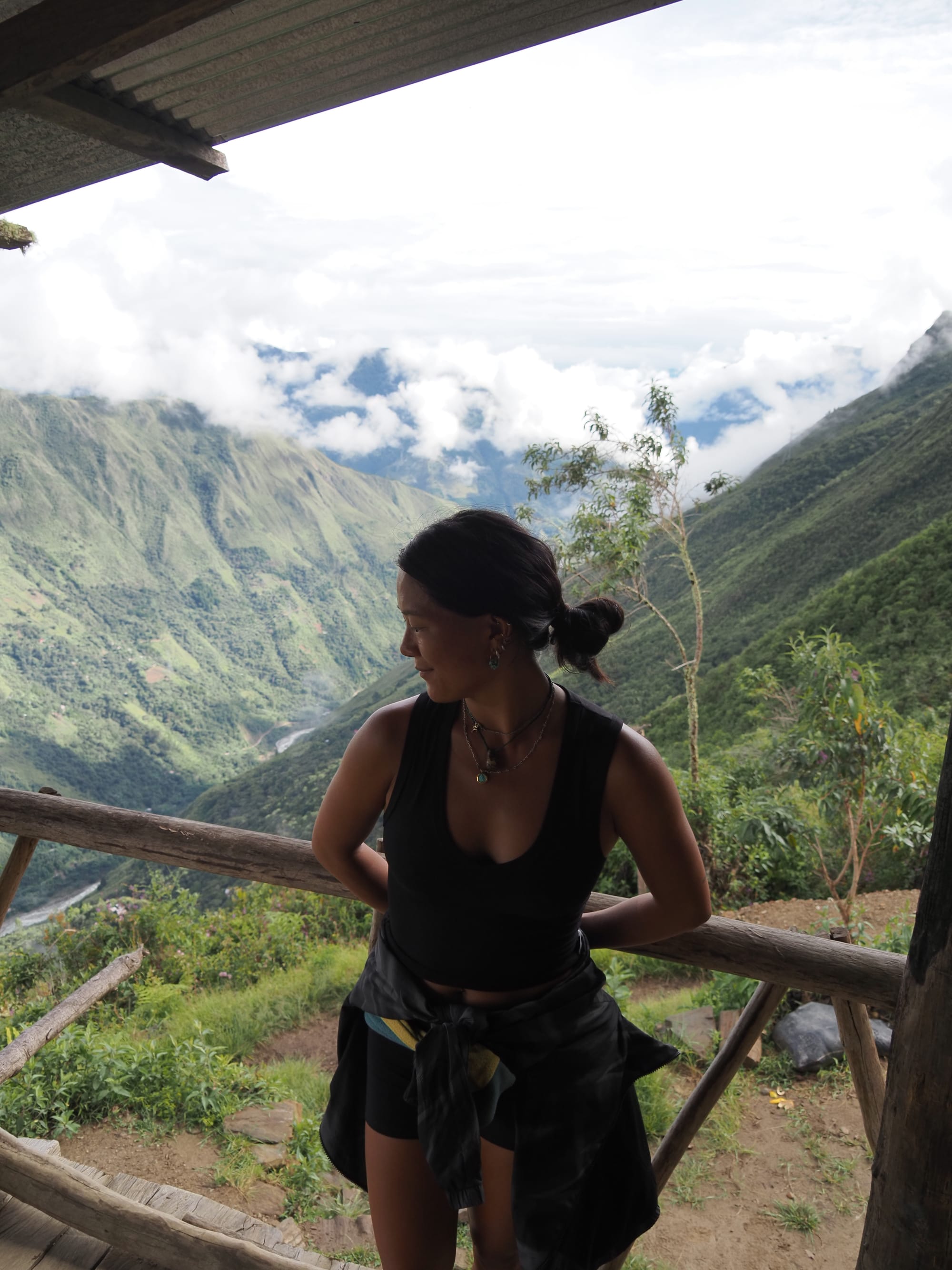
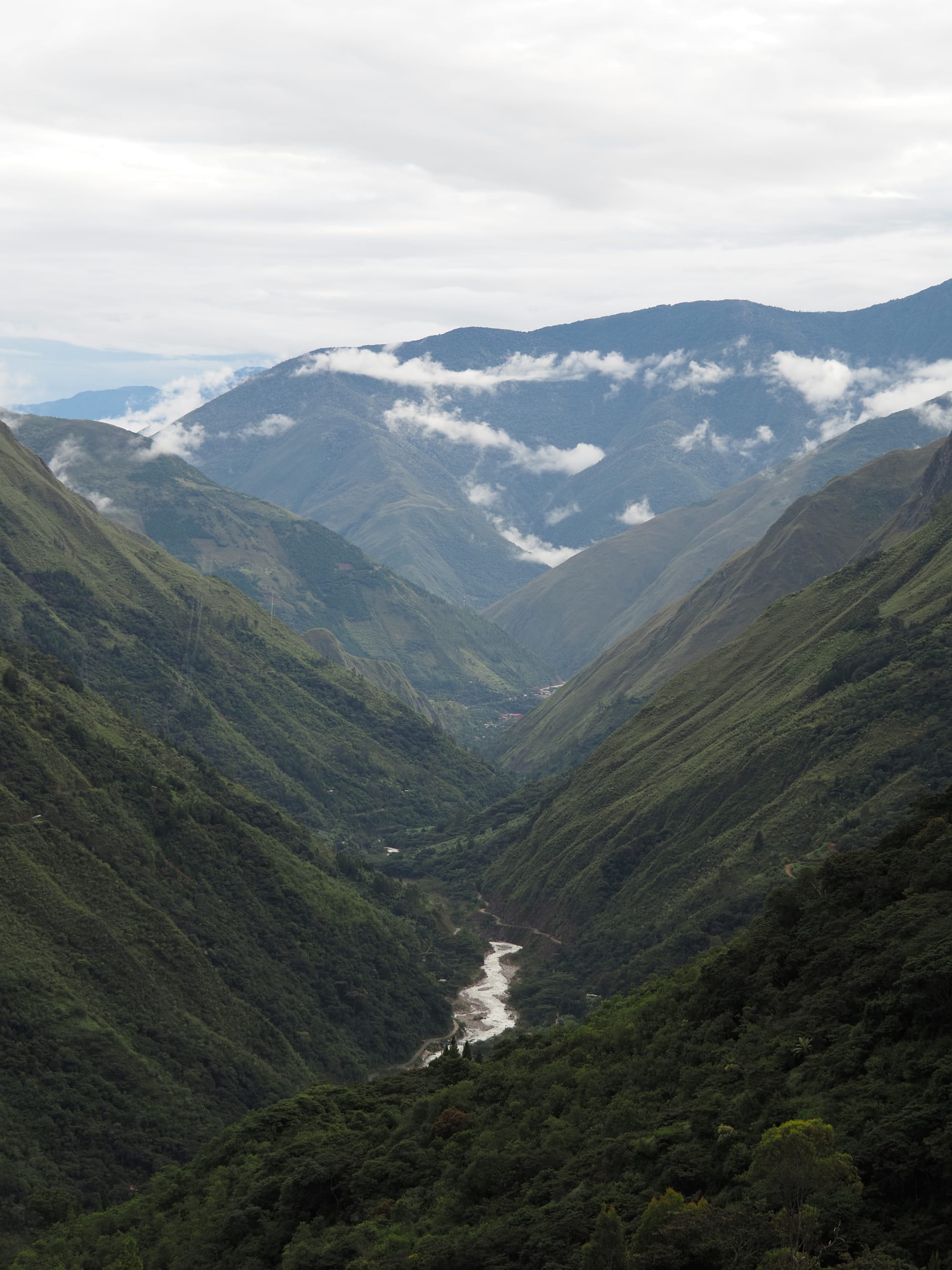
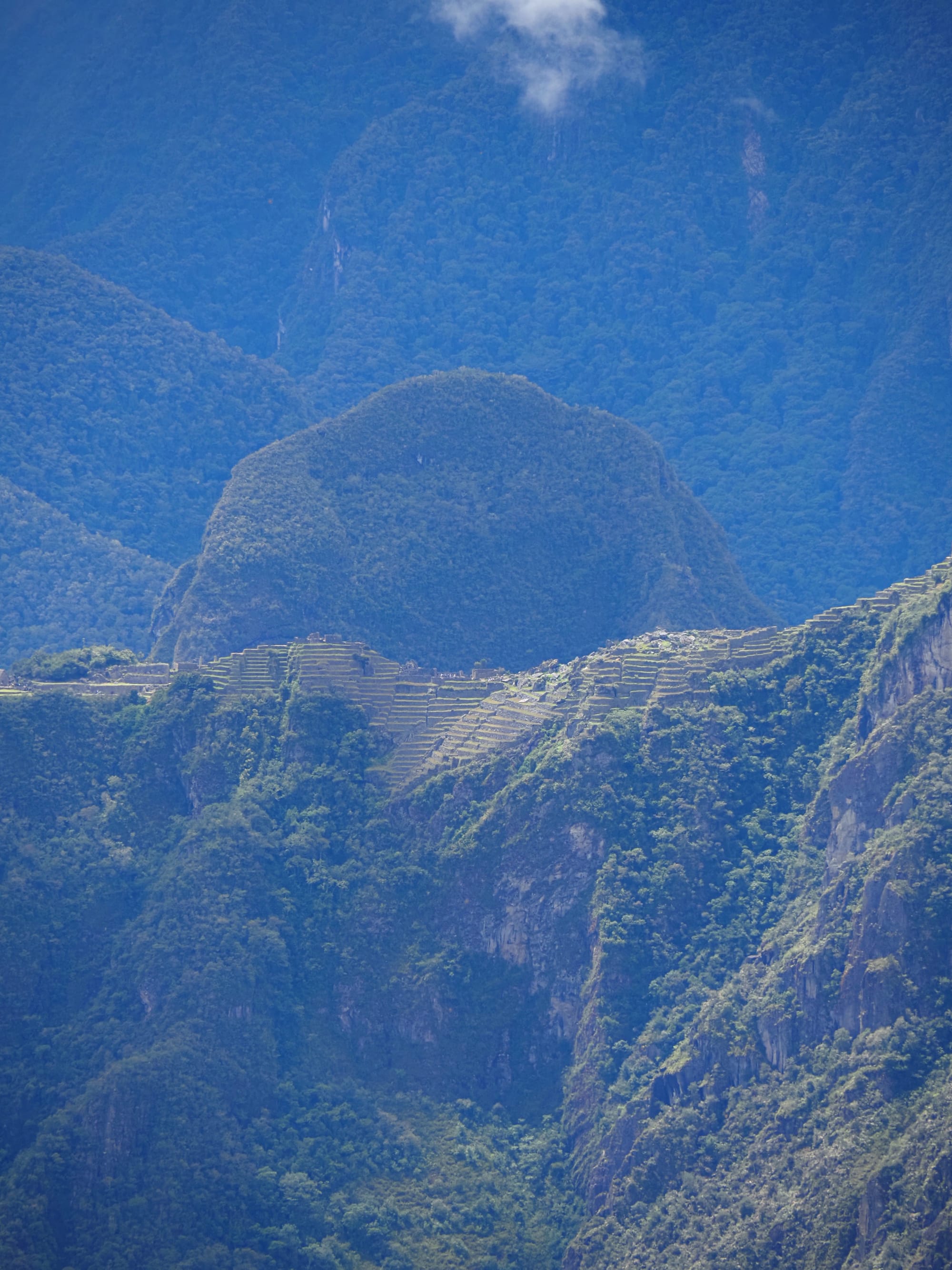
From the viewpoint, we then headed towards Mirador de Llacrapata. This one isn’t normally included with the Alpaca Expeditions itinerary but because we were making good time and the weather was pretty decent, Sergio said we should go there first. From the first viewpoint it is probably about forty minutes away and if you are lucky and the weather is clear, you might get a little surprise at the top. We obviously wanted to see this surprise so raced up to this viewpoint, where, typically as we arrived the clouds came tumbling in and blocked all the views. Luckily as unpredictable as it is within ten minutes the clouds started lifting and we were graced with a little glimpse of Machu Picchu in the distance, which was pretty stunning! That and the surrounding mountains, the views we saw were insane!
We sat up at Llacrapata viewpoint for about thirty minutes (first photo below), taking in the breathtaking views. I would recommend completely covering up here, even if it is really sunny. The sand flies at this viewpoint are lethal, you won’t feel it at the time, but they will 100% be biting you at every opportunity! I annoyingly spent the next three days subconsciously scratching my tiny bites.
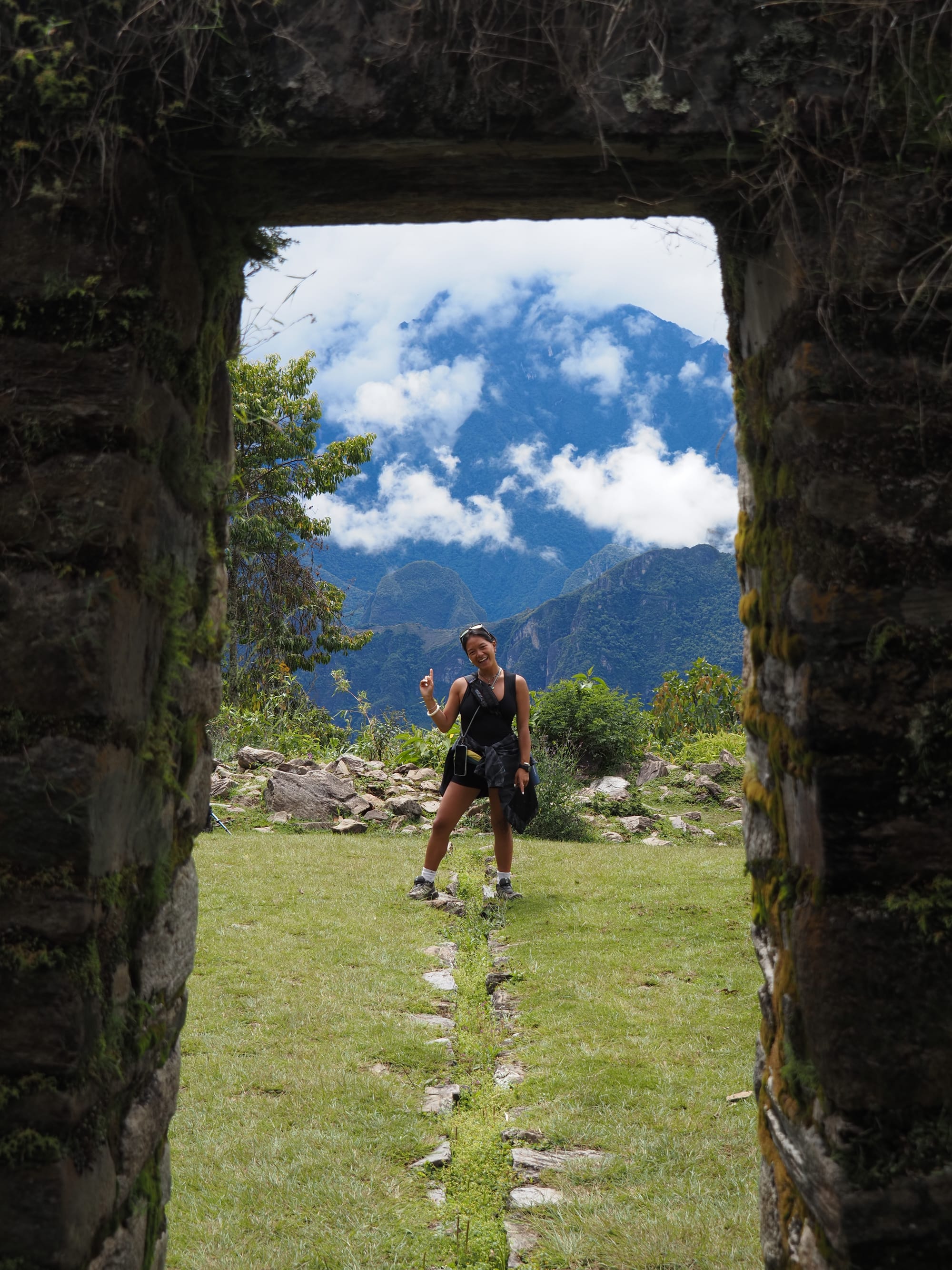
We then headed down to two more pretty incredible viewpoints. The second viewpoint was at some small Inca Ruins around thirty minutes later. Here we got to walk through the ruins and learnt that they purposely built the ruins to directly face Machu Picchu. From the right photo below, you can see me pointing to Machu Picchu and I am standing directly over the path which points there. Pretty amazing view! Our third viewpoint was at Llaqtapata Lodge, another twenty or so minutes later. Here we got to see a 180 degree view of the surrounding green mountains, the valley and Machu Picchu, just wow!
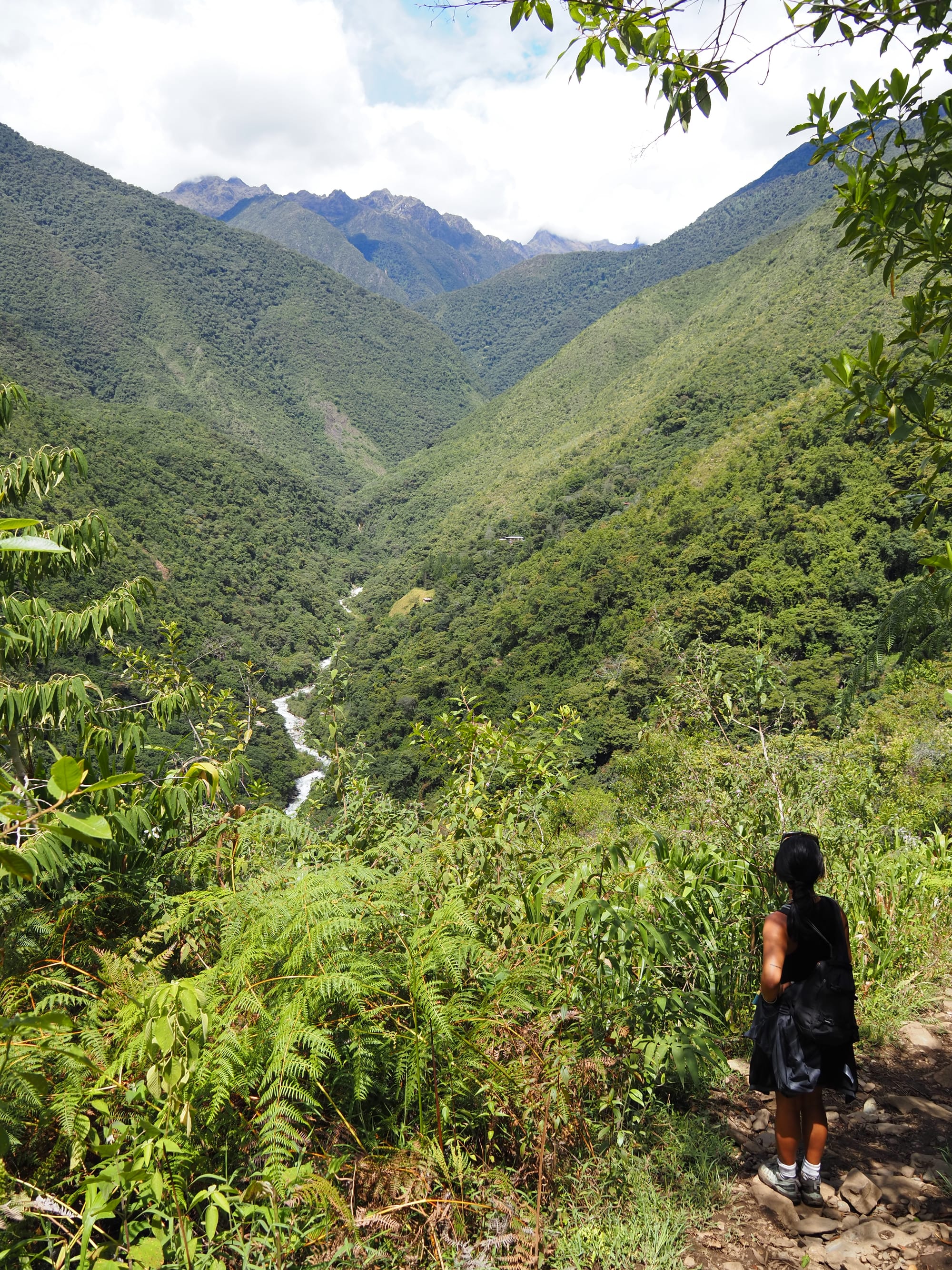
The next part of the hike is probably the hardest of the trip! The three hours to lunch is practically all downhill, is rocky, slippery, muddy and very hard on the knees! We were lucky that the weather was gorgeous, so we could see all the views as we went down. I can imagine those who had cloudy weather would have absolutely hated this part of the trek, as it would have been pretty boring! After two hours of constantly going down hill, you will have to start crossing some landslides…let’s just say it’s better to go over them quickly and to not look down! Once you are at the bottom, it is a flat road for another thirty minutes to our lunch spot. A much needed feast here for all of us, and it was one of the best meals we had on the trip. This lunch is the last meal made from our Super Chef and porters, which is where we give them our thanks, their much deserved tips and say goodbye!
From lunch, it is another two to three hour walk to our fourth nights accommodation! This last part of the day was also pretty long, just because we had to walk on cobbled rocks along a train track the entire time, so it wasn’t the easiest walk of the day!
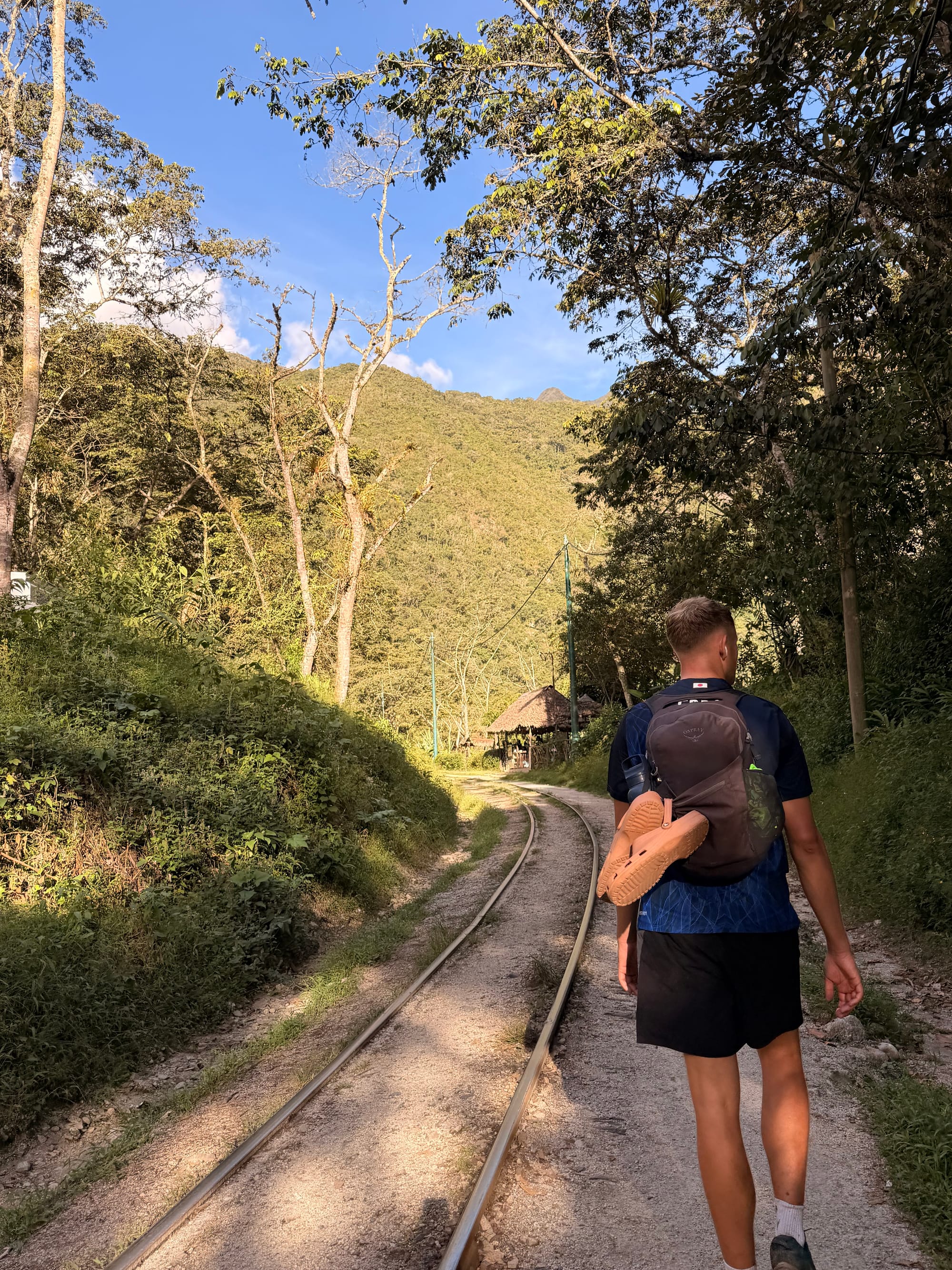
Once we got to Aguas Calientes, we got to check into our hotel!! Yep, our fourth nights accommodation was at a really nice hotel, called Inti Punku. We all had a private room with an en-suite and wow, it was so needed! This hotel room, our last dinner of the trip and breakfast at the hotel were all included in the tour price! We couldn’t believe how nice the hotel was, because we were not expecting that at all! Even though we had proper beds the entire trek, we only had our warm clothes and a sleeping bag, so a comfy double bed was exactly what we needed!
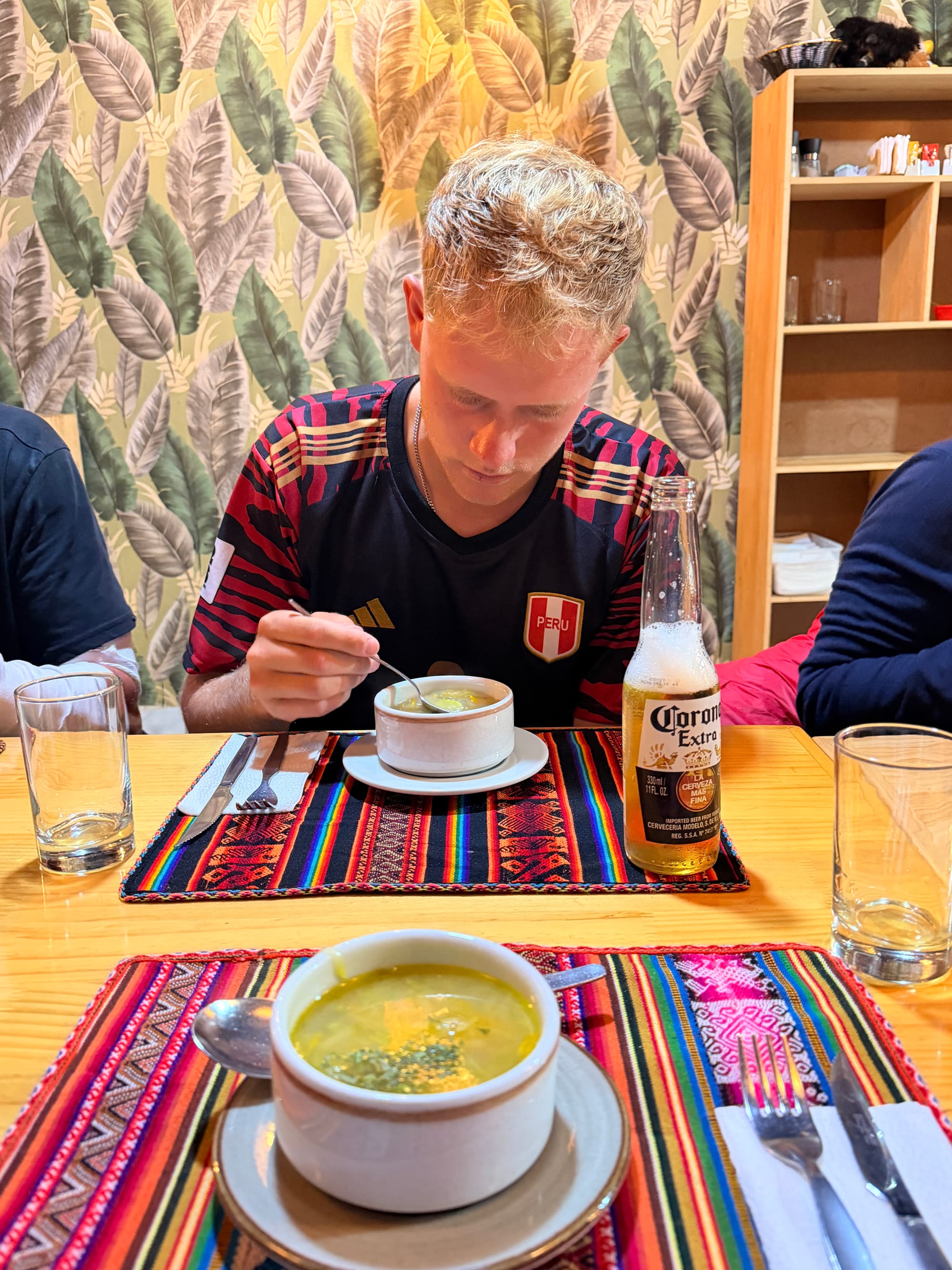
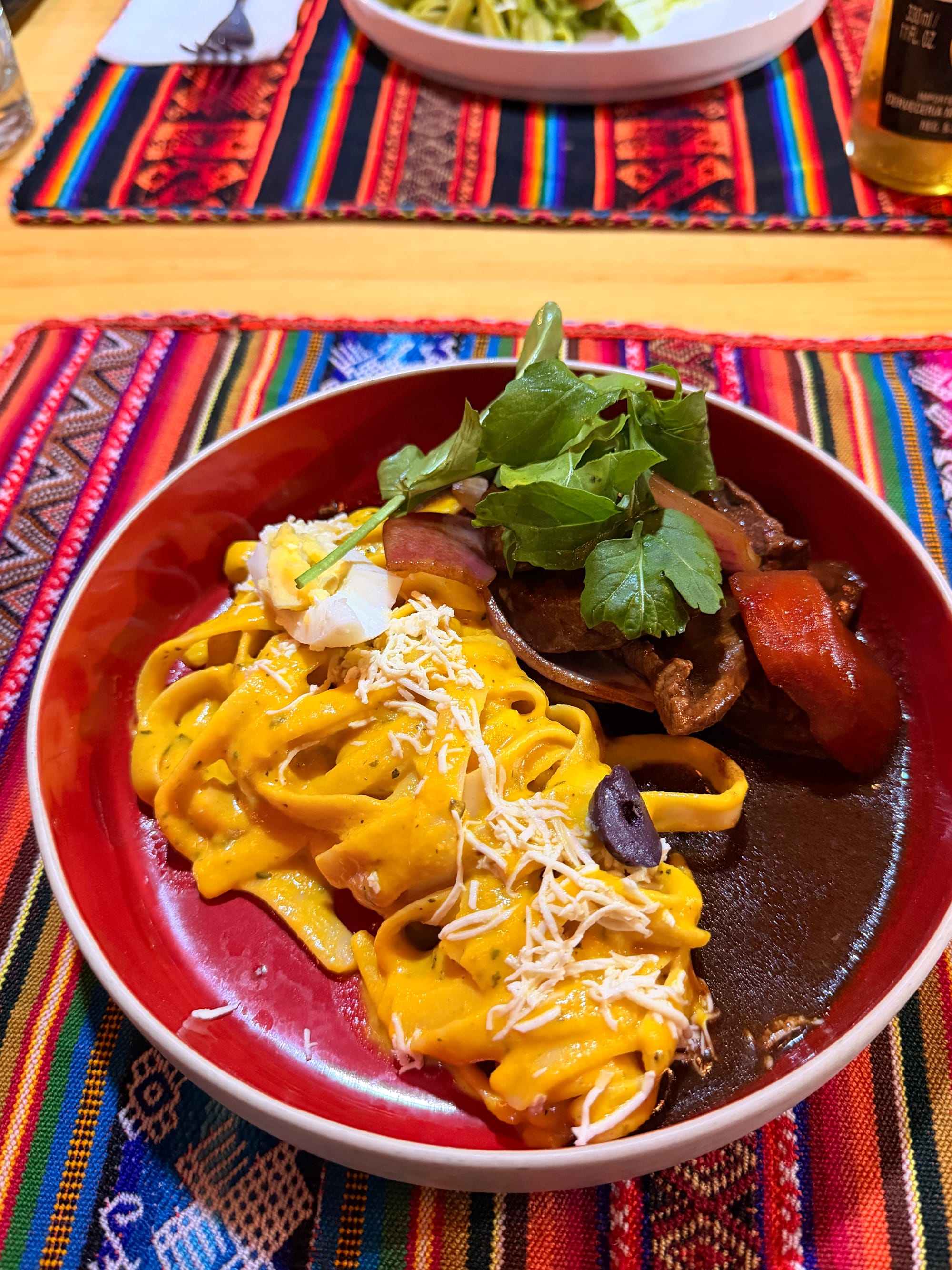
After checking in and freshening up, we all met for dinner, where we went to a local restaurant called Mis Ancestros. This restaurant as mentioned before, work with Alpaca Expeditions and provide everyone their last meal of the tour. We got to choose both a starter and a main for our meals, which of course Ned and I shared. Drinks were not included , which is completely fair in my opinion and we treated ourselves with a beer. We then all had another early night before our final day!
Day 5
Machu Picchu Day!!! We didn’t think the tour could have gone any better, but it did! We were treated with gorgeous weather for our day of going up to Machu Picchu.
We woke up at 4:30am, to have breakfast at 5am, check out and be ready for our shuttle bus at 5:30am. With our tour, the price of the shuttle buses up and down to Machu Picchu were also included in our price. However, there are some tours where that isn’t included or just a one way ticket, the bus up but you have to walk down. We bumped into a couple people who had to walk both ways and they said out of the five days this hike was the hardest because of the length, steepness and just being at the end of the trek, so they were very tired! If your tour doesn’t include it, the shuttle bus is only 12 USD each way, so you should definitely buy your ticket on the day if you want!
We were very happy that we had the buses to take us up and they were between 6am and 7am. The bus takes around 25 minutes to get to the entrance of Machu Picchu, but if you are even a couple of minutes late within your time bracket, you might be turned away for a later time! This happened to some of our group. They were late by three minutes and even though their time was between 6-6:30am they had to come back at 7am to be let in! You don’t want to be late and miss your chance to see Machu Picchu, so take this into account and speak to your guide if you are worried about timings.
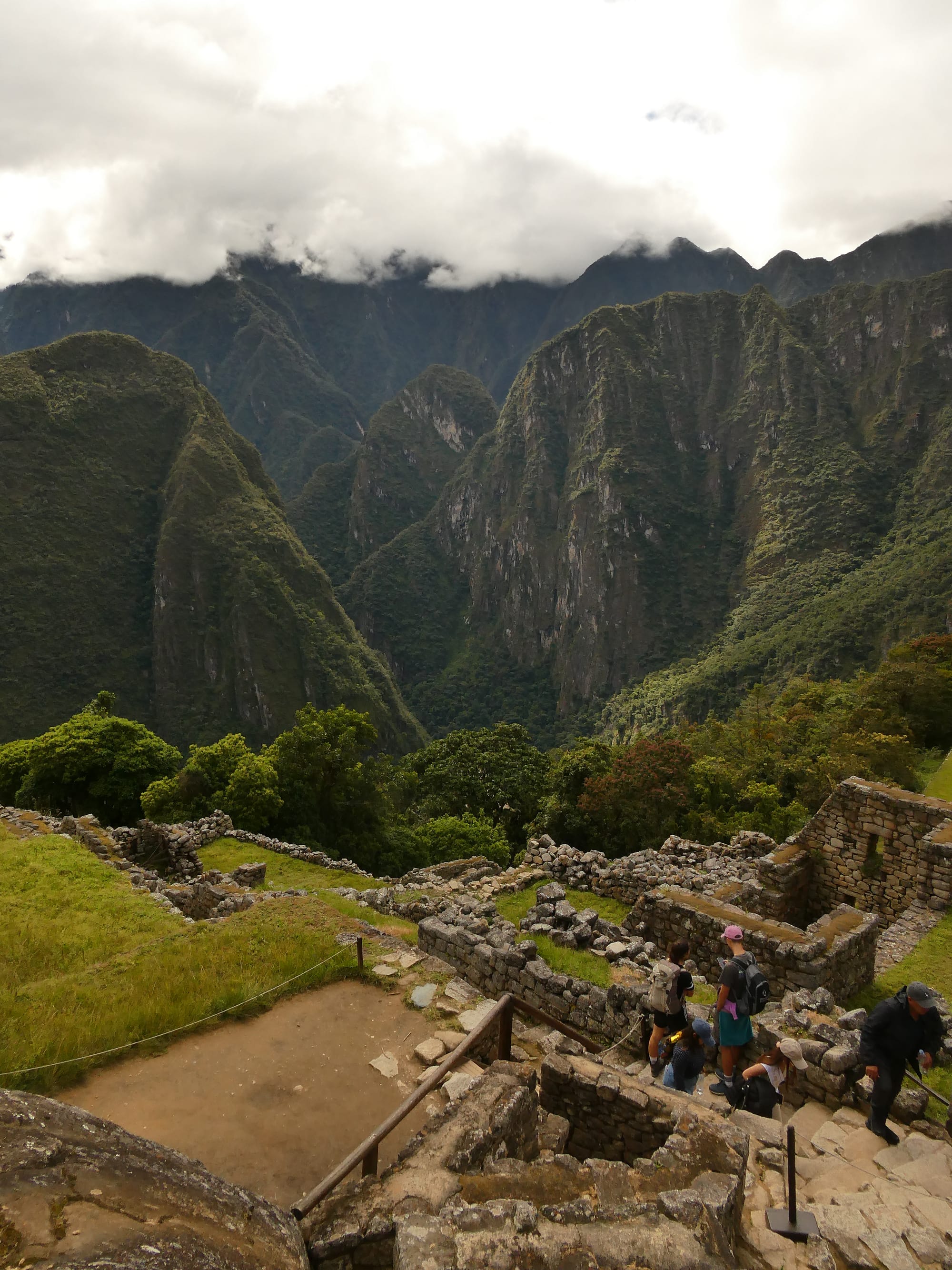
Once you are at the entrance to Machu Picchu, you get the opportunity to go to the bathroom. This is the only chance to do this within the tour, as they don’t have facilities inside. Once you are in all you need to do is follow the directions for the Circuit you are doing and then you start the tour!
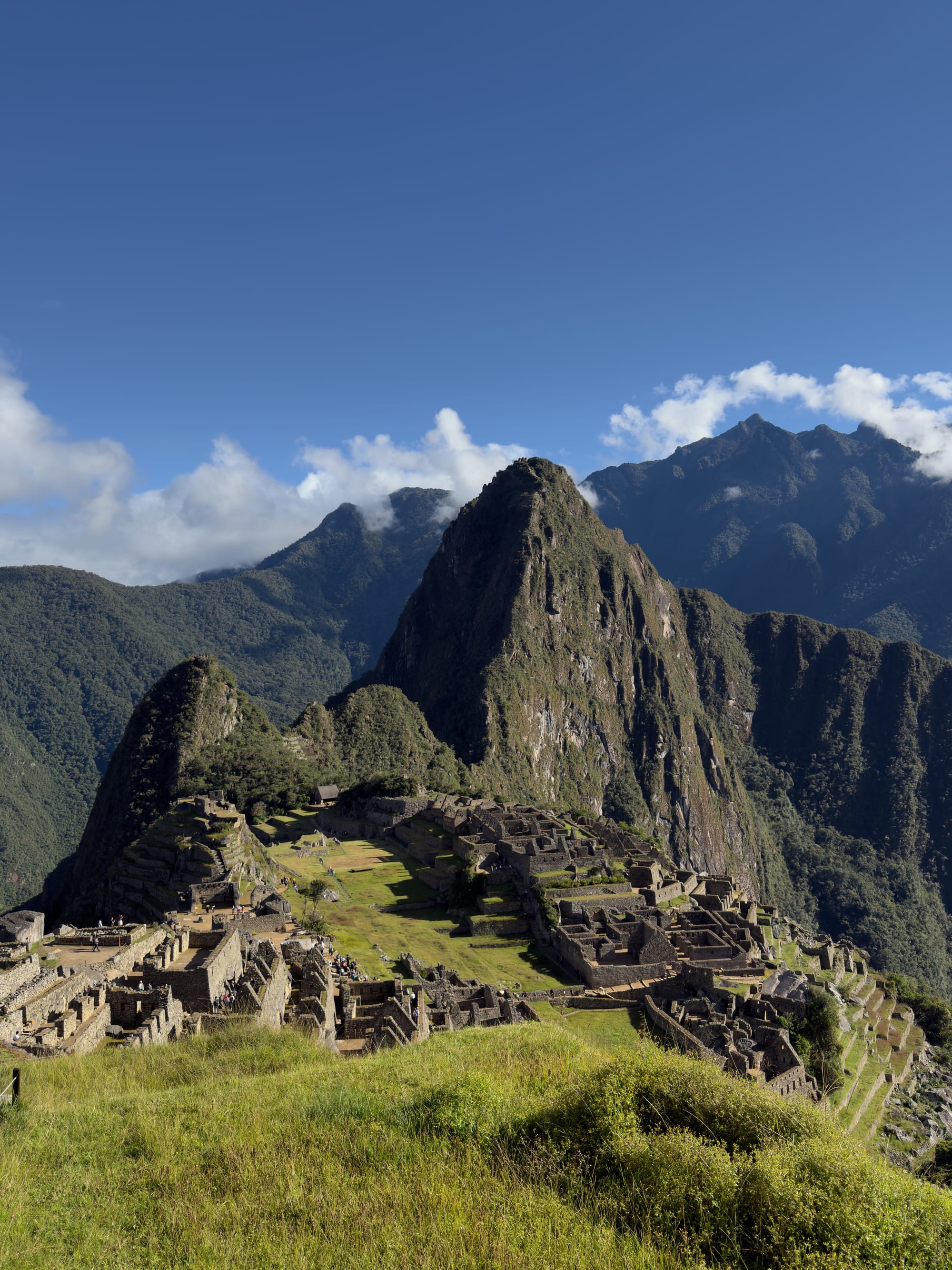
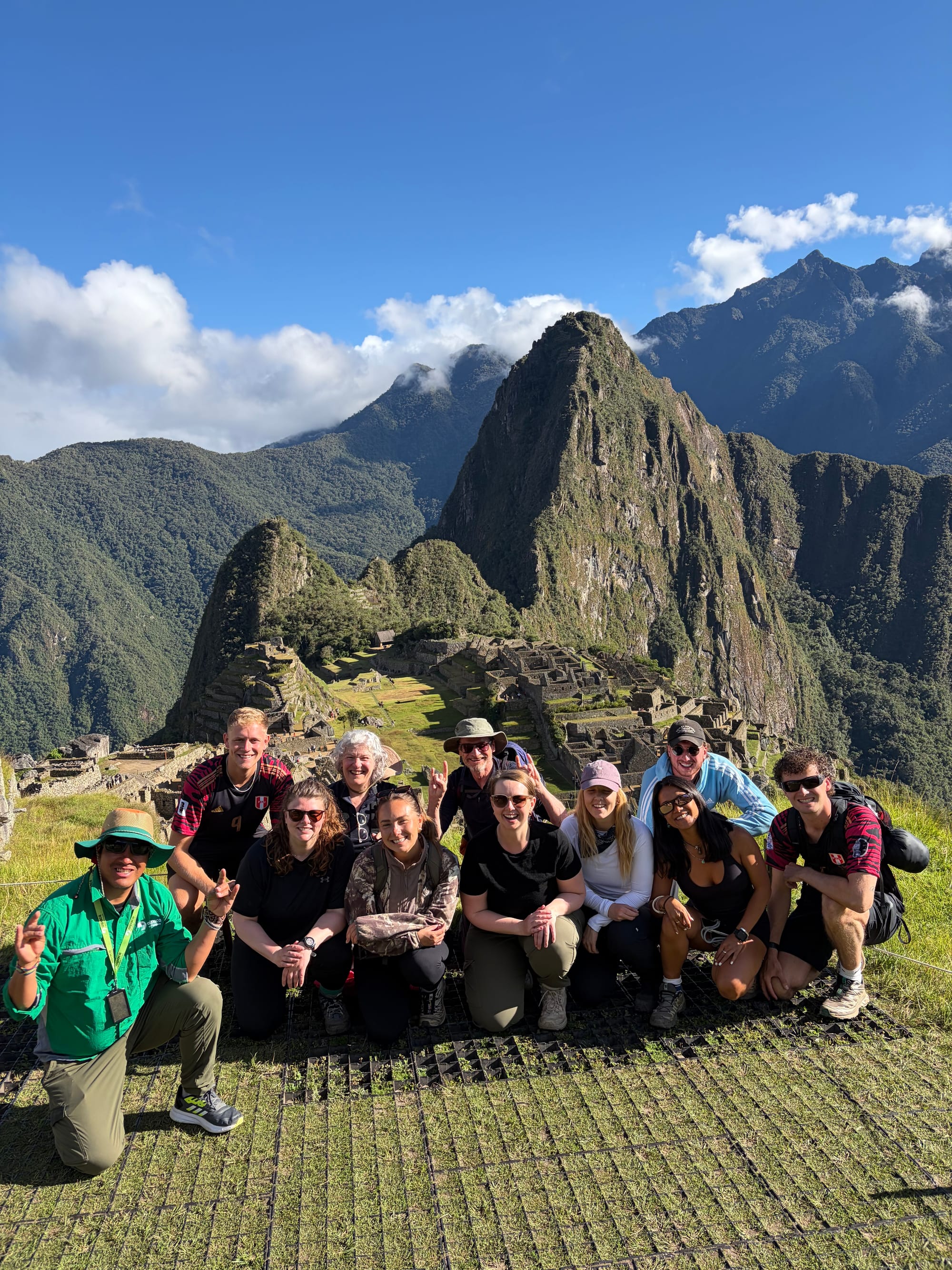
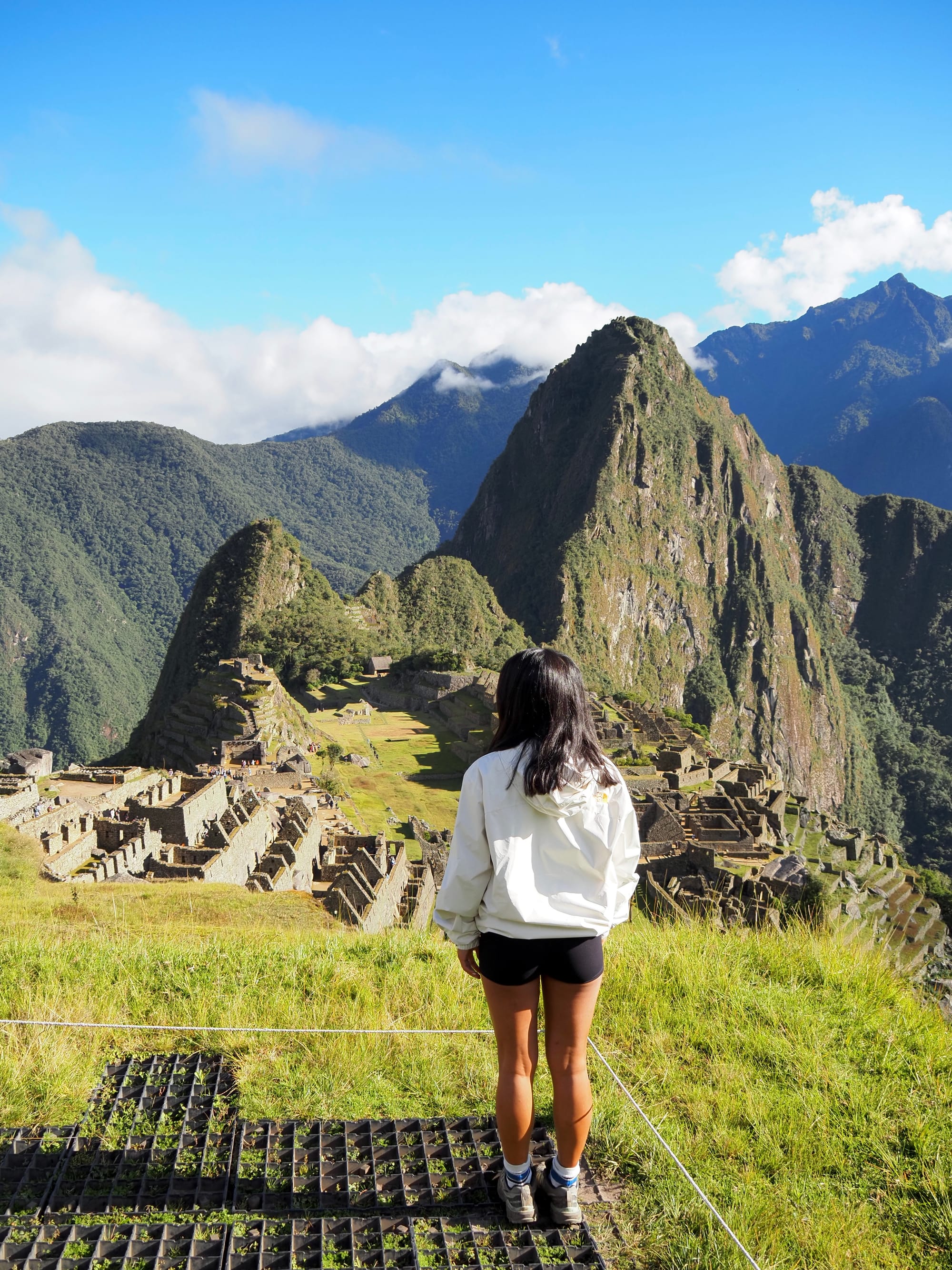
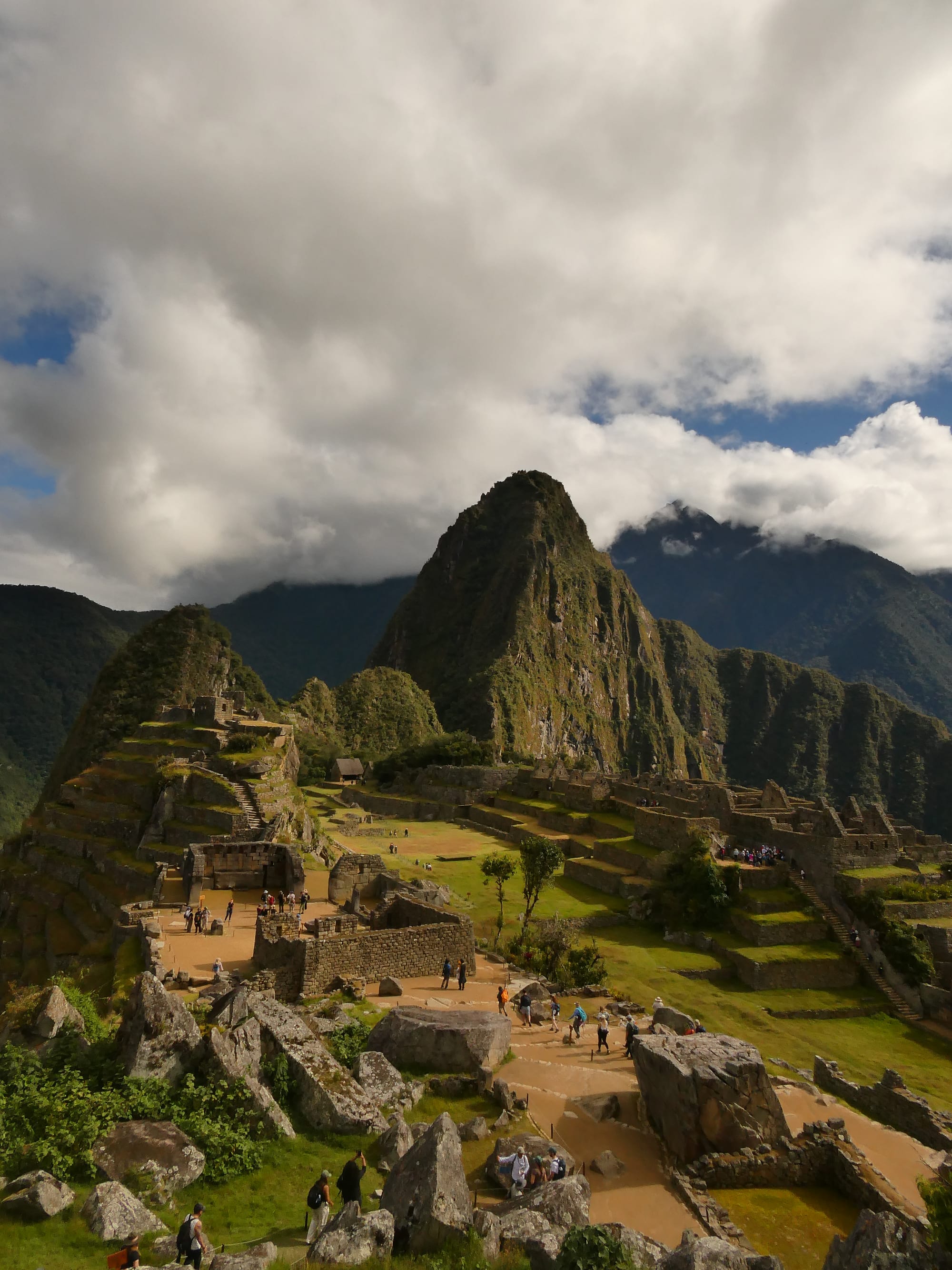
For Circuit 2, you slowly start going upstairs to see Machu Picchu from above for the iconic postcard view. Here, there are loads of different spots to get your photos and where you can take in the incredible views. A proper pinch me moment, because this has been on my travel list for so long! When we arrived it was pretty cloudy but as the minutes went by, the weather changed dramatically. Sometimes groups have to wait an hour or more for the weather to clear, as it is so unpredictable, whilst we know some people who have had no views at all. We were extremely lucky!
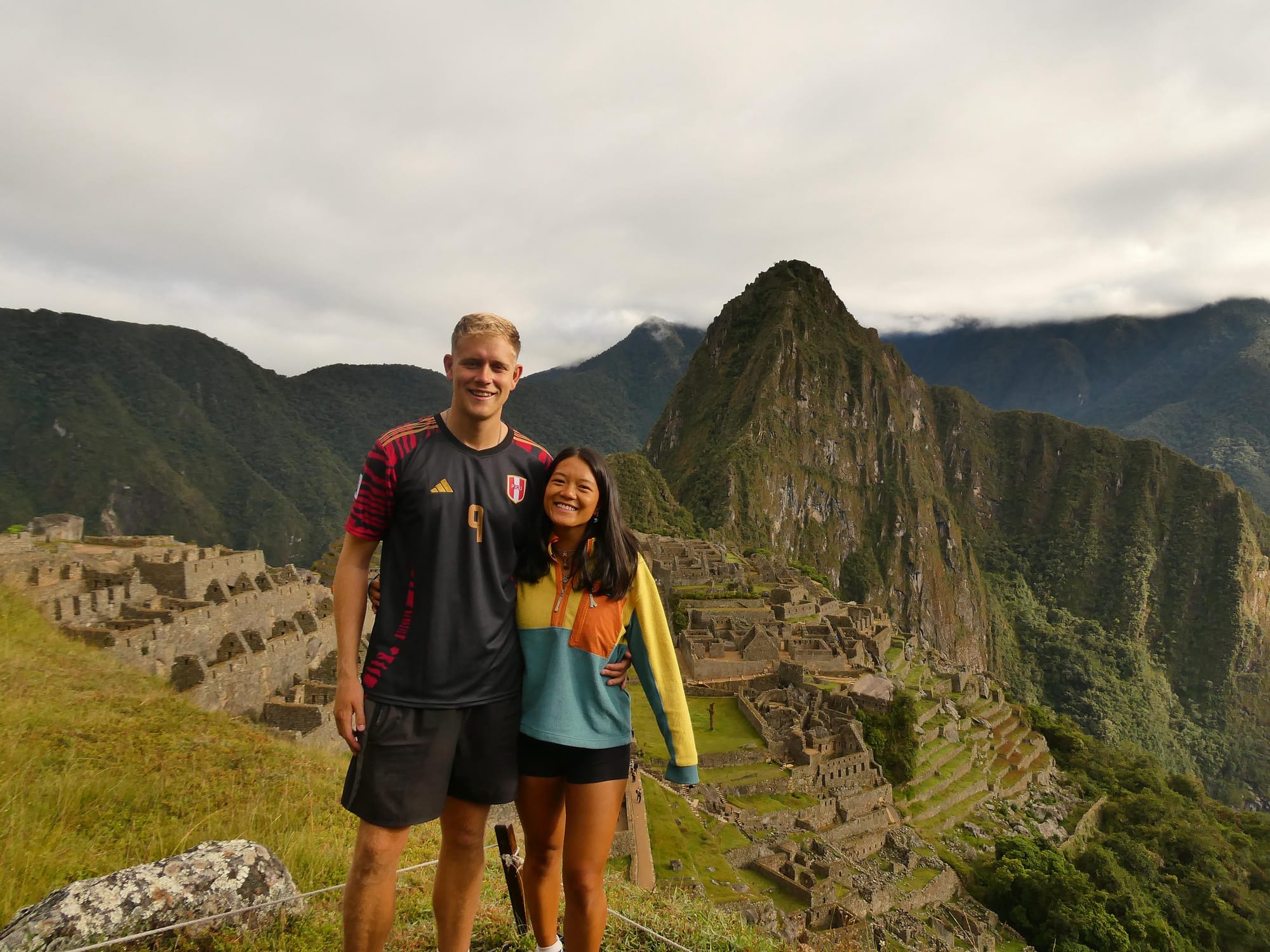
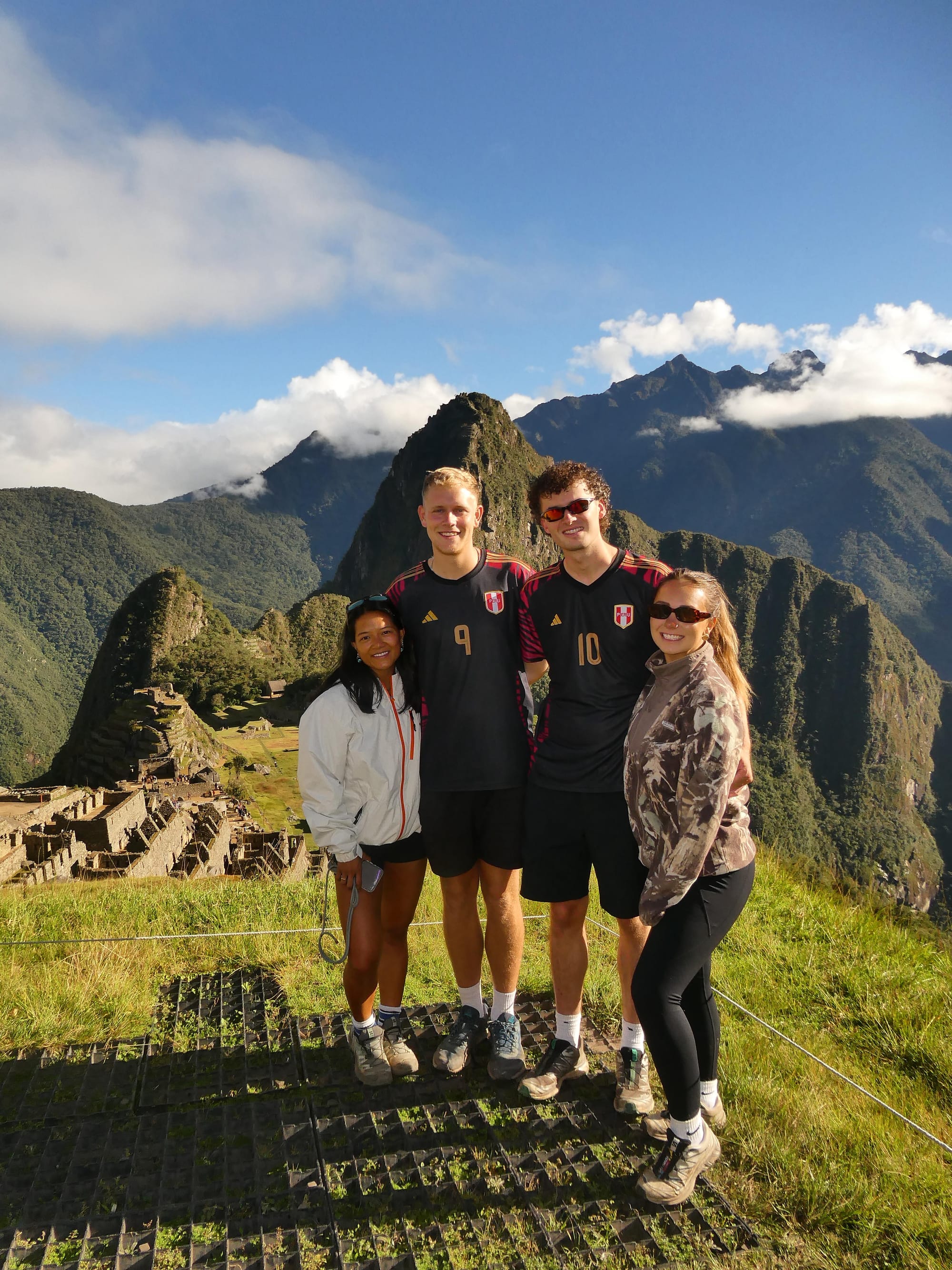
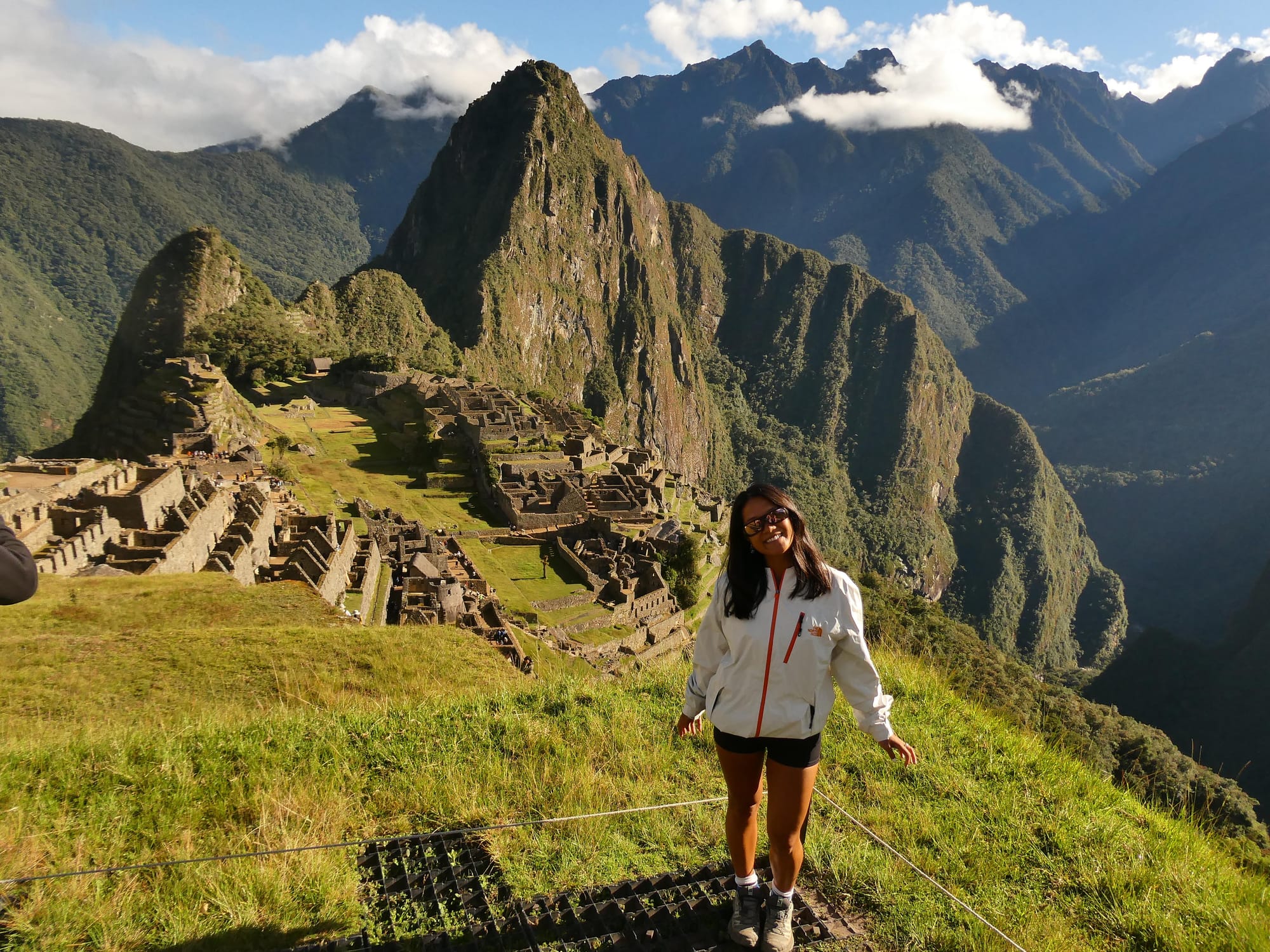
Once you have got your photos, you start making your way down into the ruins. For this part of the Circuit, as I mentioned earlier, we had another guide called Javier. He was extremely good and we learnt a lot of interesting facts about Machu Picchu, a couple of our favourites were:
- The man who discovered Machu Picchu, wasn’t a proper archeologist, so he ordered the locals to burn all the vegetation, which had grown over Machu Picchu to clear it. But in turn, that destroyed all the natural roofs and blackened all the stonework, and potentially ruined countless artefacts.
- They also believe that there is a large portion of Machu Picchu that is yet to be uncovered under the surrounding vegetation and proper archeological uncovering could take up to 50 years to reveal the rest.
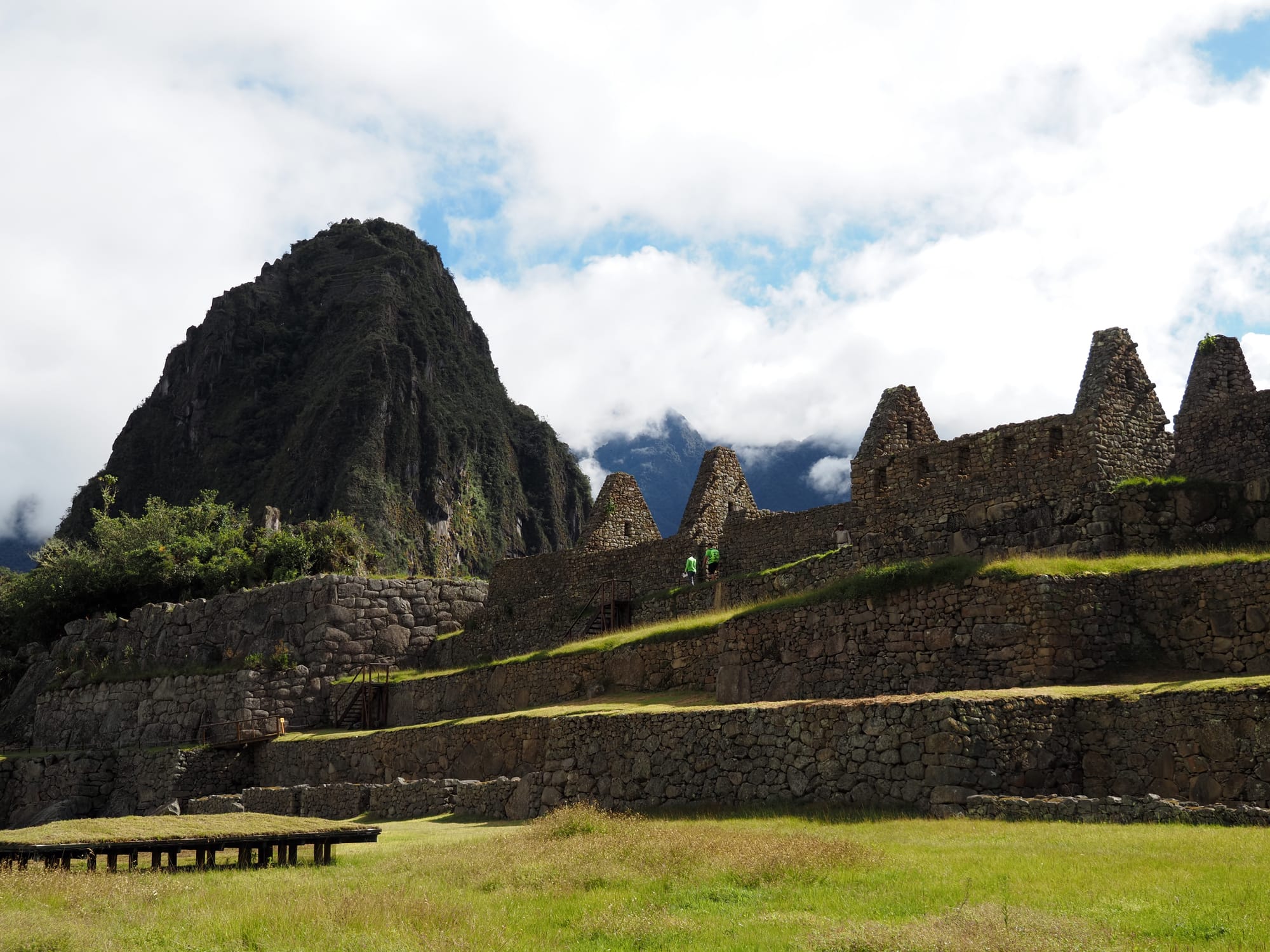
- We learnt that the Incas built a round sun building, known as the temple of the Sun on Machu Picchu, which helped tell the time and seasons. The windows in the building were designed to capture sun rays during June and December solstices, which helped the Incas to track the equinox and determine the right time for agriculture seasons. For example, during the June solstice (winter), the sun would hit directly through one window of the building, signalling the shortest day of the year and then during the December solstice (summer) the sun would hit the opposite window. This was how they identified the seasons at the time, before the months were created.
- Lastly, we learnt that they will sadly be stopping Circuits 2 and 3 within the next few years to avoid the ruins collapsing under the stress of thousands of tourists each year. Circuit 1, the postcard view from the top will be the only one available.
Conclusion
Overall, if Machu Picchu wasn’t on your travel bucket list, it should be now! The best five days we have ever had, and probably in the top three highlights of our trip so far. We couldn’t stop saying wow the entire trip and felt very lucky with the company that we went with. Thank you to everyone at Alpaca Expeditions for making our trip so amazing!