Bolivia🇧🇴

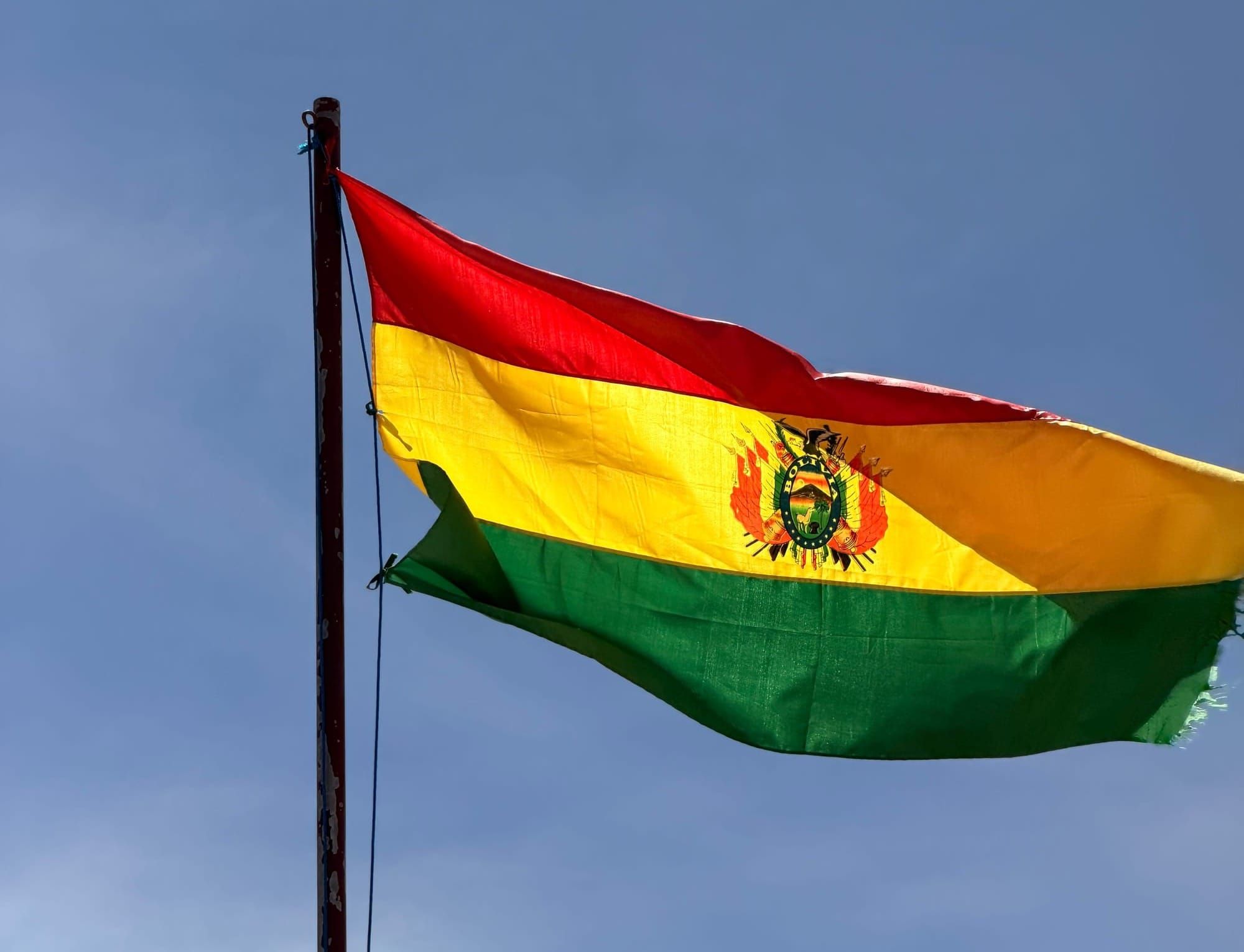
Our fifth country of our South America trip is Bolivia! We chose to go via land border from Brazil. To do this, we got a bus to Corumba, which is a town in Brazil by the border. Even though the border is technically open 24/7, the immigration office closes at 6pm every day, meaning we had to spend one night in Corumba first. This is because we are required to get our passport stamped exiting Brazil and into Bolivia. Spend only one night in Corumba, as there’s not a lot to do there and it is a pretty dodgy place at night. We found the cheapest hotel we could find and then left at 7am the next morning.
The immigration offices open at 8am, so get there early to start queuing. It took us about two hours to go through immigration on both sides and then we caught a nine hour bus to Santa Cruz, which was the first bus of the day at 11am. At the bus station you can also exchange any Brazilian Reals or US Dollars into Bolivianos.
Big Tip: Before you come to Bolivia, have as much USD cash as possible! This is because the exchange rate from USD into Bolivianos at a local company is a lot better than withdrawing Bolivianos cash from a ATM. We luckily had 700 USD left over from Ecuador and were able to exchange this, where we got double what it said we would get online. If you can’t get any dollars, the next best thing is to use Money Grab. This app allows you to withdraw money from the bank but at a really good rate, meaning we were able to get more Bolivianos for our money. All you need to do is send money across on the app, go to the bank that you choose and pick the cash up. Make sure to bring your passport with you as you will need it as well as a paper copy of it, which you can normally print out near the bank. The bank asks for a copy to keep when you get money out, and also asks you for your signature for security checks. Make sure your details match your passport as otherwise you won’t be allowed to collect the money. We nearly had an issue with an old signature!
Santa Cruz
There isn’t a lot to do in Santa Cruz and it personally isn’t the nicest place, so I would recommend only one full day here! We ended up staying here for a few days to relax, as we were waiting for Spanish school to start.
Plaza de 24 & Market
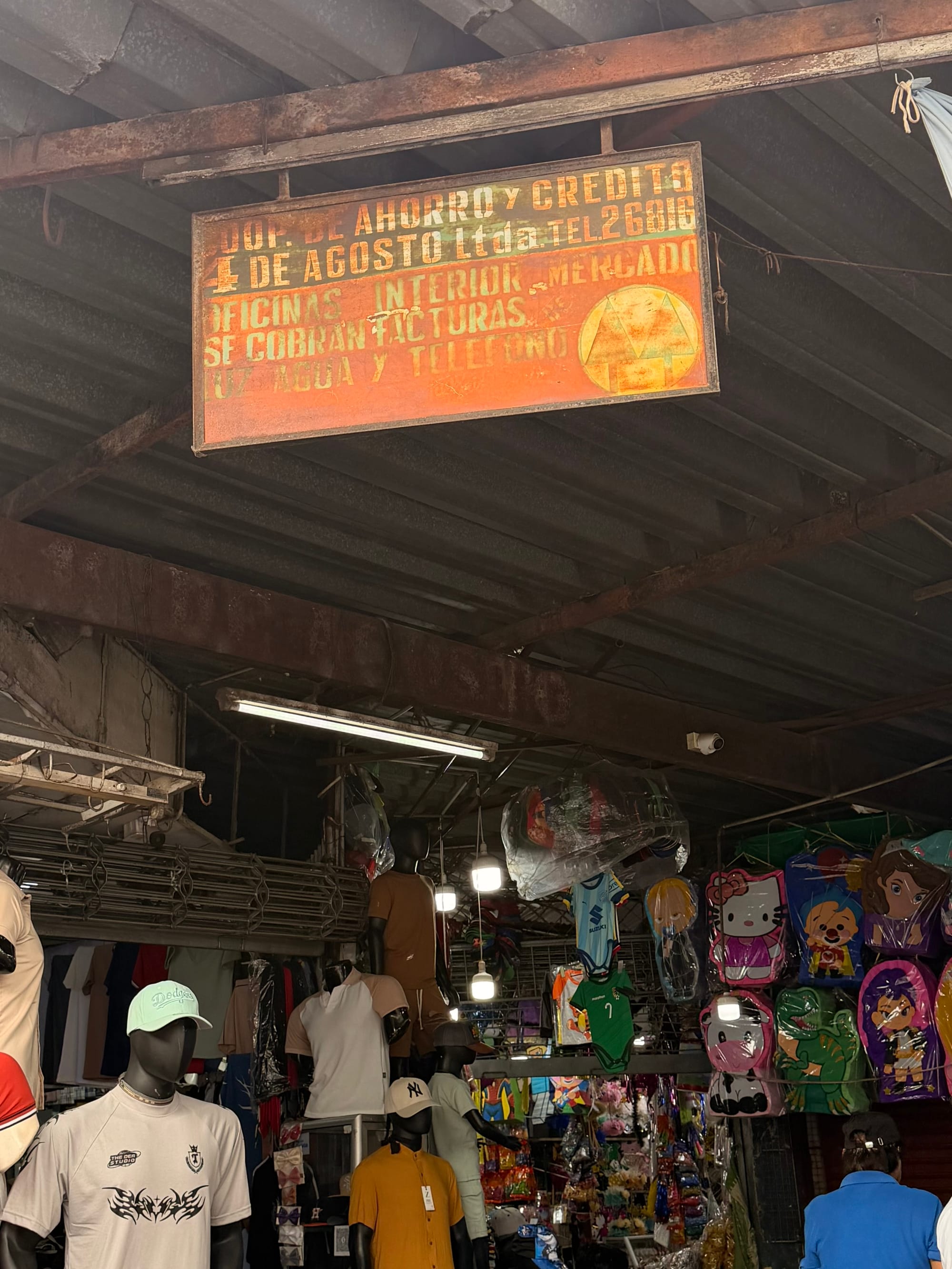
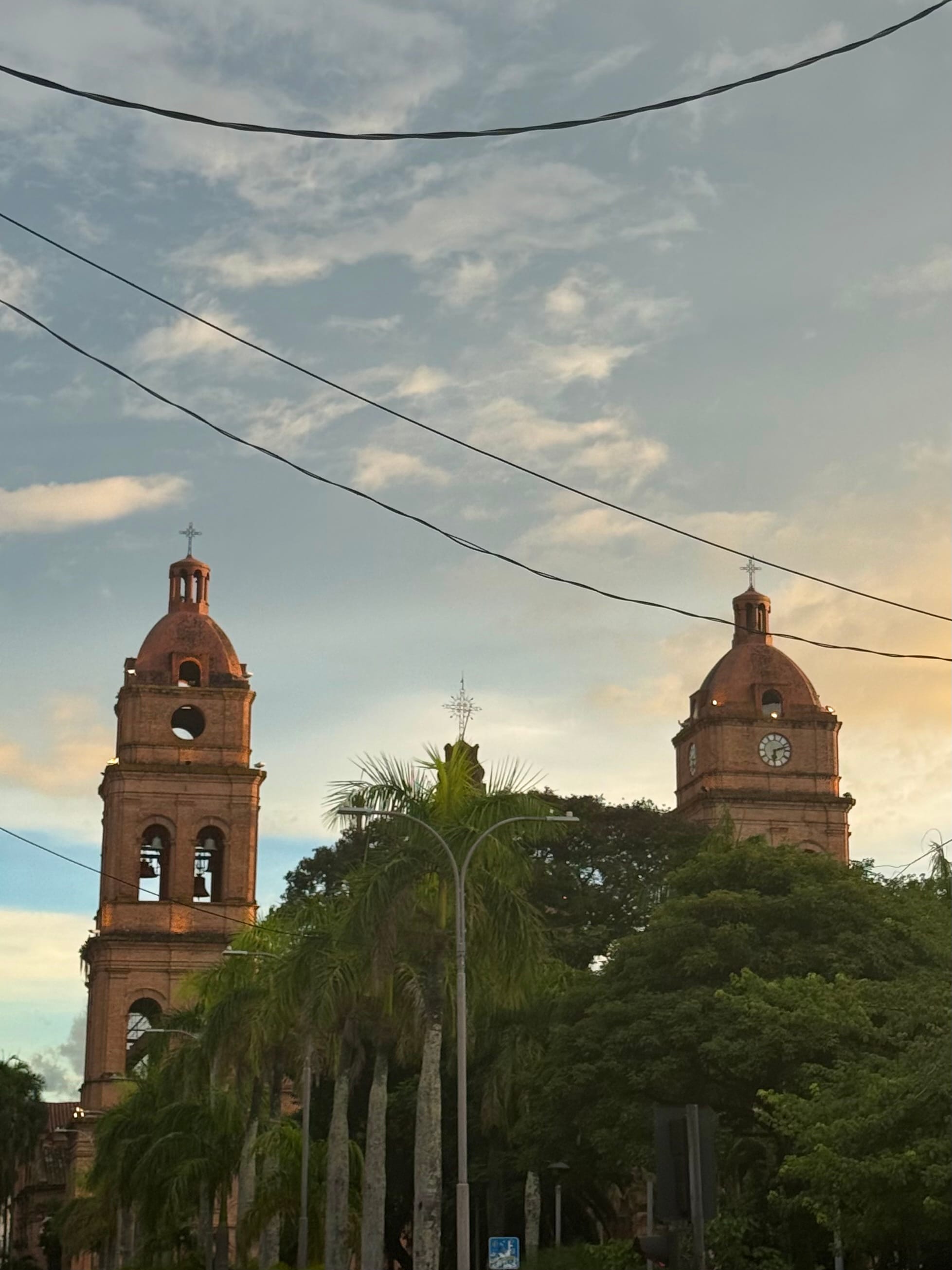
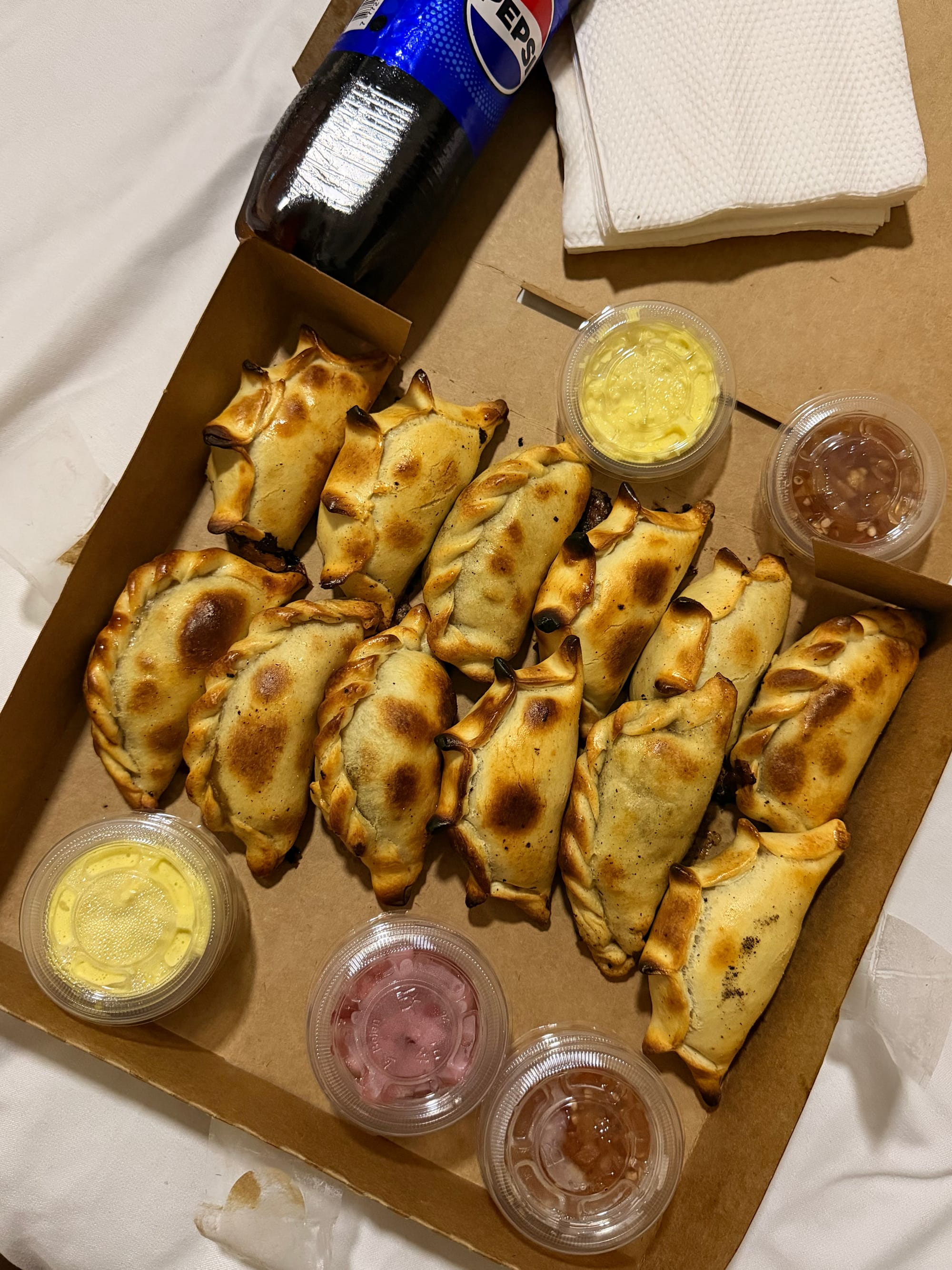
The two things we did do, were walk to the main Plaza de 24 and explore the different street food markets.
Samaipata
For a change of scenery, we decided to spend one full day and night in Samaipata, a small, cute town only three hours away from Santa Cruz!
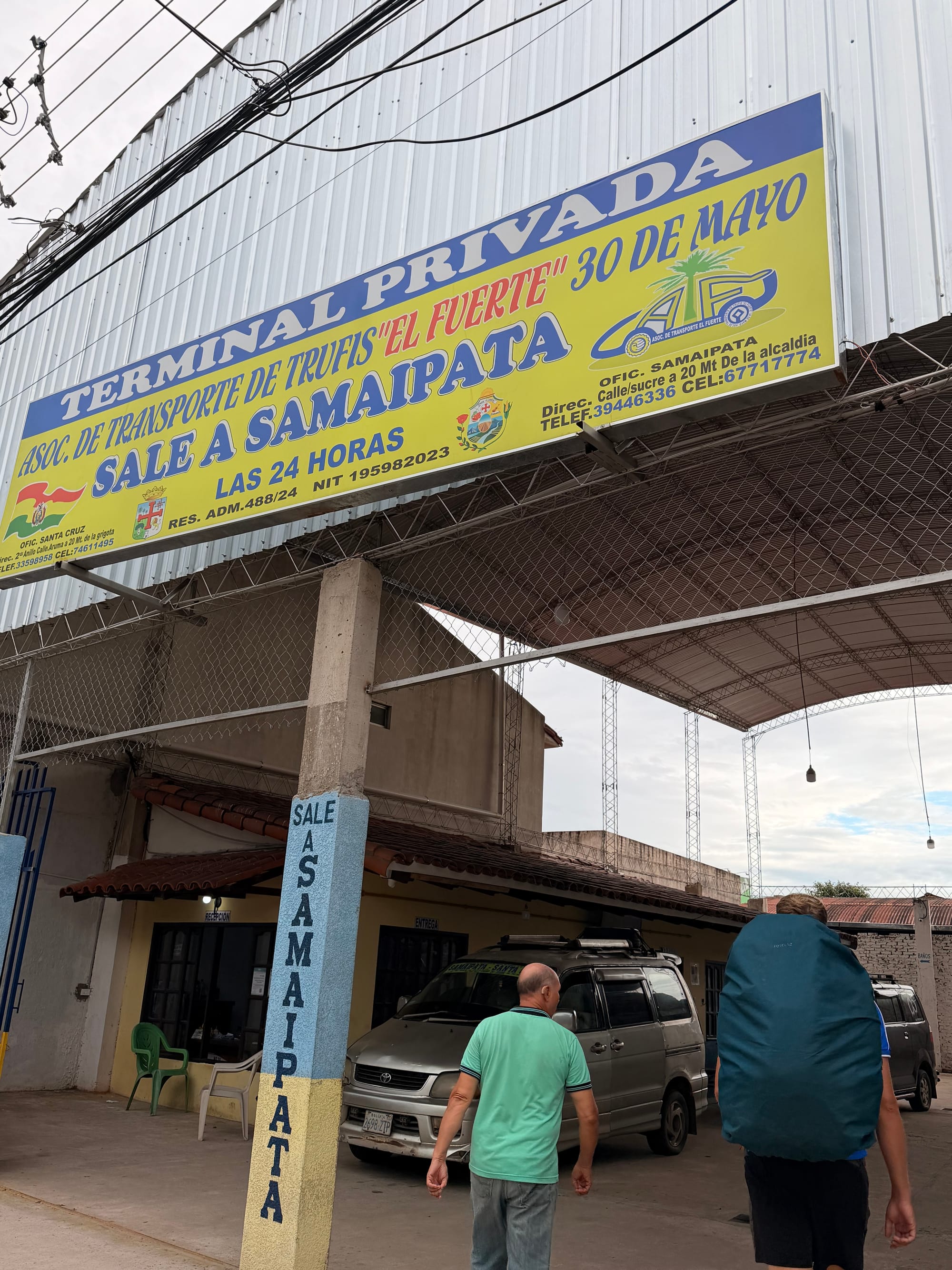
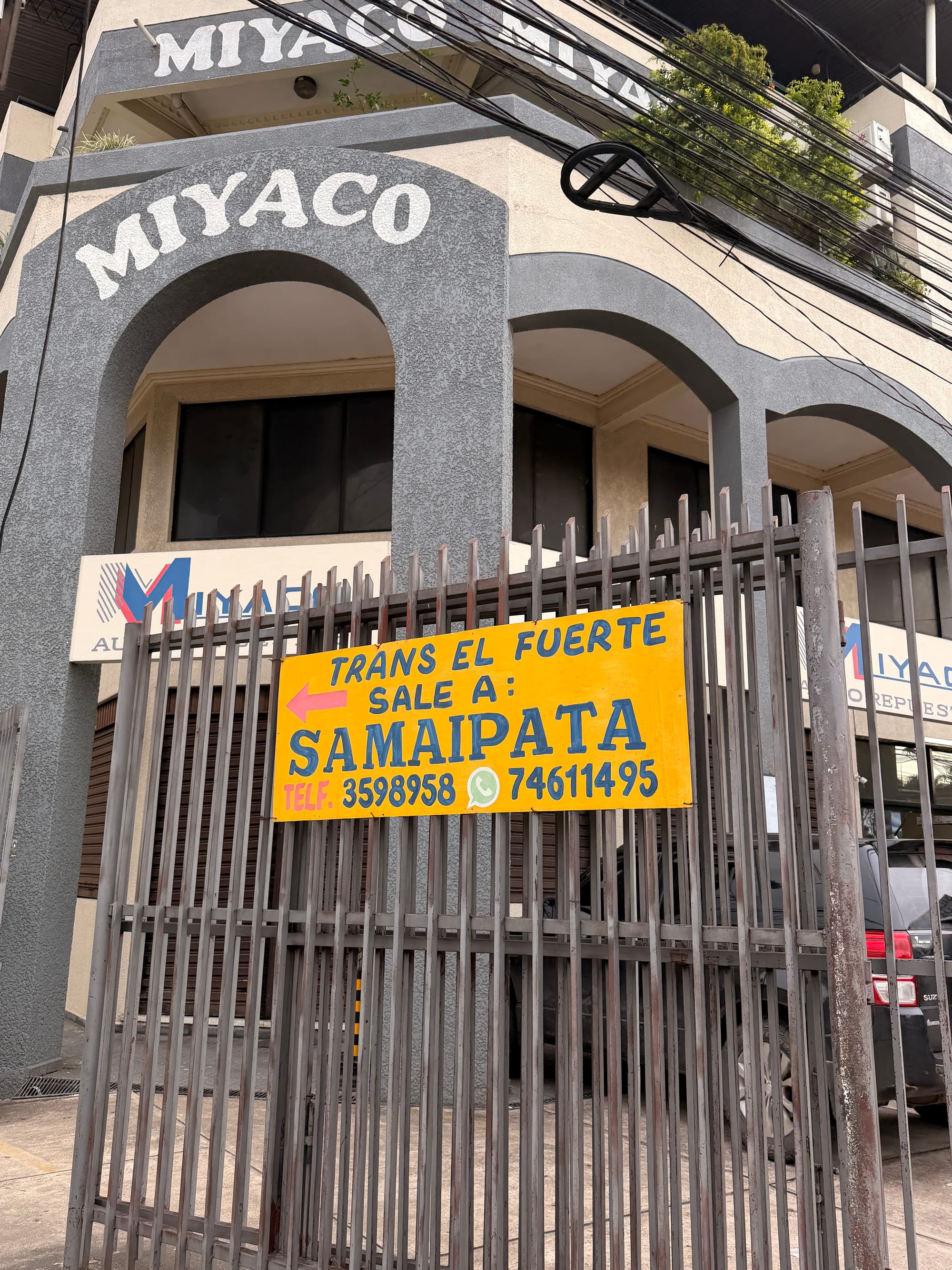
We got a shared taxi, which is a little tricky to find! Go to Monument To The Chiriguano which is on Avenida Grigotá, and in the middle of a roundabout. You will then see the sign in the picture below on road Calle Isabel La Católica. Here is where people go to find a share taxi for Samaipata. We got there around 8:00am and didn’t leave till 9:00am as the drivers normally wait until they have at least four people before they leave.
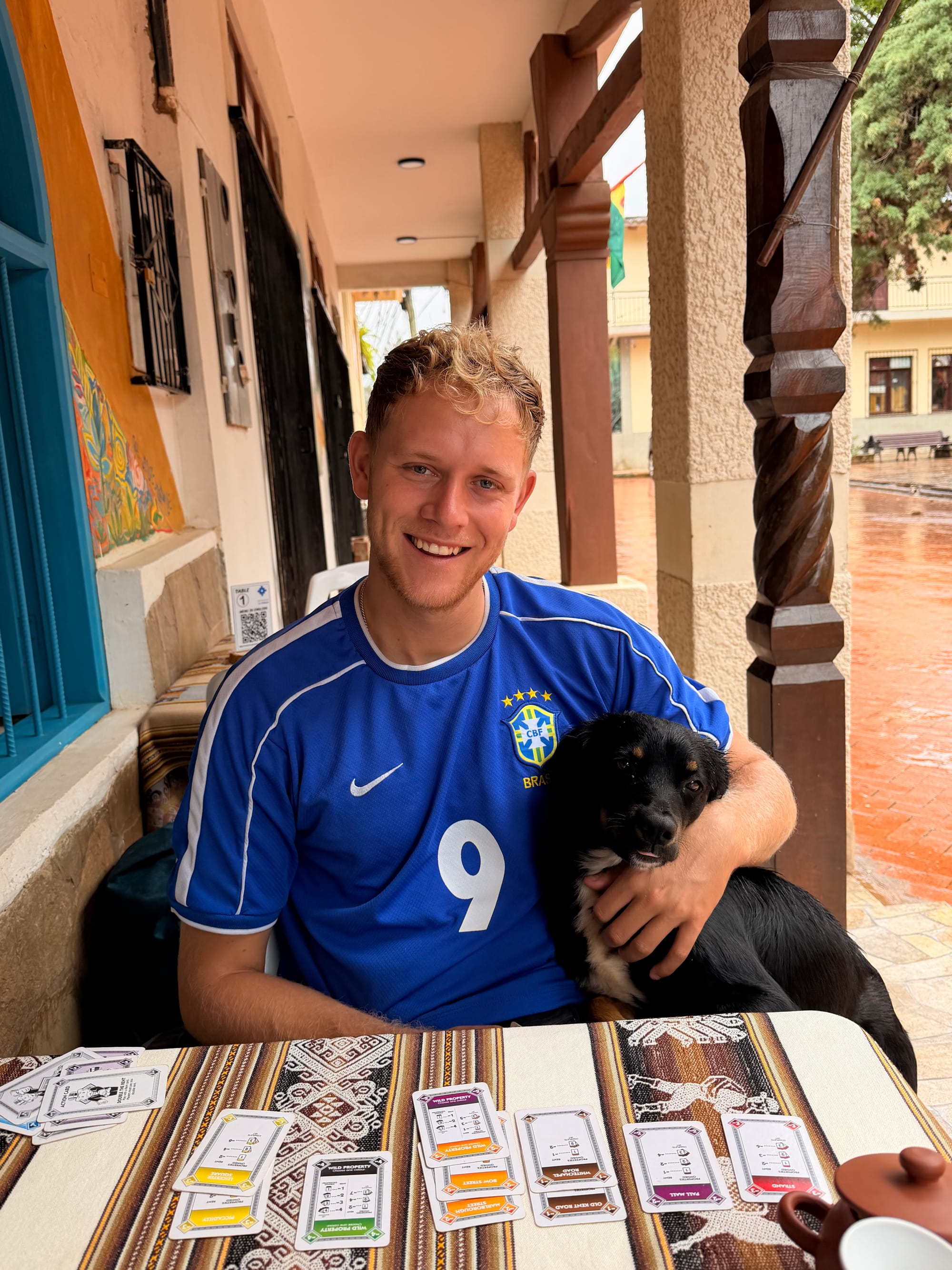
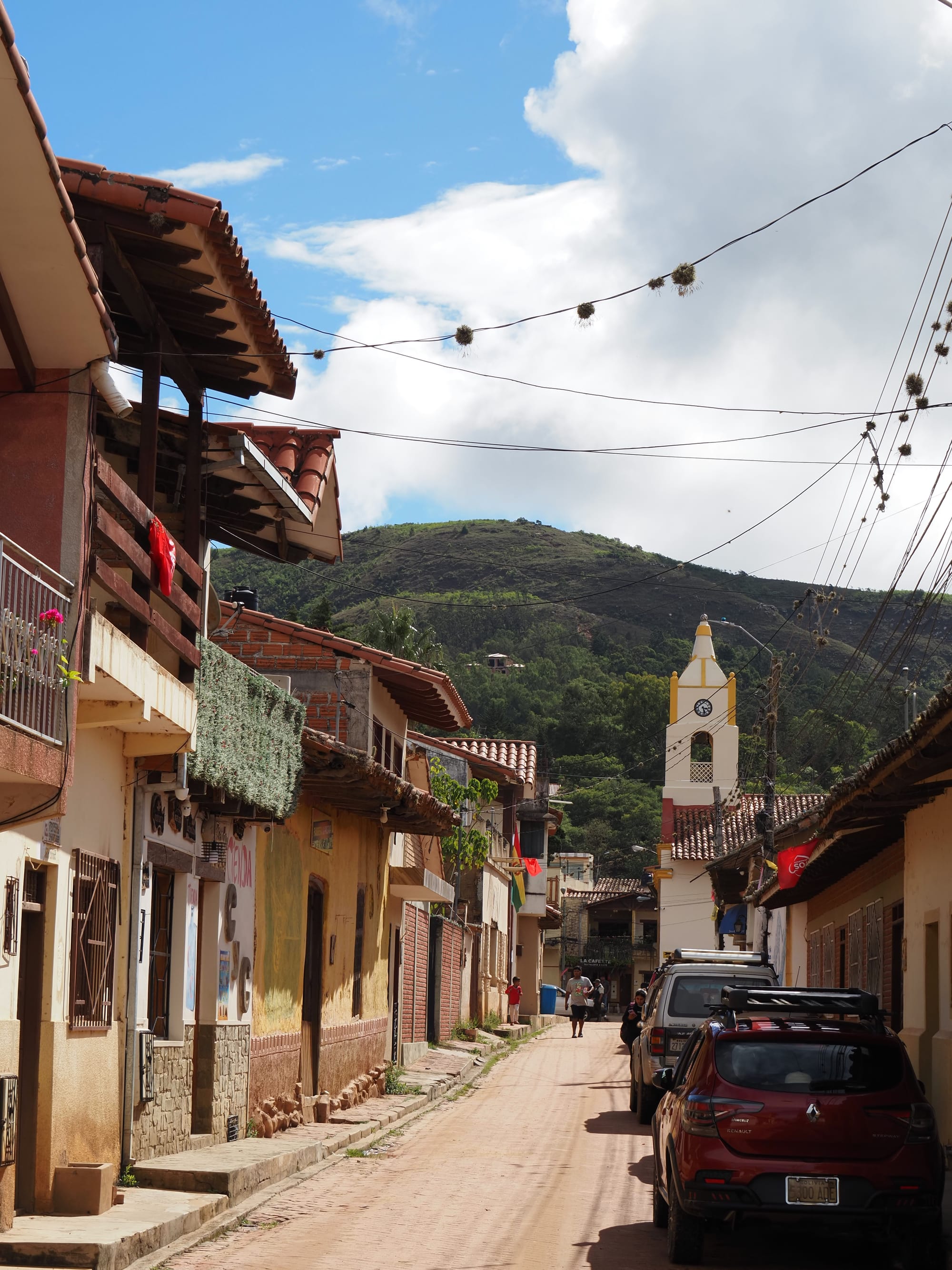
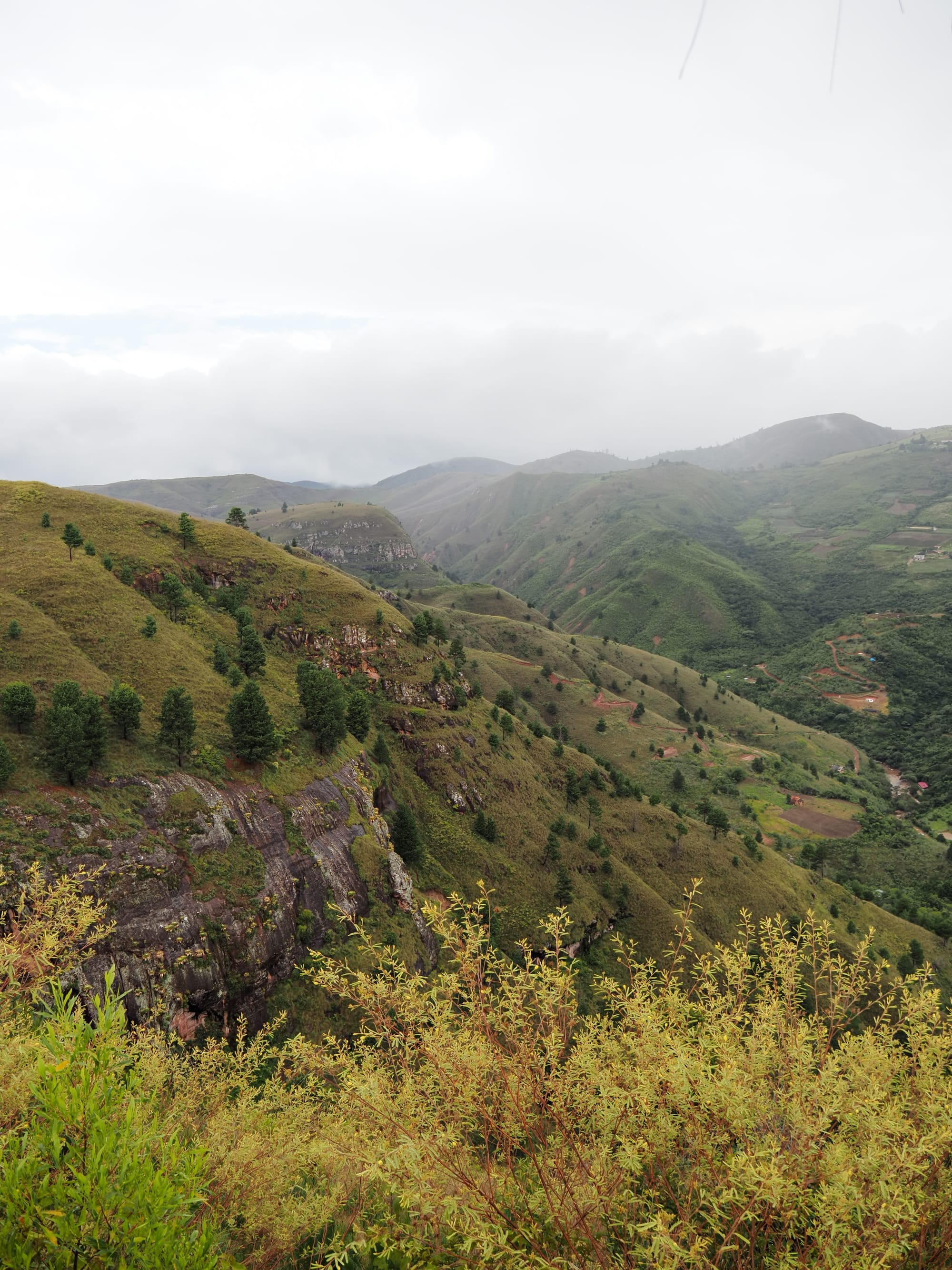
We arrived in Samaipata at around midday, checked in and then went to explore. It’s a very small town, with hardly any tourists there and not a lot to do. We had a few things that we wanted to check off, but sadly, as there was really bad weather they closed off the waterfalls and recommended that some of the hikes would be a bit dangerous to do because of the rain.
El Fuerte de Samaipata
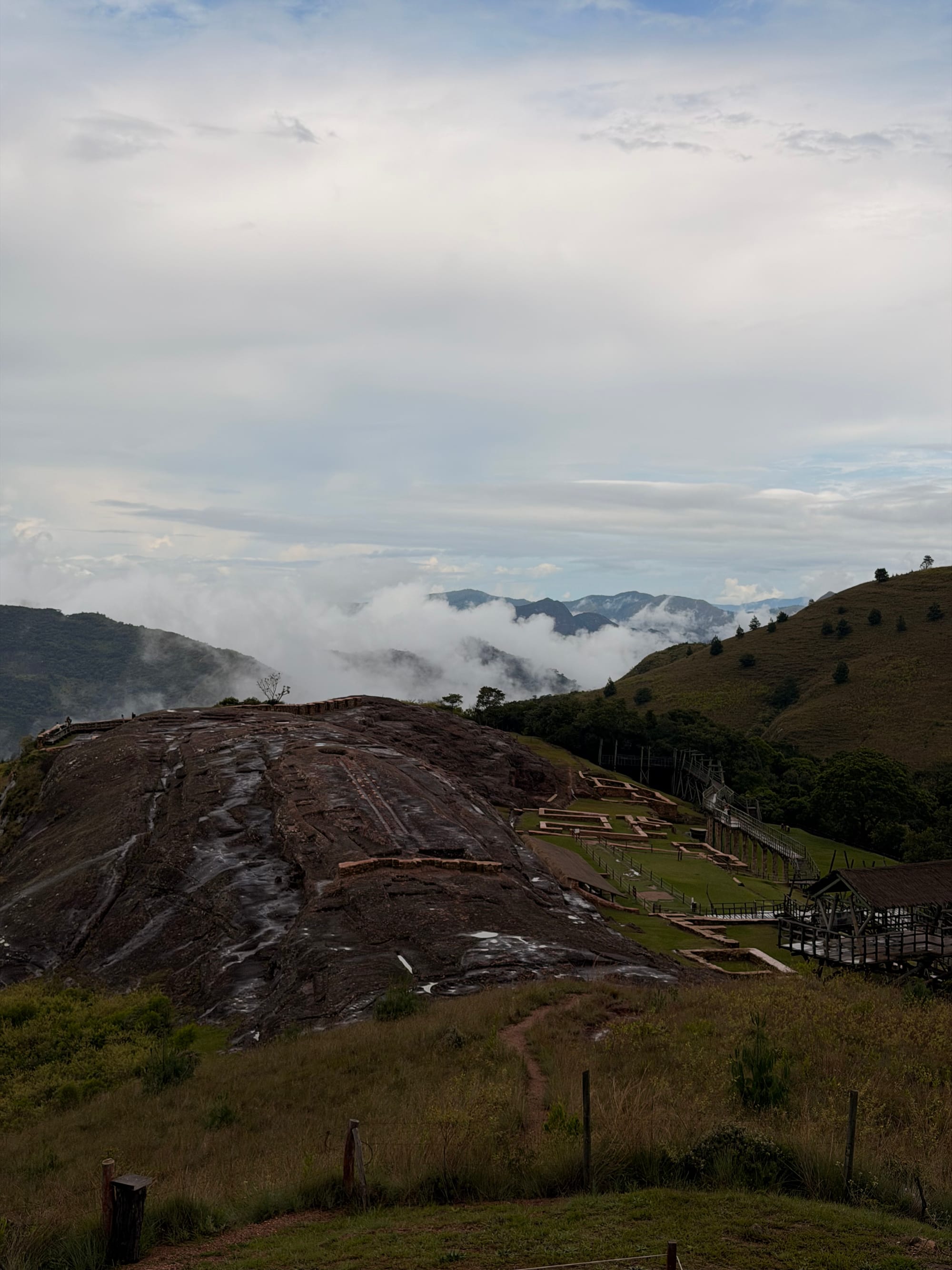
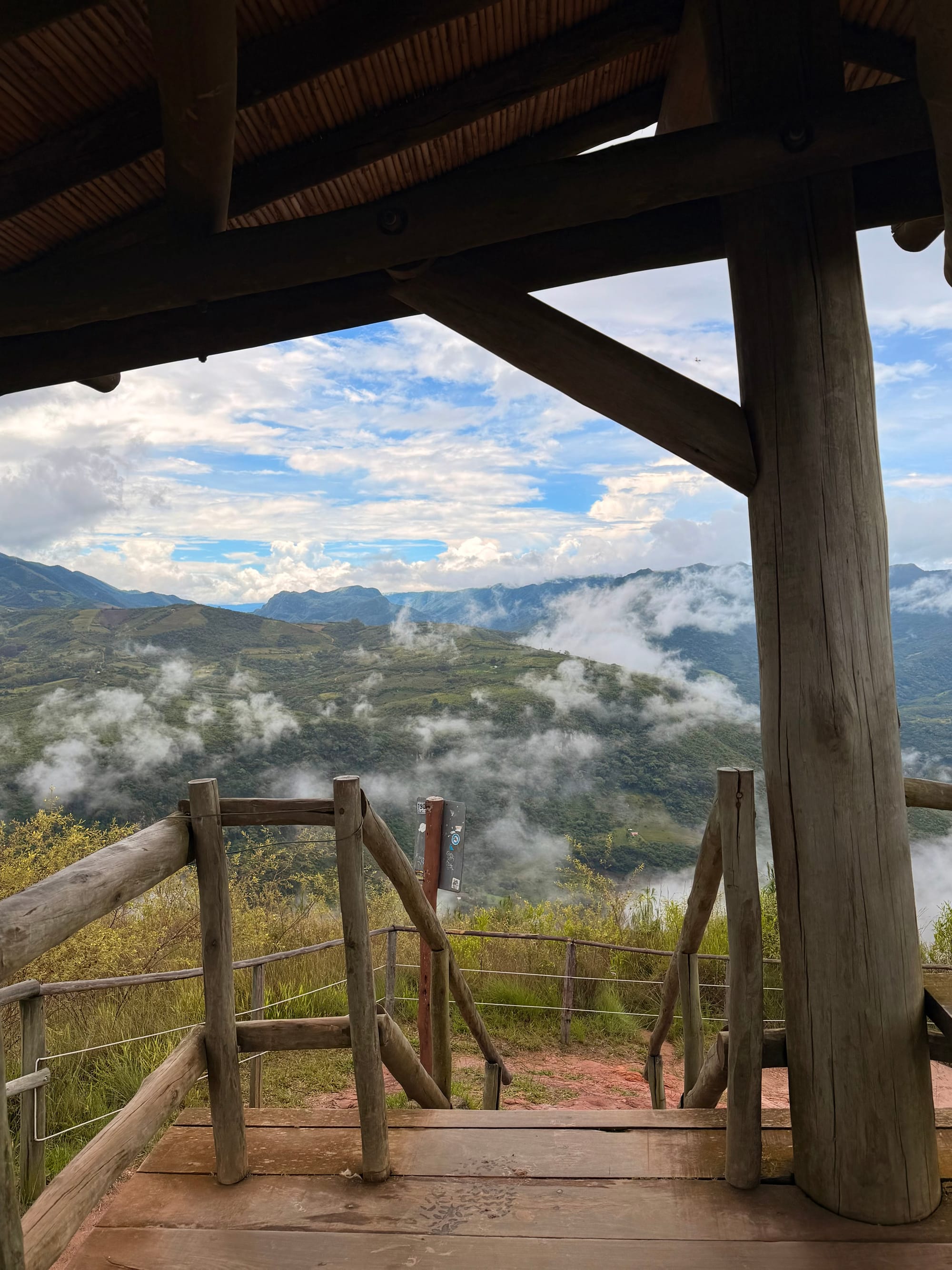
One of the main things to do in Samaipata, is to go to the El Fuerte Ruins where you can walk around them and learn about their history. It is a UNESCO World Heritage Site, founded in 300 CE and features the world’s largest carved sandstone rocks. These ruins explain the history of three distinct cultures, the Chané, Inca and Spanish acting as a crucial archaeological bridge between the Andes and the Amazon. It cost 50 Bolivianos each to enter the ruins and is a self guided walk, although you can pay extra to have a guide too. You can spend however long as you want to walk around them, but it took us around an hour.
Sucre
We spent over a week in Sucre, mainly because we decided to do a Spanish School with our friends. There is an also a lot of things to do here, so we made the most of our time.
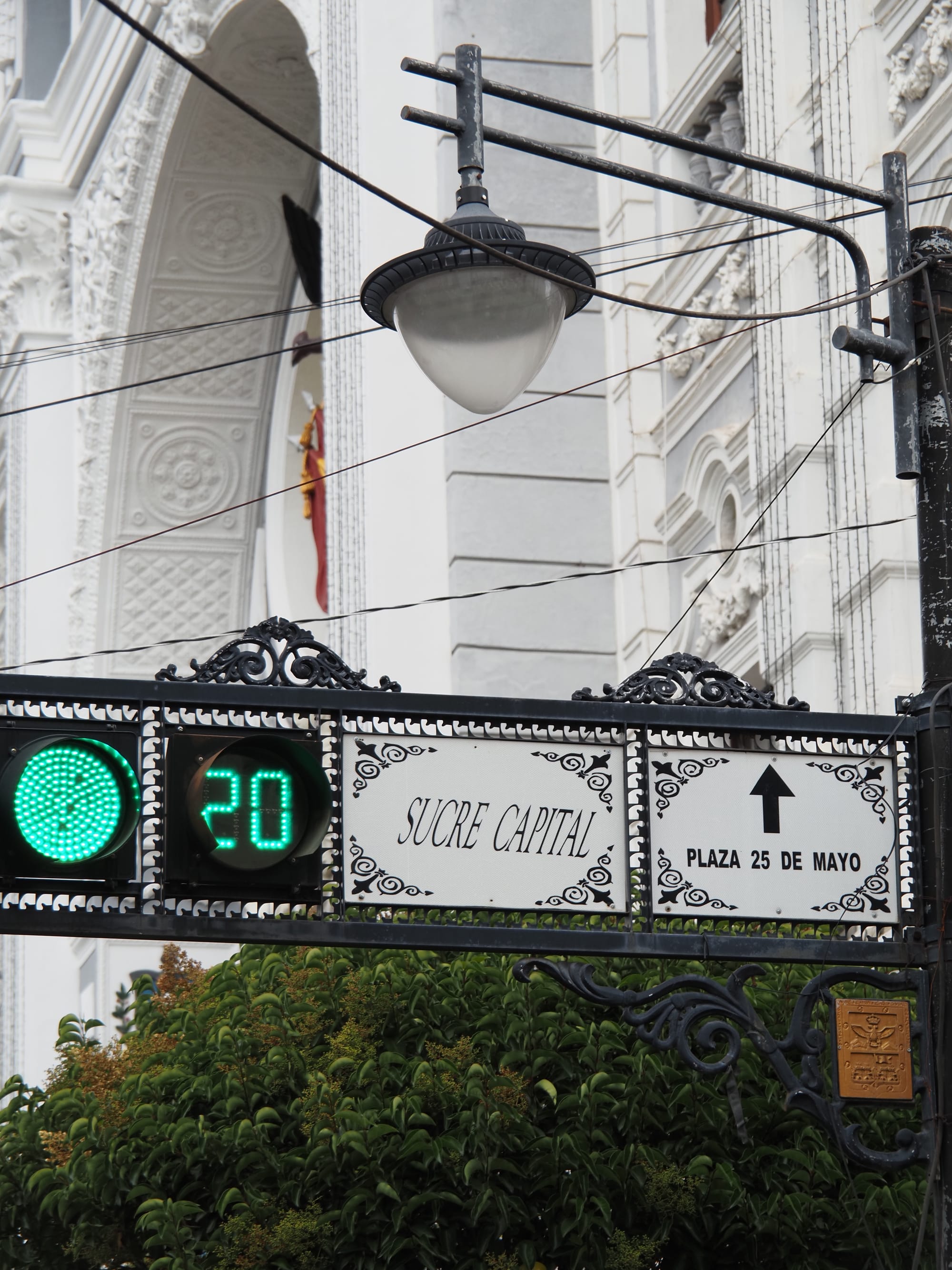
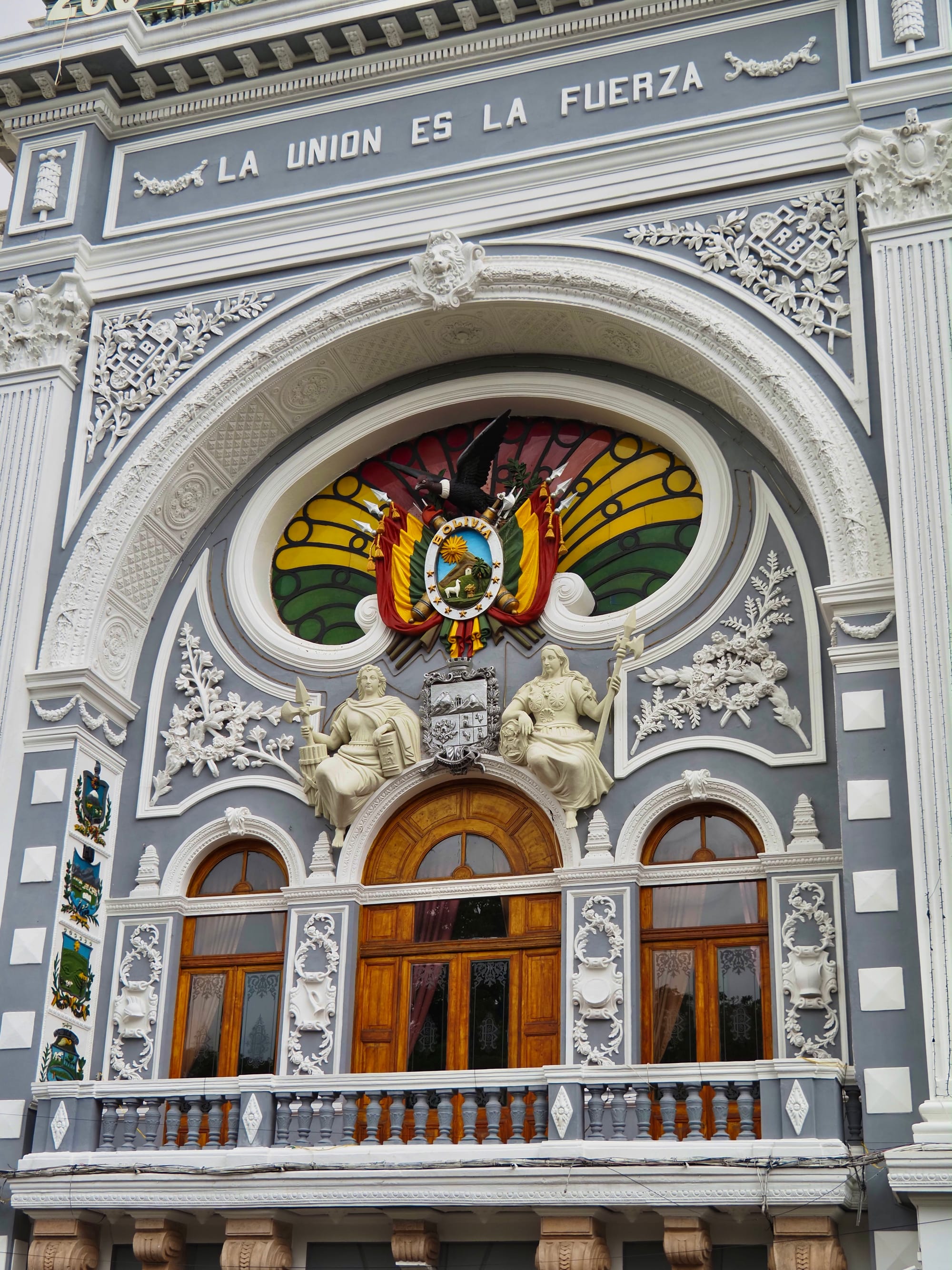
Plaza 25 de Mayo
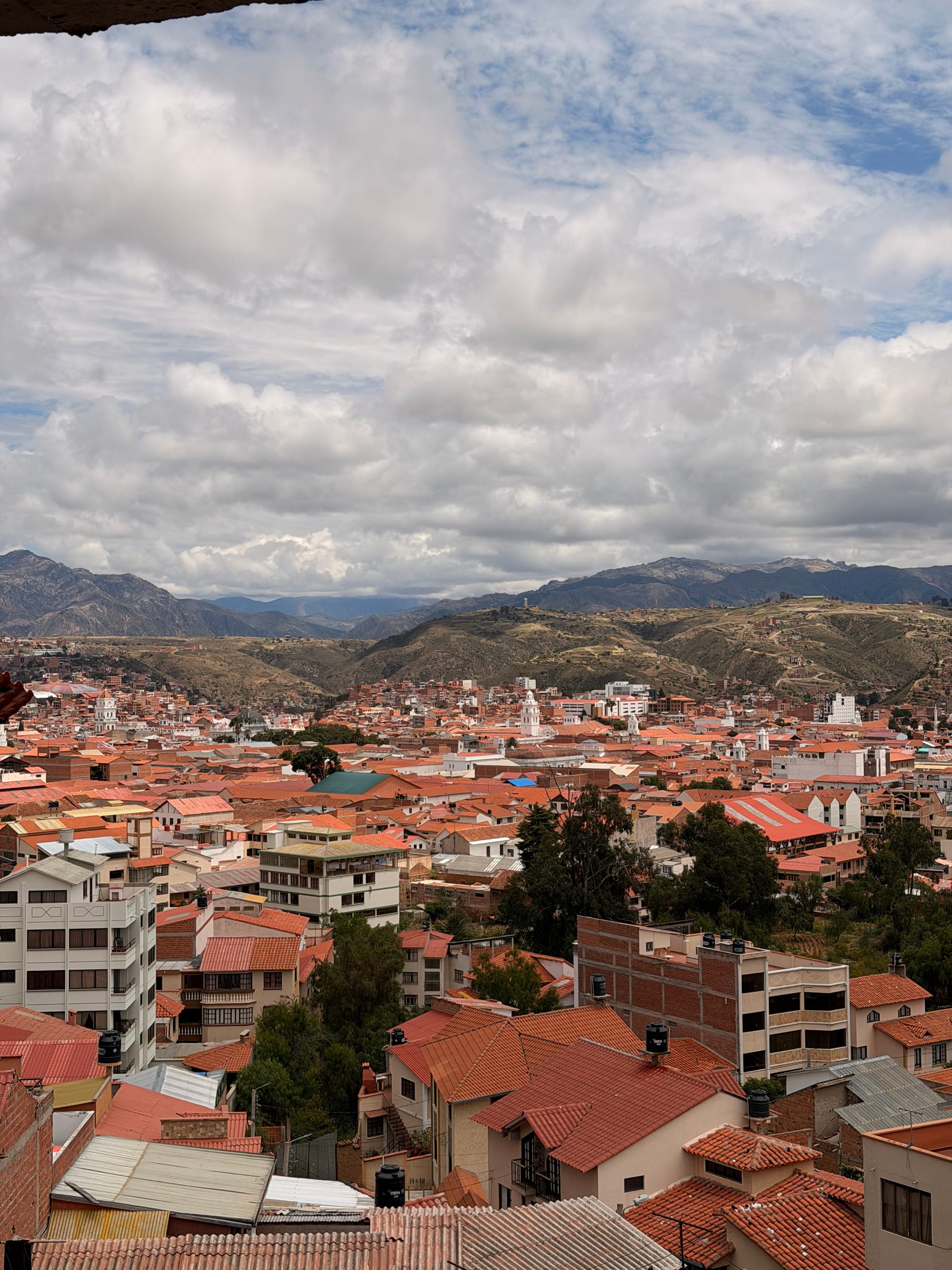
We walked to Plaza 25, which is in the heart of the city and has loads of cute shops, food stalls and cafes to choose from.
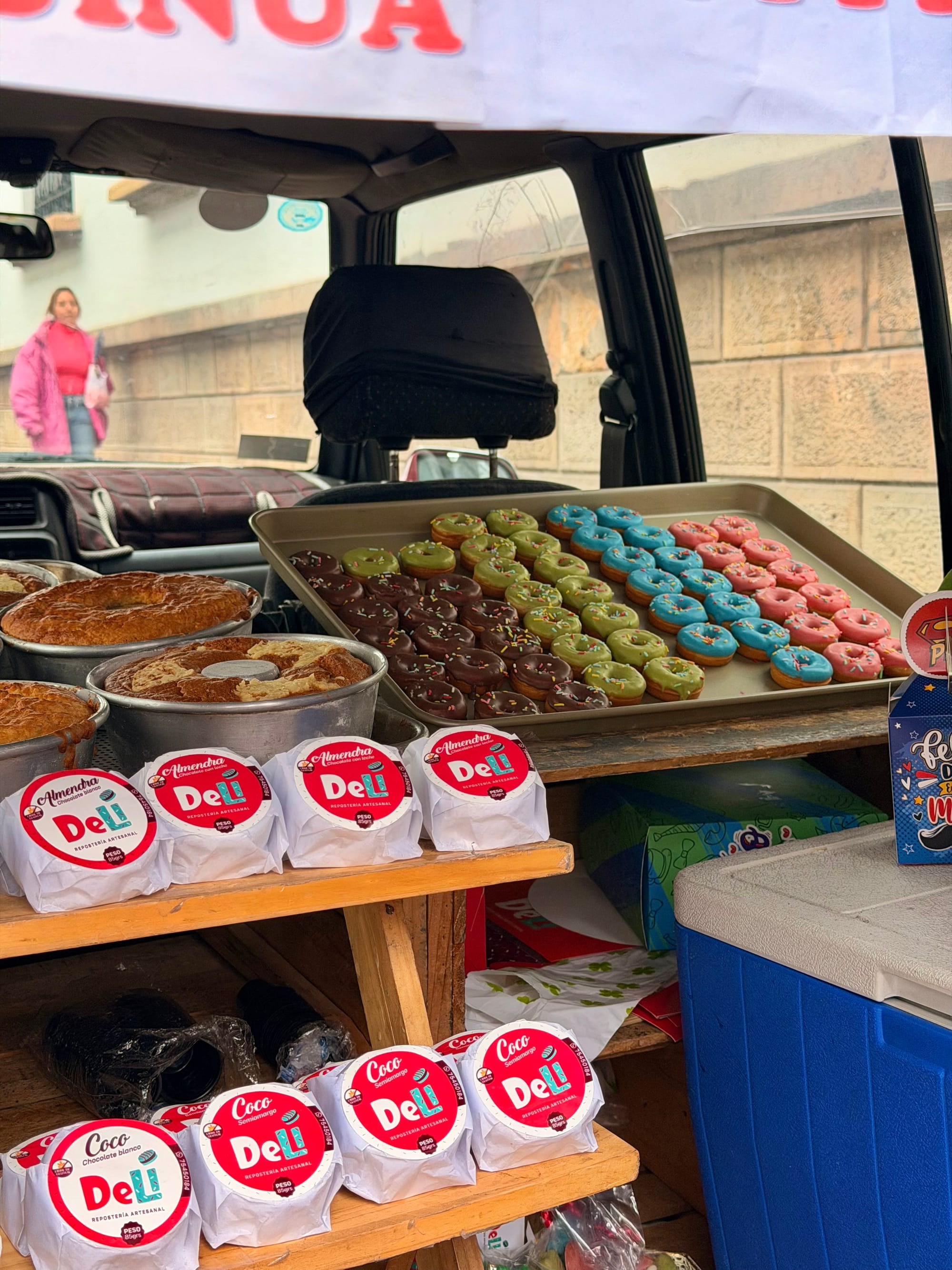
Central Market (Mercado Central)
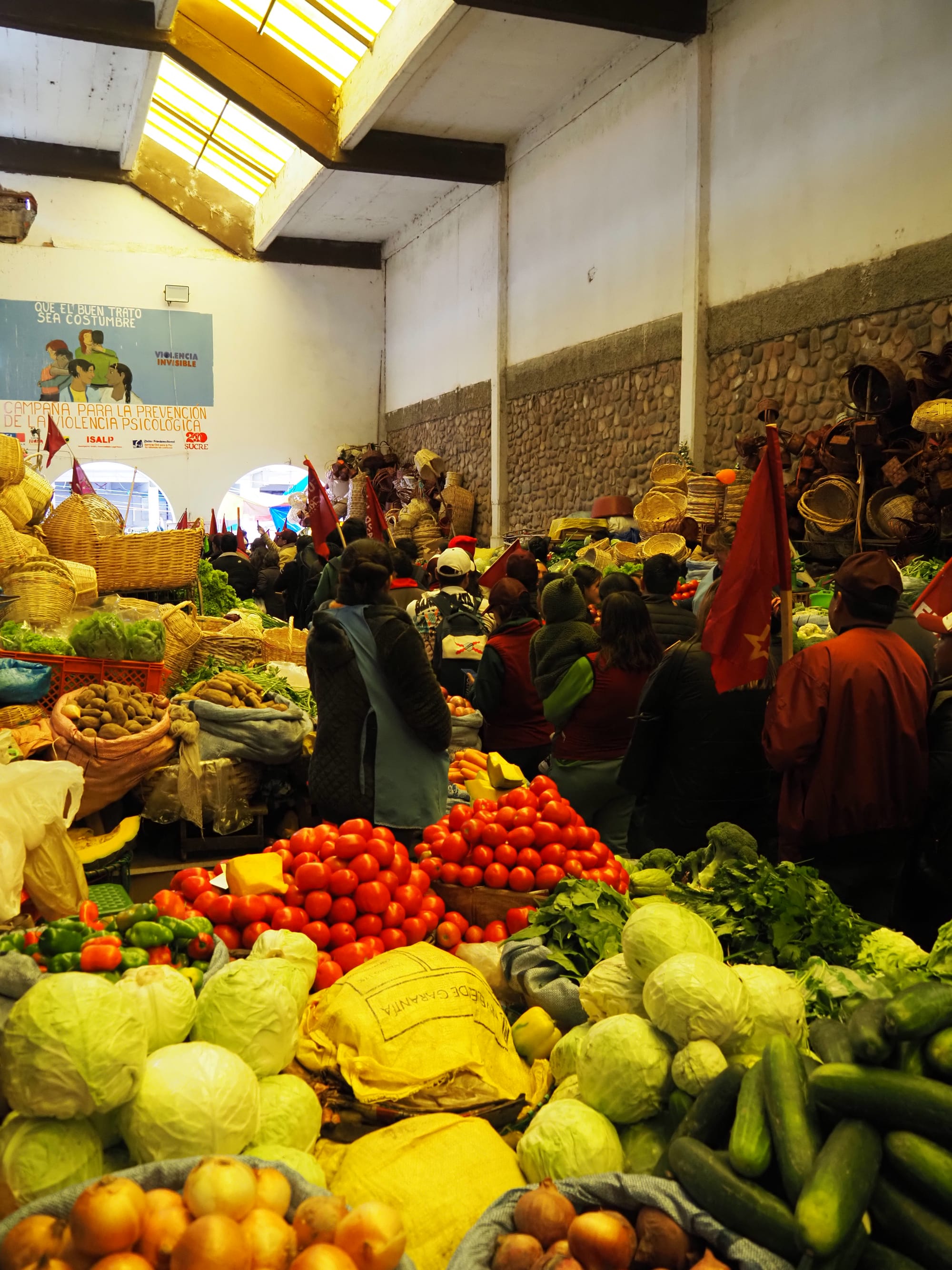
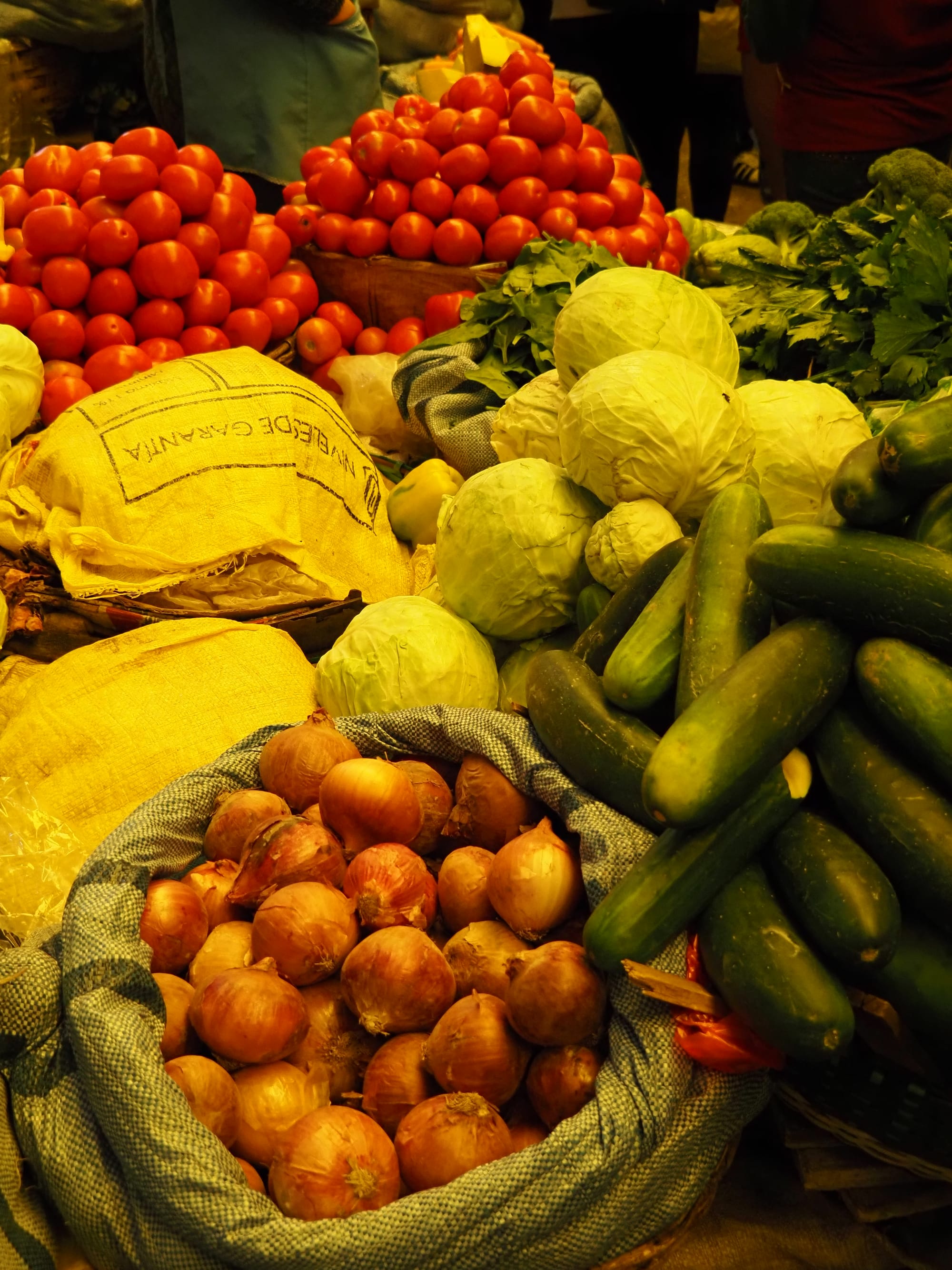
To save money or find cheap eats, you must go to the Central Market which has three floors. Here you can buy fresh groceries or eat out and try traditional Bolivian dishes. For our first couple of days, we tried different Bolivian dishes, but during Spanish school, we all chipped in for food and made our own breakfasts and dinners.
We also learnt that it is polite to show Bolivians appreciation for their food, and if you want to have a little bit more food, but not pay for a second dish, you can say ‘Yapa’, and sometimes they may offer you seconds.
Somos Pasteleria y Cafeteria
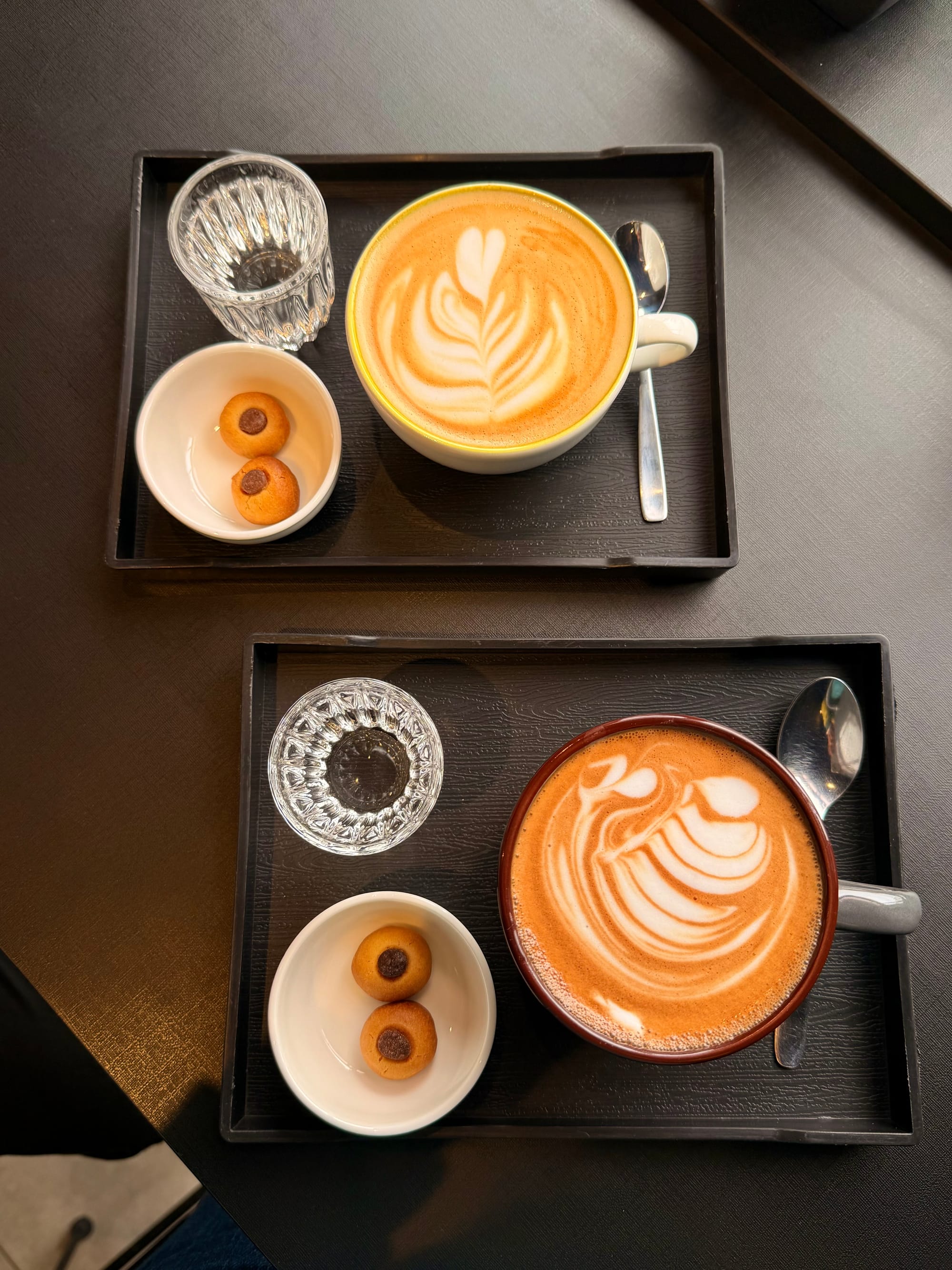
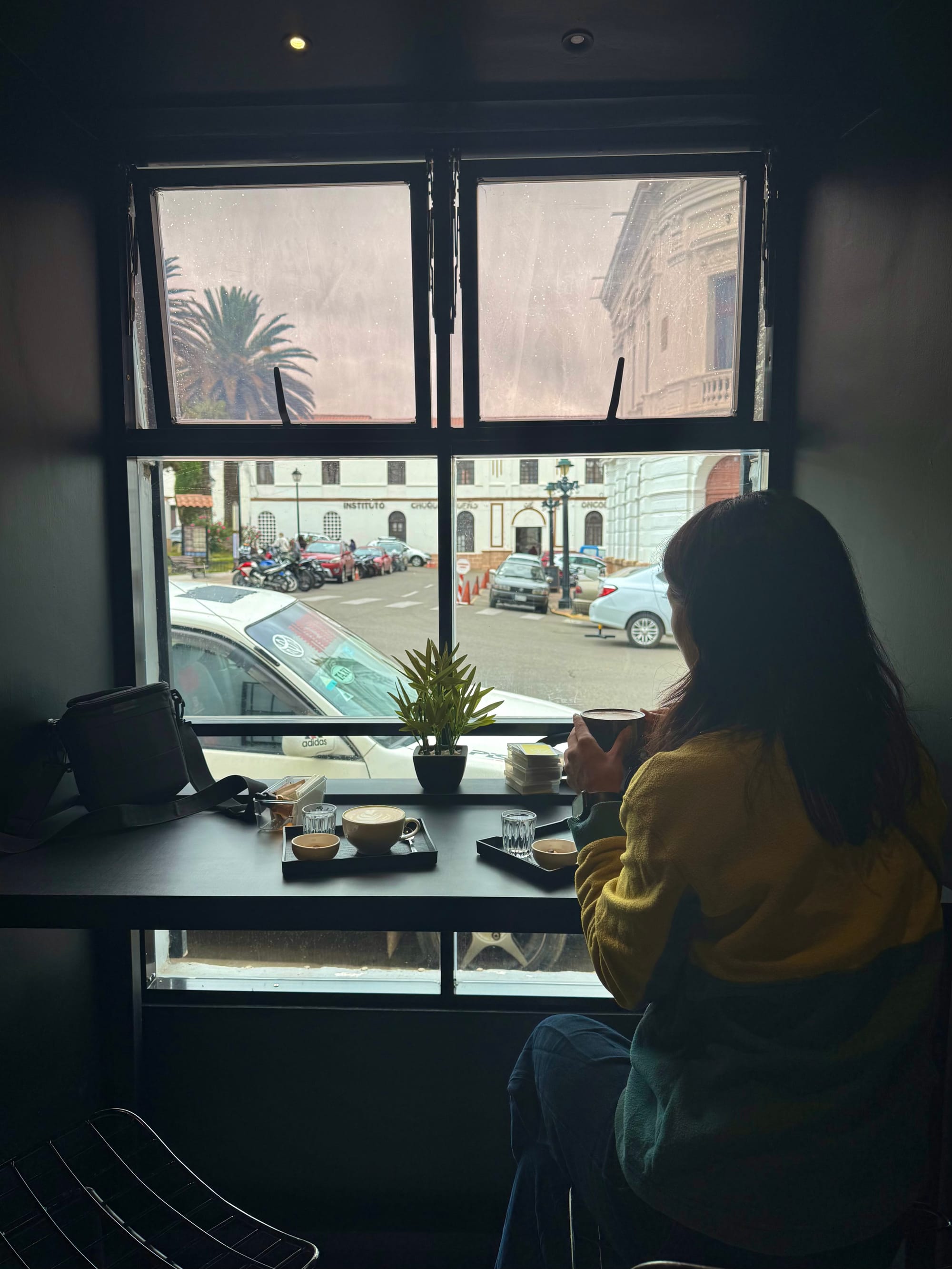
Somos Coffee shop was recommended to us and is in the top 100 coffee shops in South America. We were dying for a good coffee, that wasn’t instant, so spent the morning here, playing cards before exploring the city.
Terraza 625
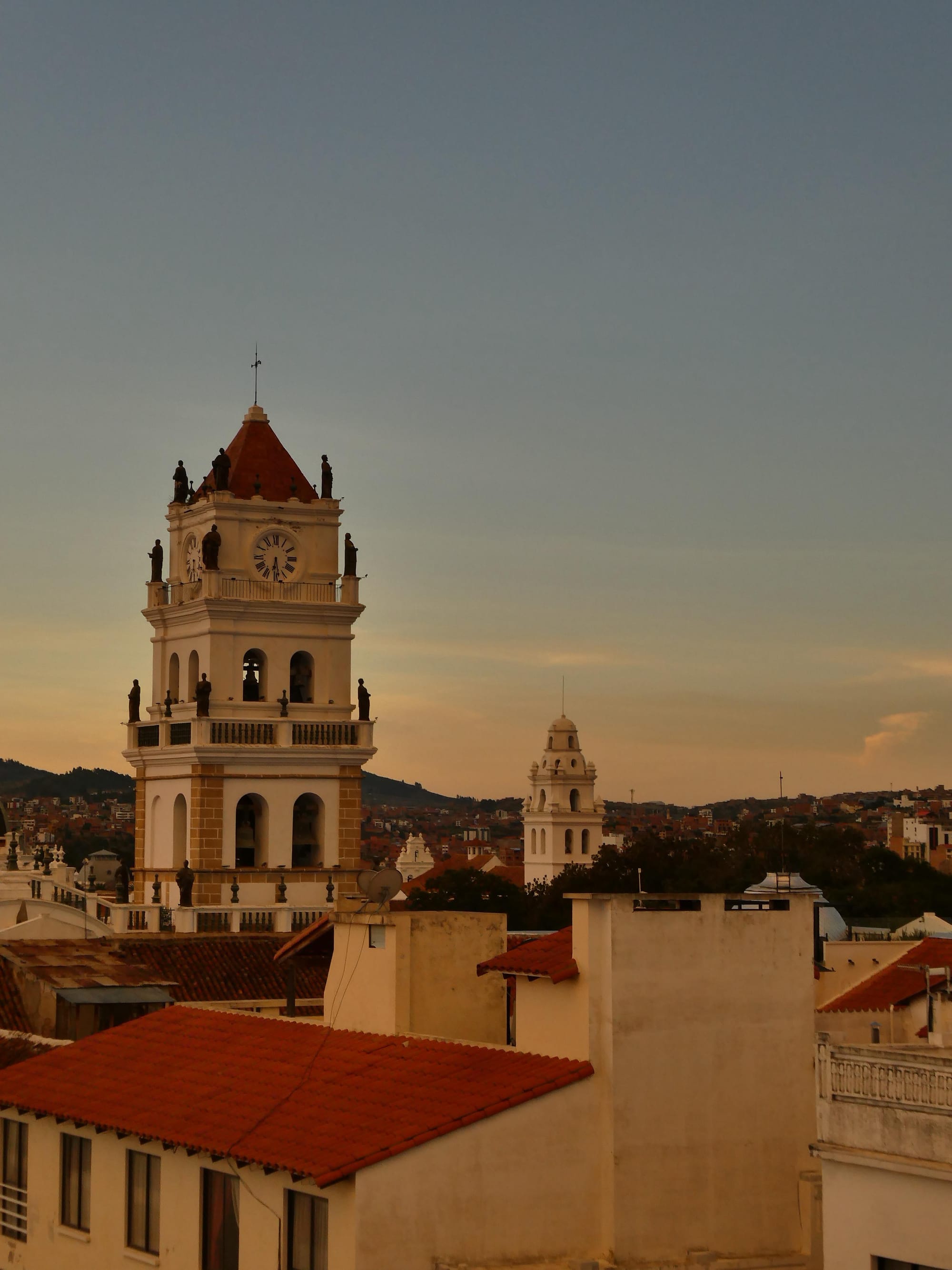
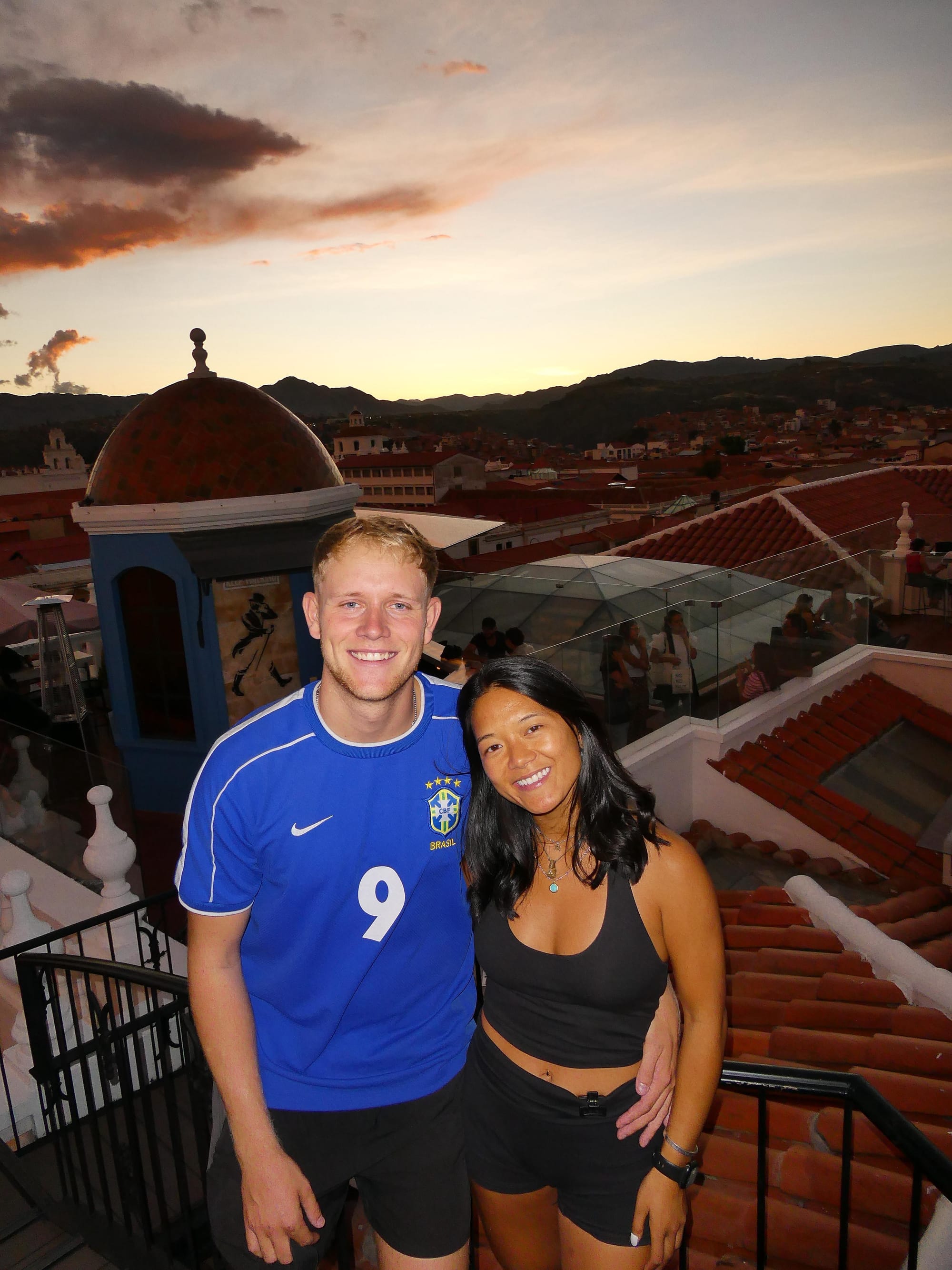
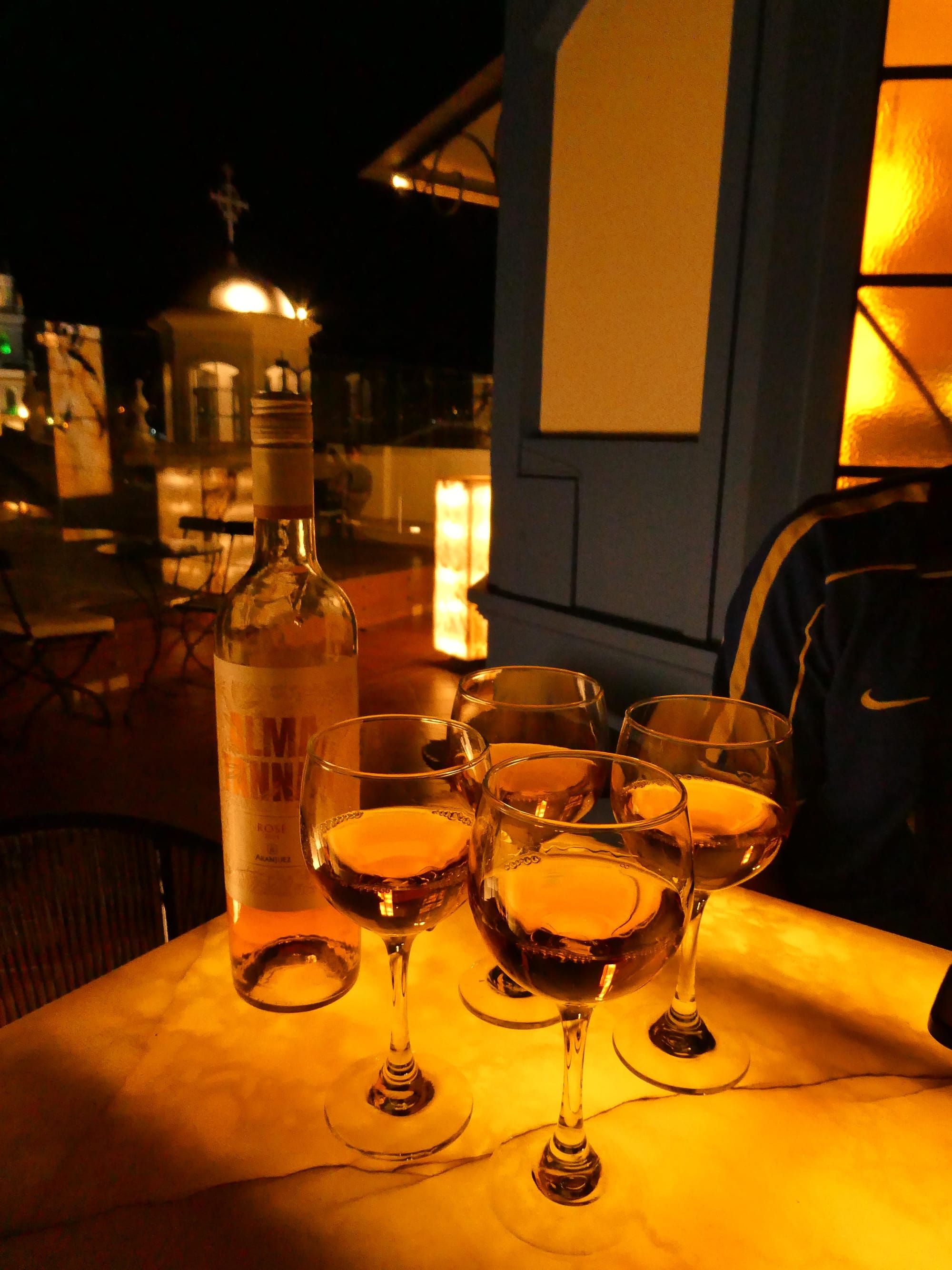
One place to spend an evening in Sucre, is at this rooftop bar. Annoyingly, it only opens at 4pm, but it’s a great place to watch the sunset over the city. We went here one evening and spent a few hours playing cards and sharing a bottle of wine.
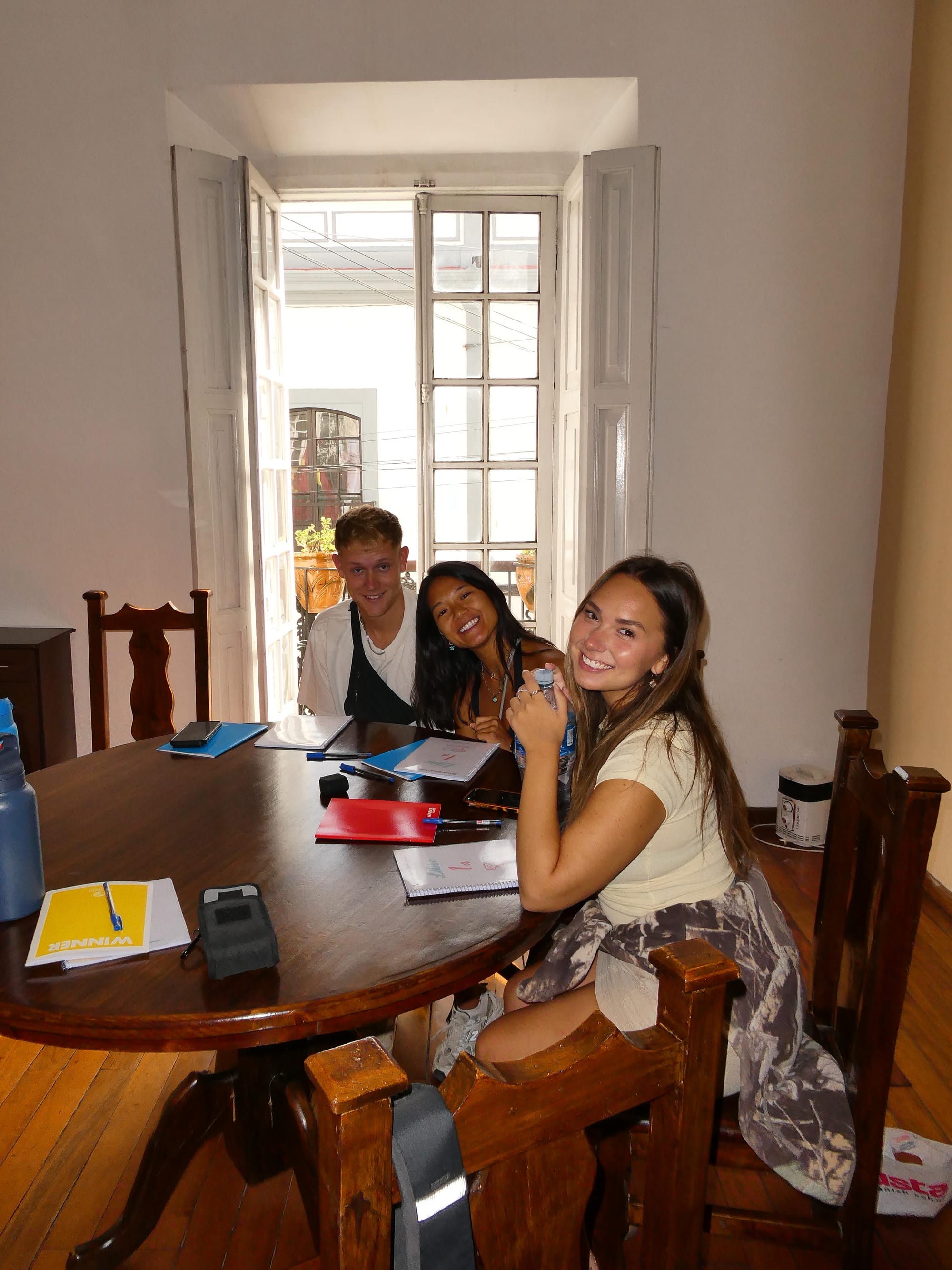
Me Gusta Spanish School
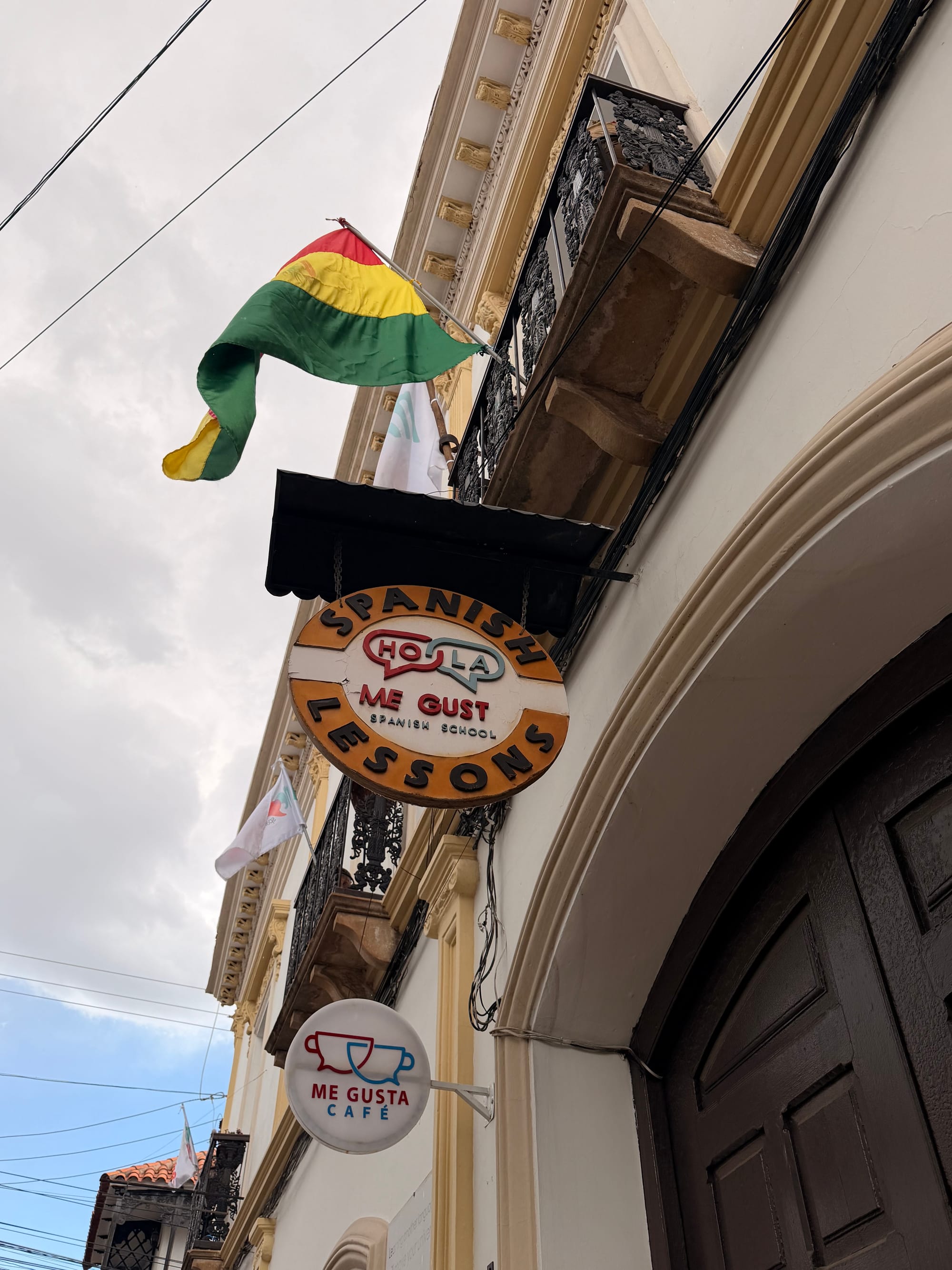
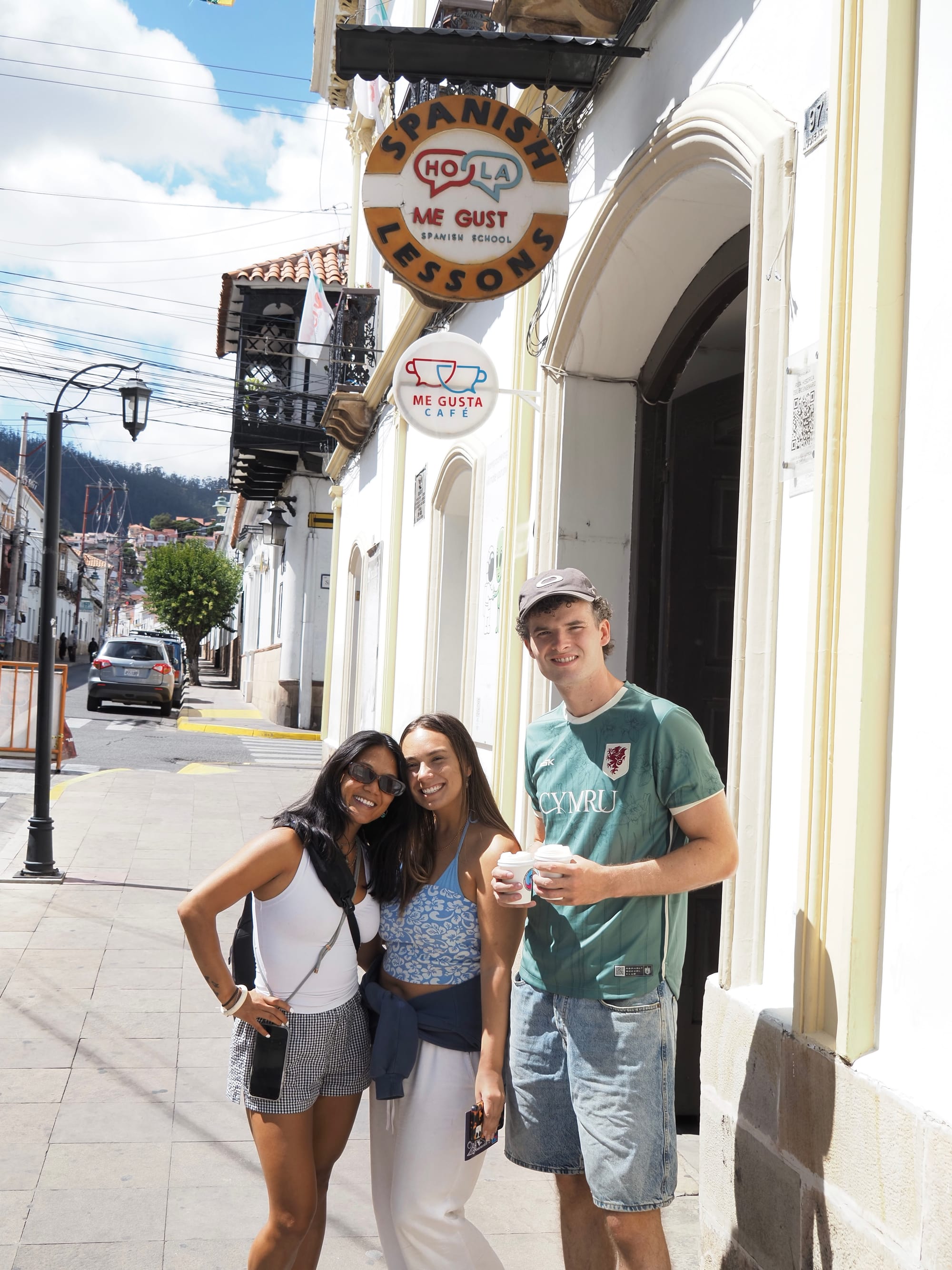
One main activity to do when travelling South America is to do a Spanish School. If you want to improve or learn Spanish, this is the perfect way to do it. A full explanation into the Spanish School we did, will be in this blog here (To be added)
Other things to do in Sucre:
There are a couple other things to do in Sucre:
- Casa de la Libertad, an important historical monument, where the country’s Declaration of Independence was signed.
- Seeing gorgeous views of Sucre from the La Recoleta Viewpoint.
- Visit and walk along the world’s largest dinosaur tracks at Cal Orck'o.
- Exploring the Maragua Crater Trek, a one or multi day hike known for its unique geological formation and indigenous cultures.
- The 7 Cascades (Seven Waterfalls), another hiking spot outside of Sucre.
- Parque Simón Bolívar, a park which has a small miniature replica of the Eiffel Tower.
- Try a cooking class to learn how to make traditional Bolivian dishes.
- Trying the local chocolates at Parati and Tawanda.
Uyuni
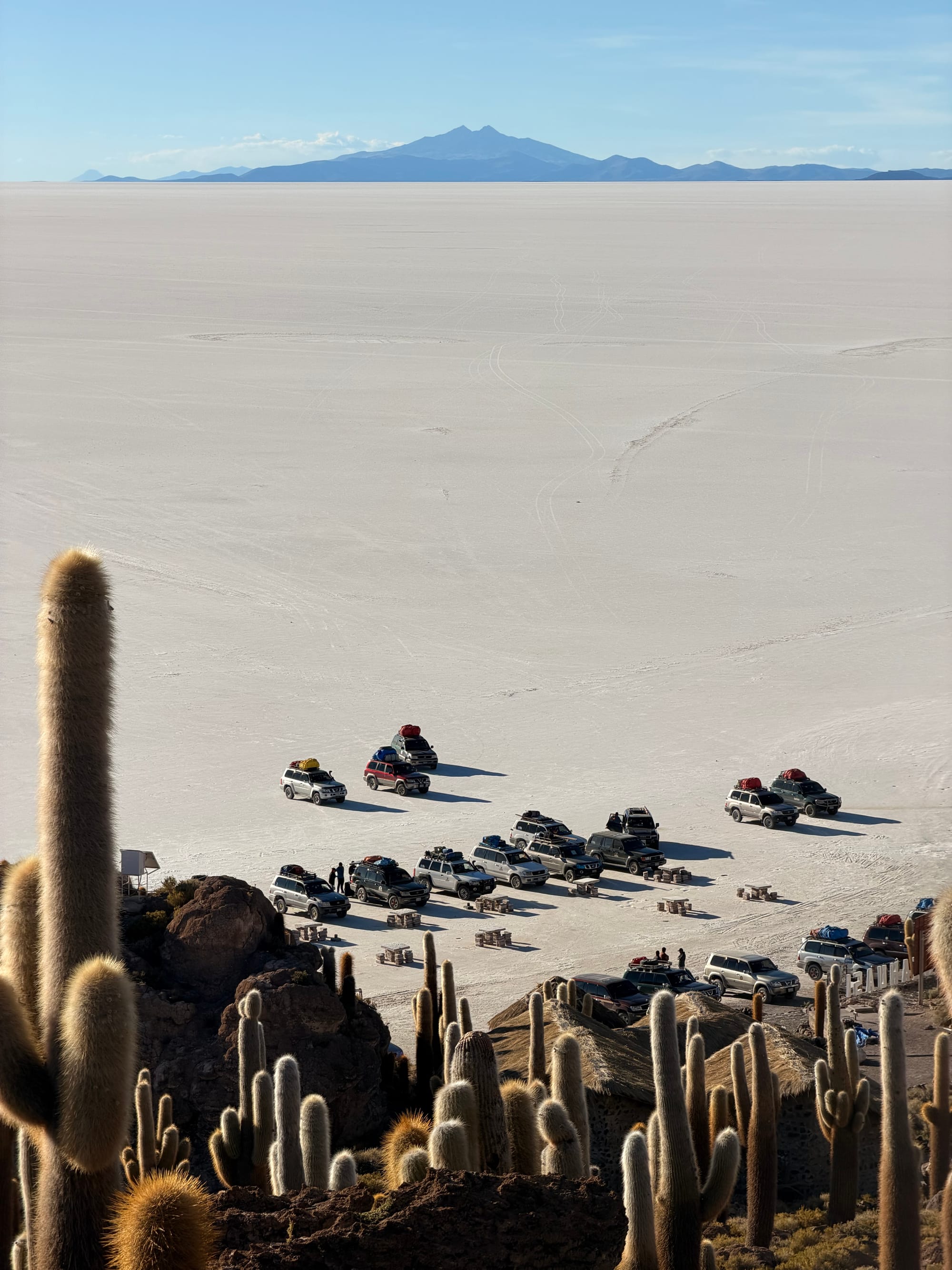
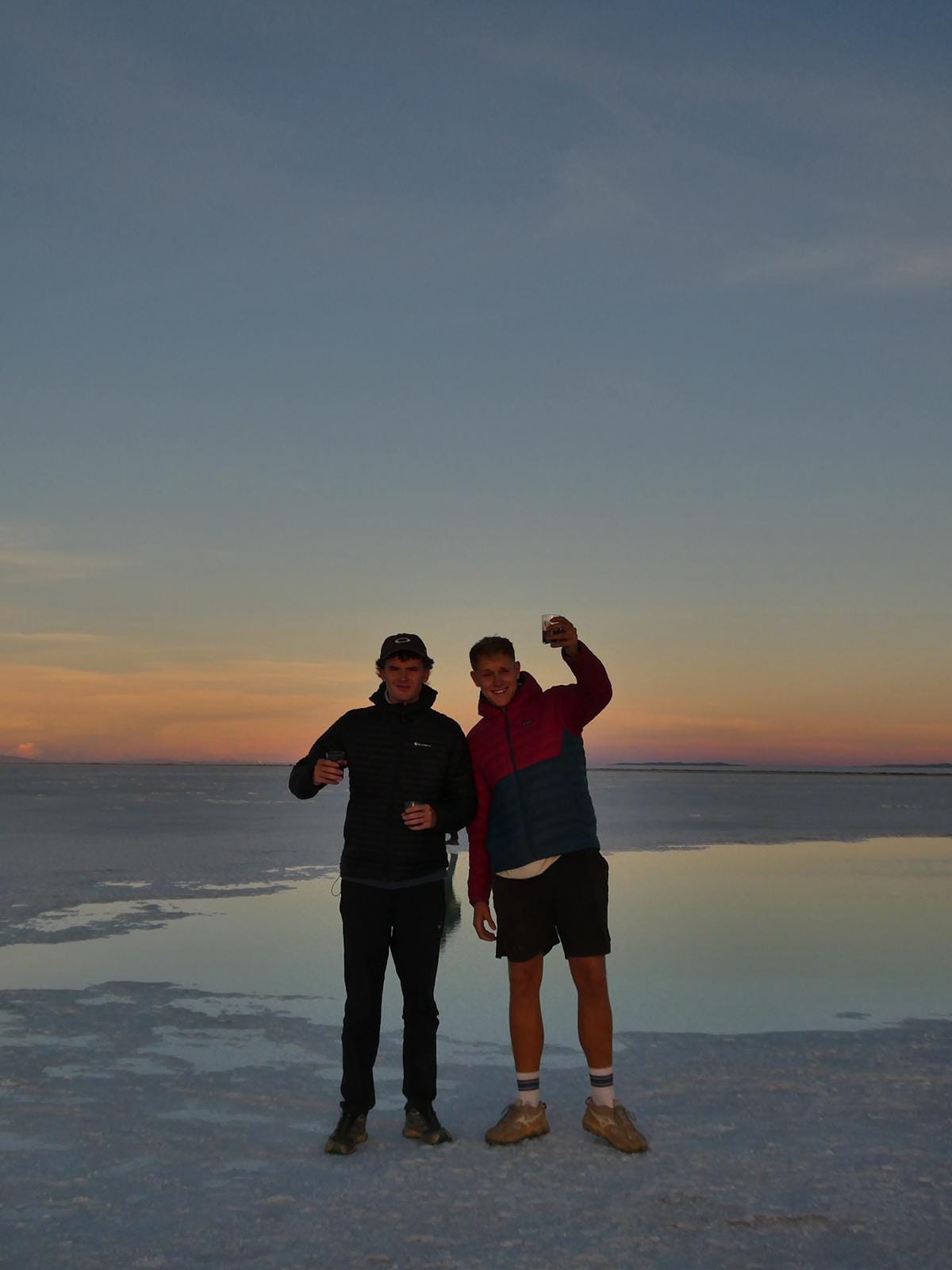
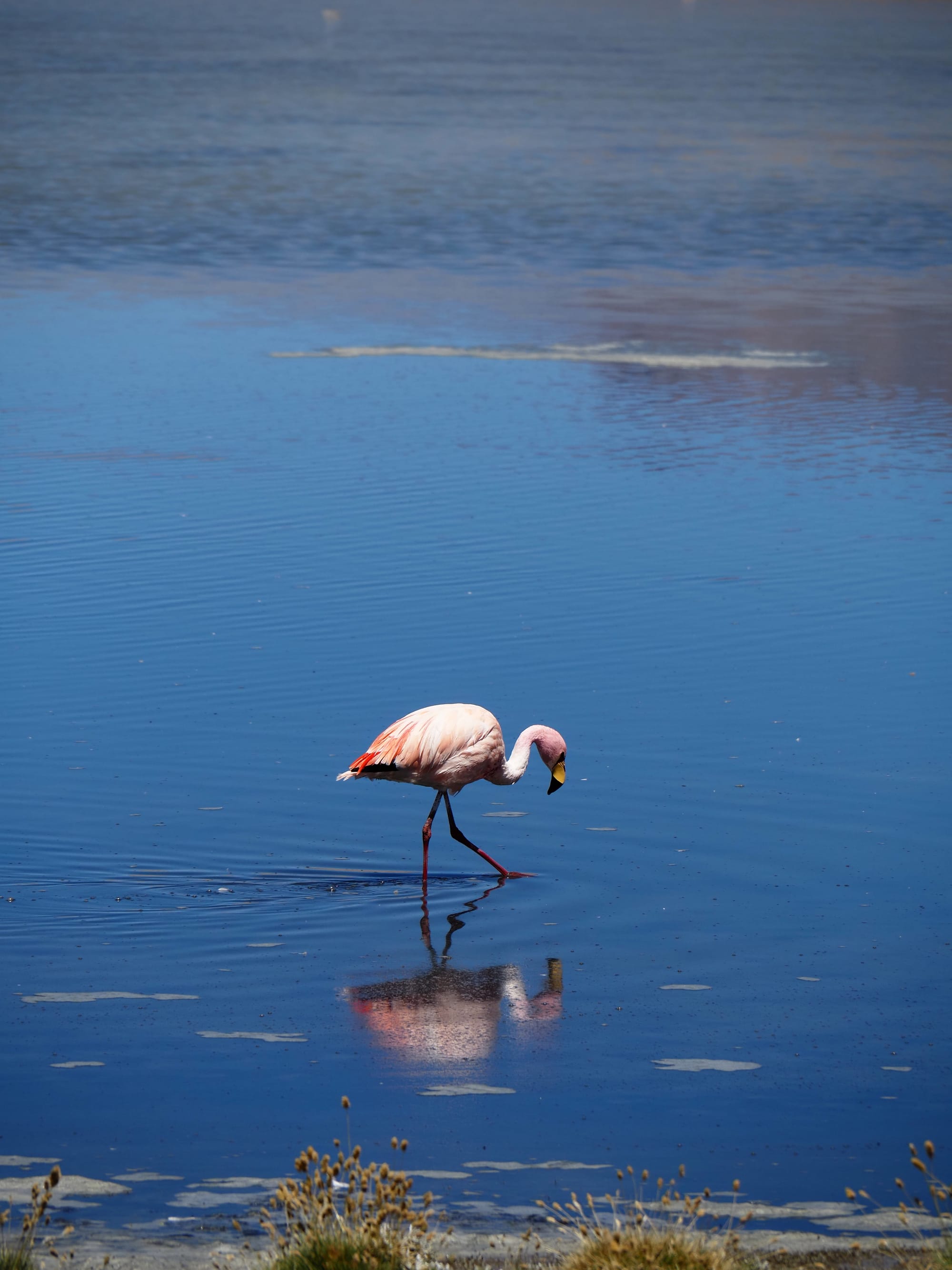
The only thing to do in Uyuni is to do the Bolivian Salt Flats tour, which can be a one, two or three day tour driving across the salt flats towards the land border of Chile. Details of our three day tour, will be in a separate blog here.
La Paz
🏨Wake Up Hostel
A really nice hostel in prime location, only a five minutes walk from The Witches Market and the main centre of town. Really good price for the dorms and they do give you free breakfast. It is pretty basic compared to others we've had before but can’t complain with free food and coffee in the morning.
Death Road
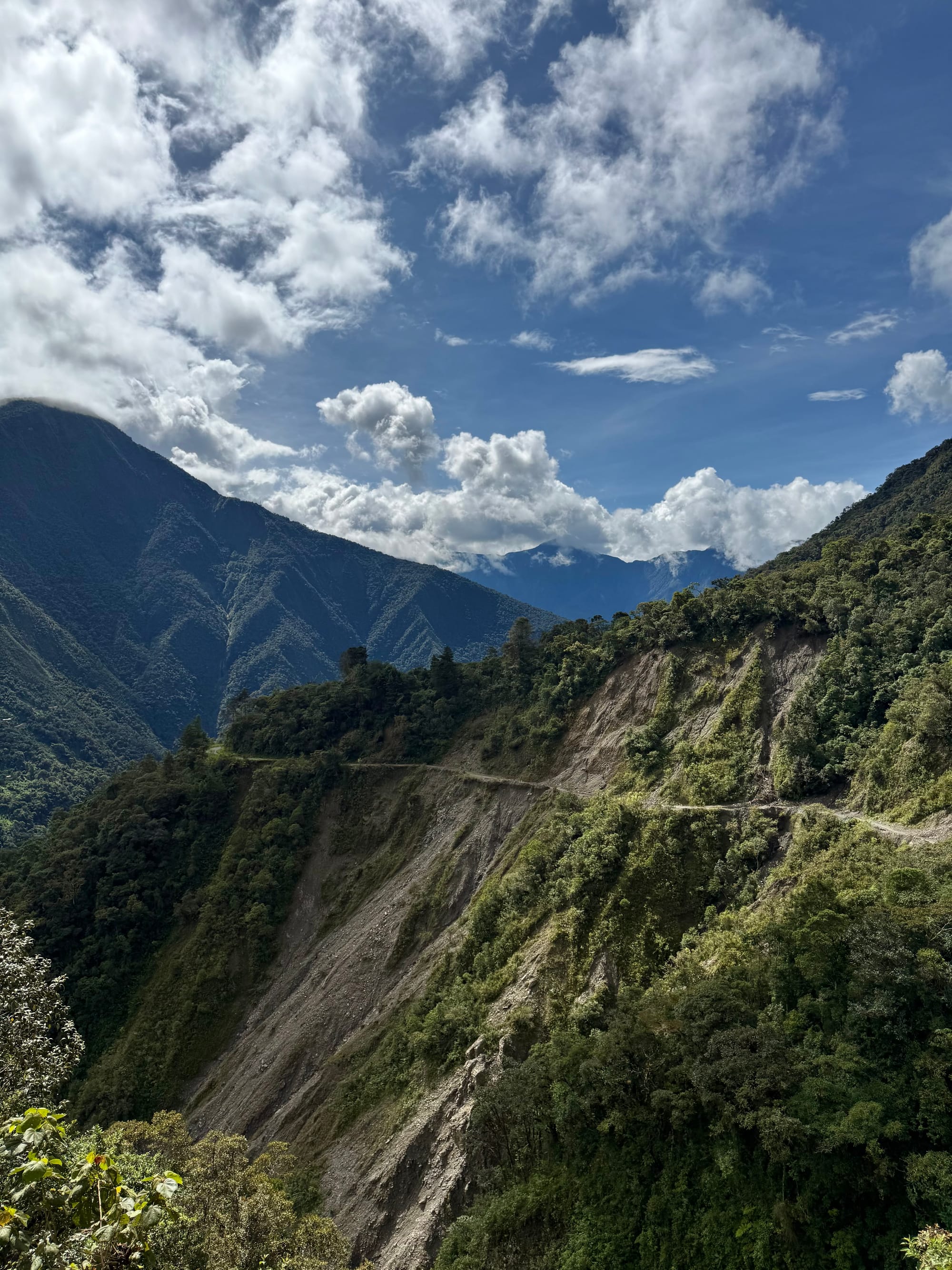
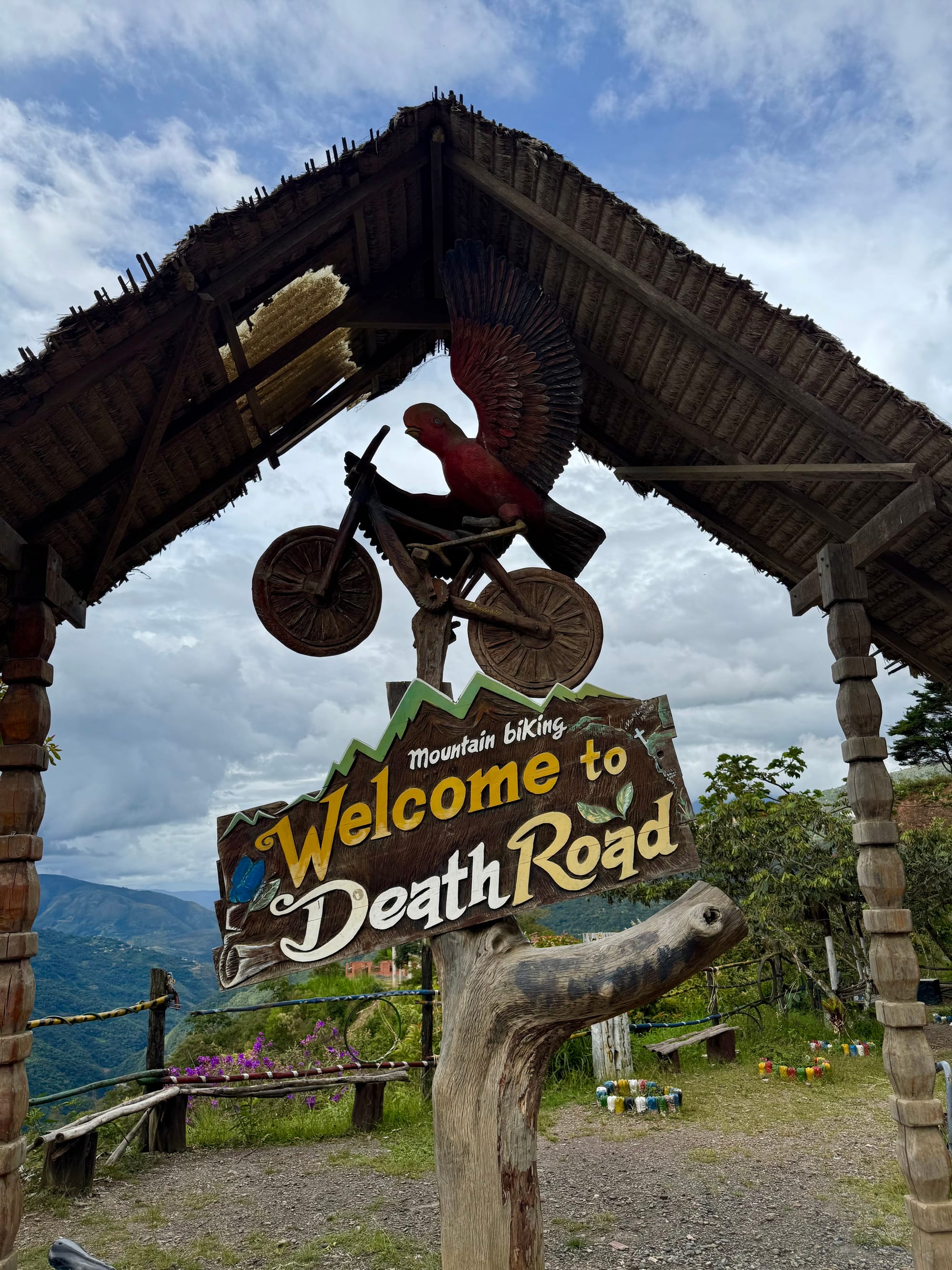
The most popular activity to do in La Paz is to mountain bike down Death Road, Bolivia’s most dangerous road. The tour we did and our honest opinion of it, will be in a separate blog here (To be added).
Free Walking Tour
A highly recommended activity to do is the Free Walking Tour around the city. We were recommended to go with this company, Cat Hat Walking Tour. You can book the tour through their website here, and we had a guide called David, who was really good.
The tour is technically ‘free’, but it is a tipping tour, which you do at the end. Tipping is recommended at 70 BOB each, but you can pay as generous as you want. This tour overall was really good, it was three hours long and we learnt so many interesting facts about the Bolivian history, regarding their previous presidents, the economy and the famous prison in La Paz.
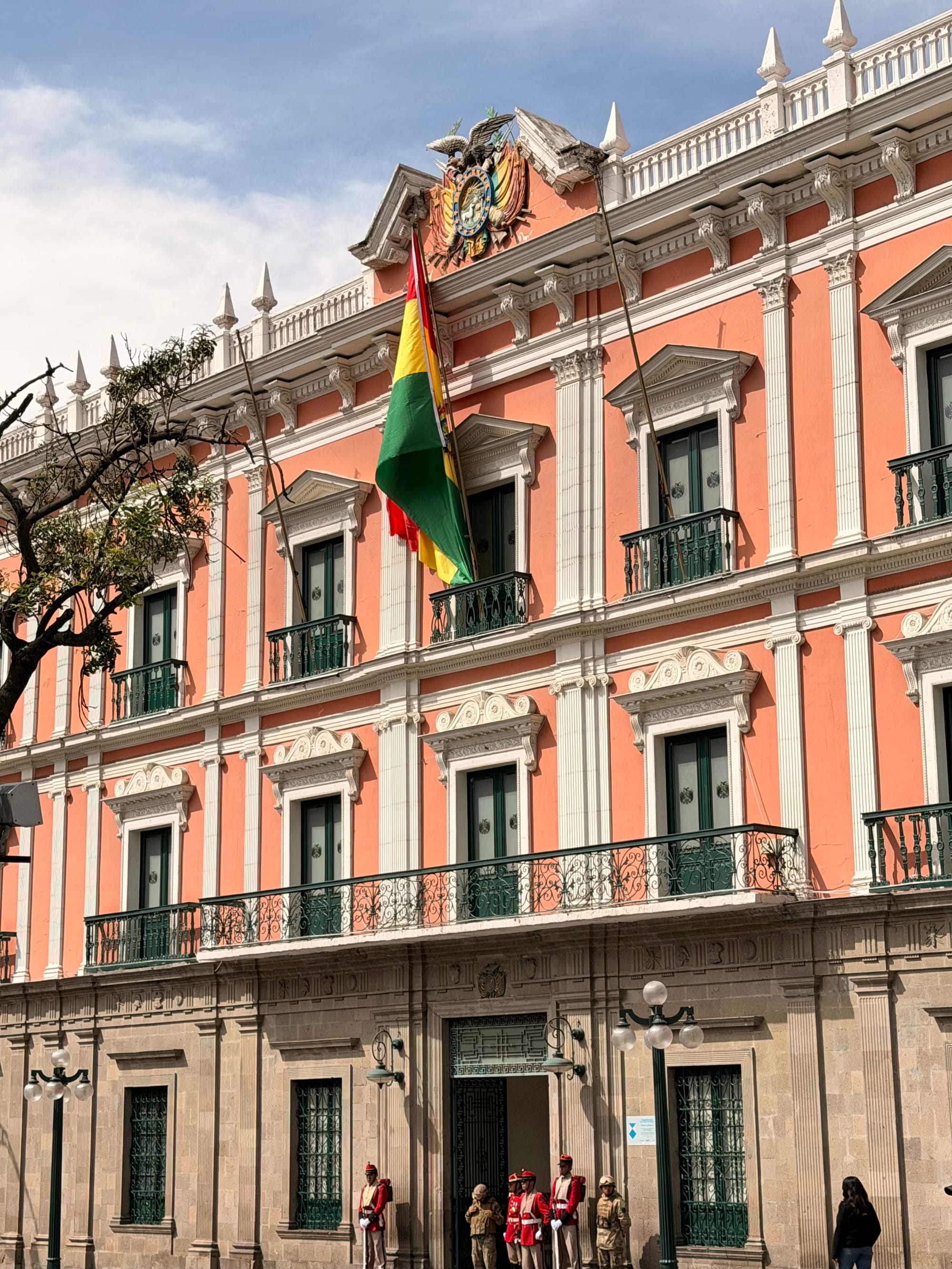
We learnt how the Bolivian economy became what it is today and why they have so many protests, how the indigenous people killed the previous president even though he was actually helping the economy, and that they had the same president until recently for 20 years because he fixed elections. We learnt that the police started fighting back against the army because they wanted to protect the local people (middle picture below), show casing the bullet holes to remind everyone of the past.
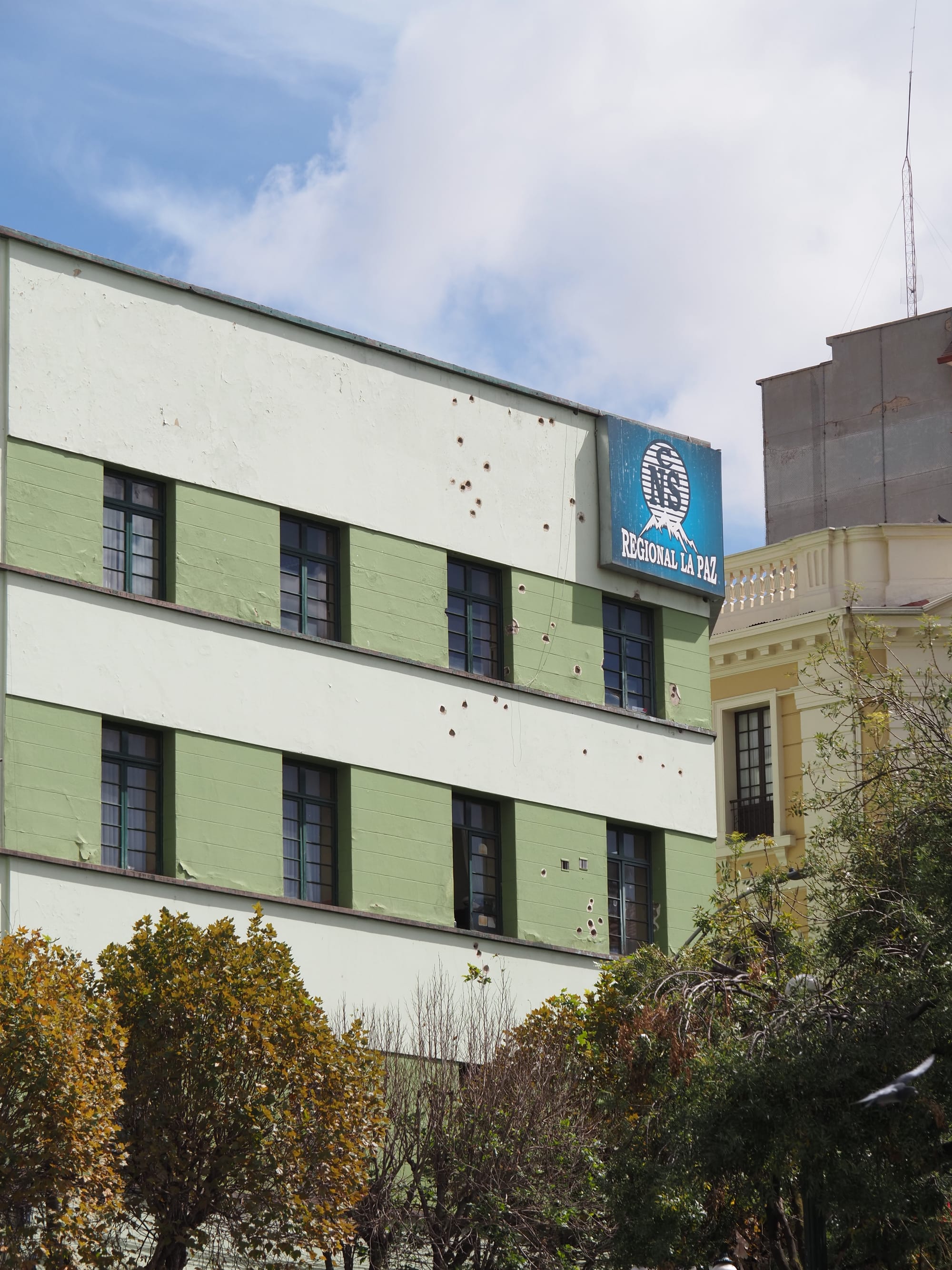
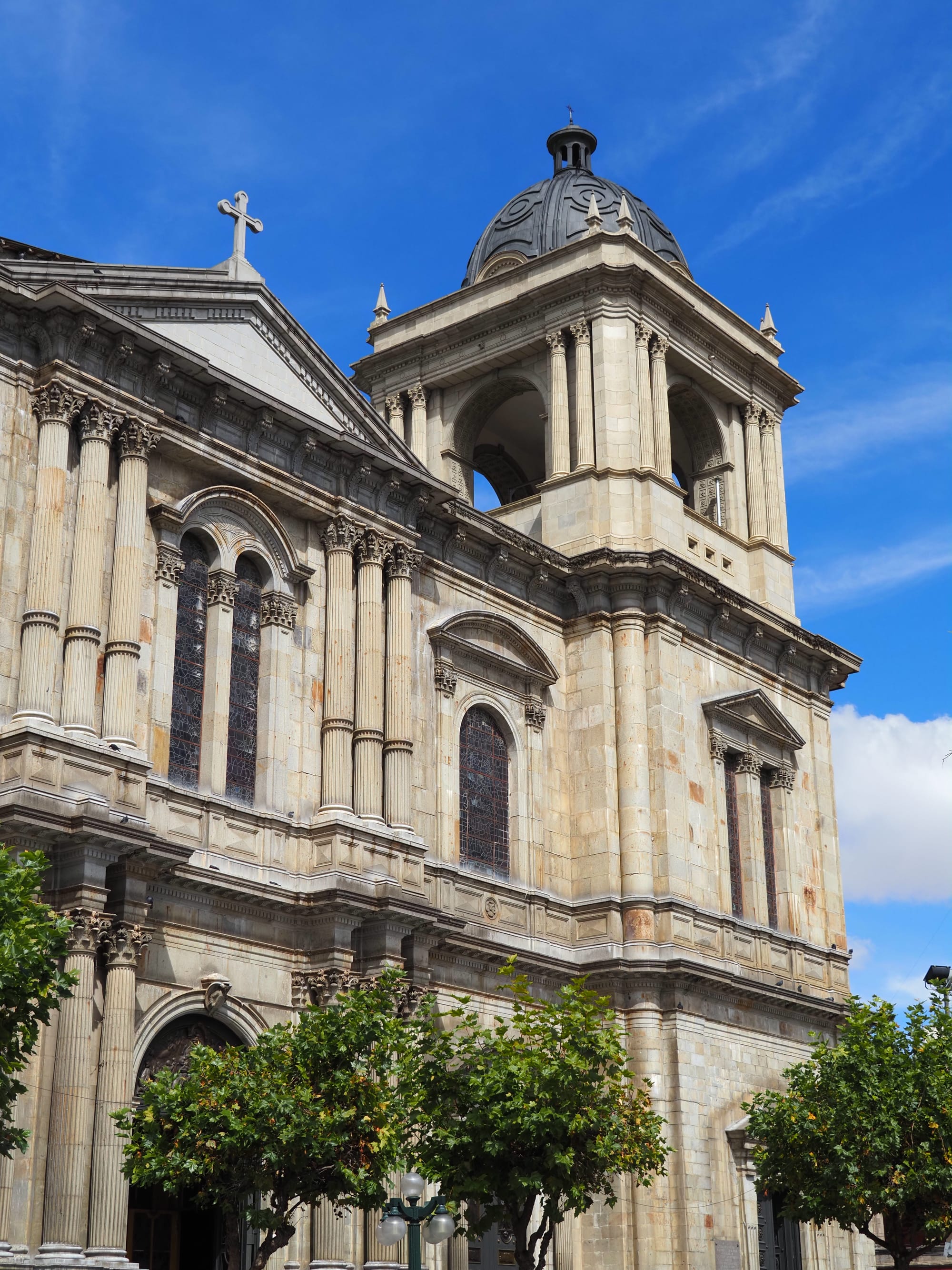
The famous prison in La Paz, was the most interesting part of the tour. This prison is in the heart of the city and was for people awaiting trial, because in Bolivia ‘you’re guilty until proven innocent’. Some facts we learnt were if you’ve got money in Bolivia, you can pay to have a nice room in the prison, but if you don’t have money, you will get the worst room. Coca Cola also made a deal with the prison to be the only beverage provider, so everything inside is from Coca Cola, which is why there are hundreds of empty bottles outside the prison to be collected.
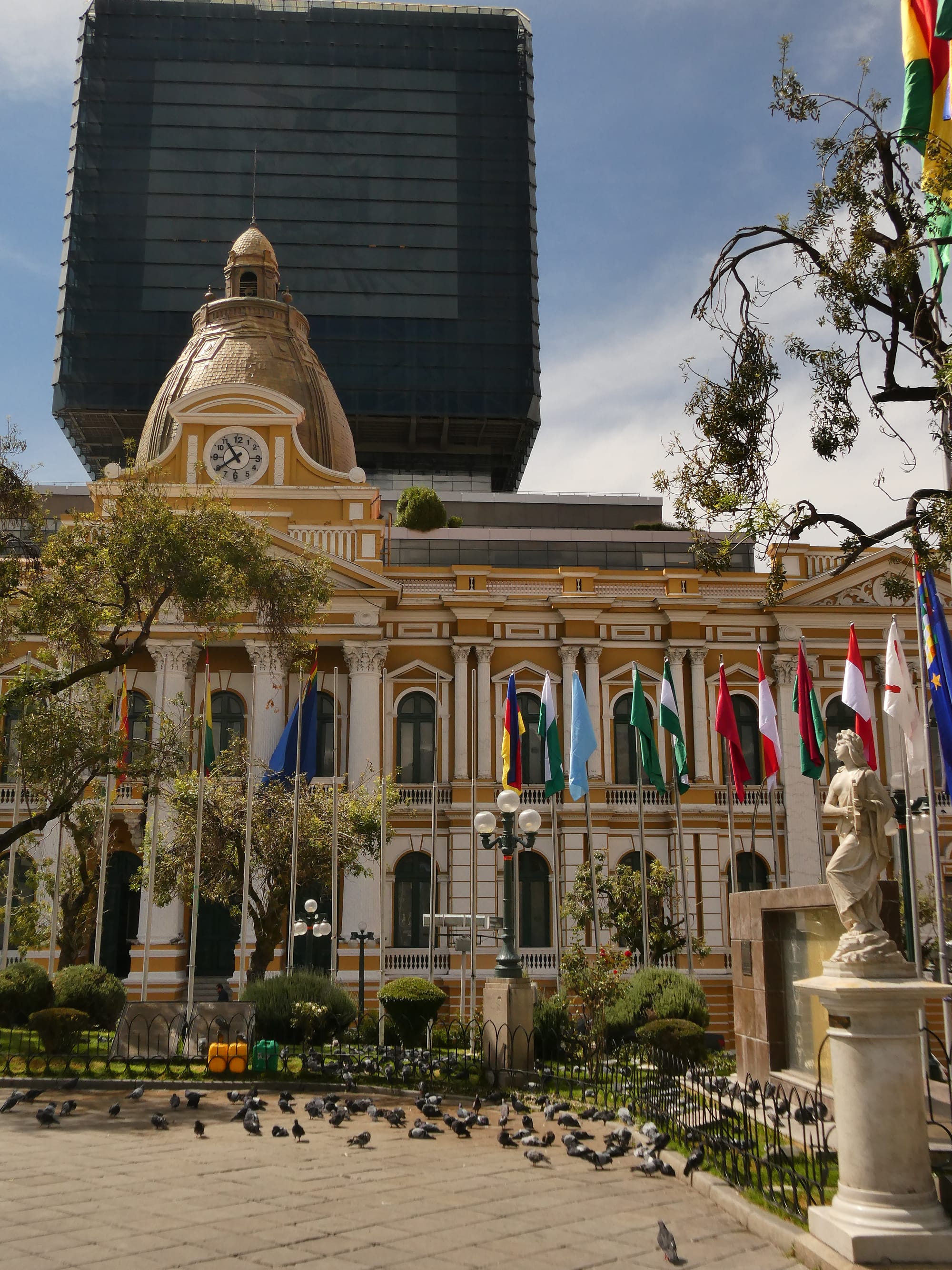
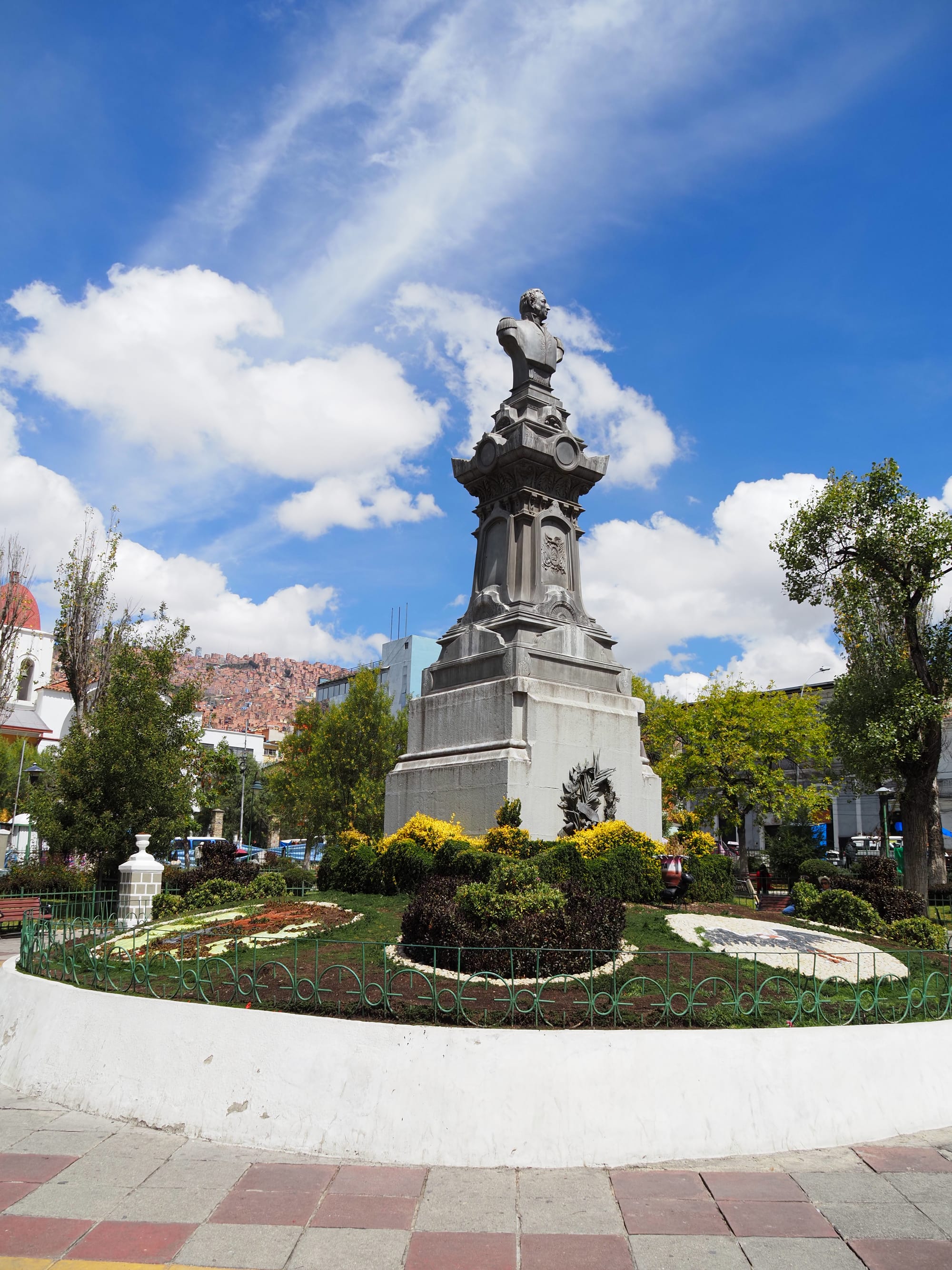
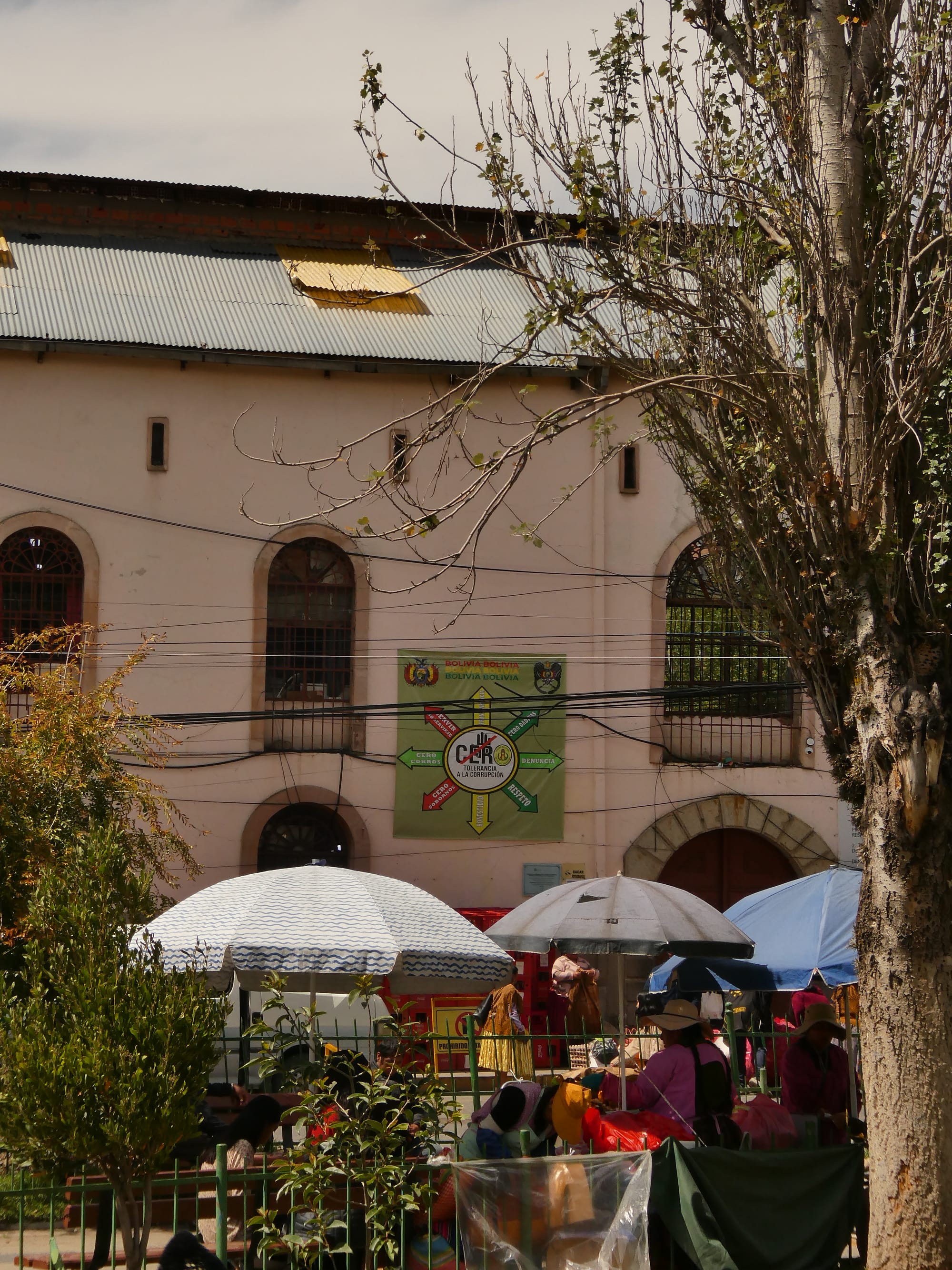
Lastly, we were told how an English businessman witnessed the drug smuggling inside the prison and developed it into an even bigger drug ring. This then turned into a tourist spot, where tourists could pay to go inside the prison and see first hand how prisons were run. This is where an Australian tourist paid to stay inside the prison for a few months and learnt about the whole drug smuggling process. This led to him writing a book and the truth behind the prison and drug ring. This book can be bought on Amazon and is called Marching Powder by Rusty Young. It is banned in Bolivia because the book holds a lot of truth and apparently the book rights have been bought by Brad Pitt who is hoping to turn it into a movie.
David might have exaggerated a few facts to make it sound more exciting but it was really interesting nonetheless!
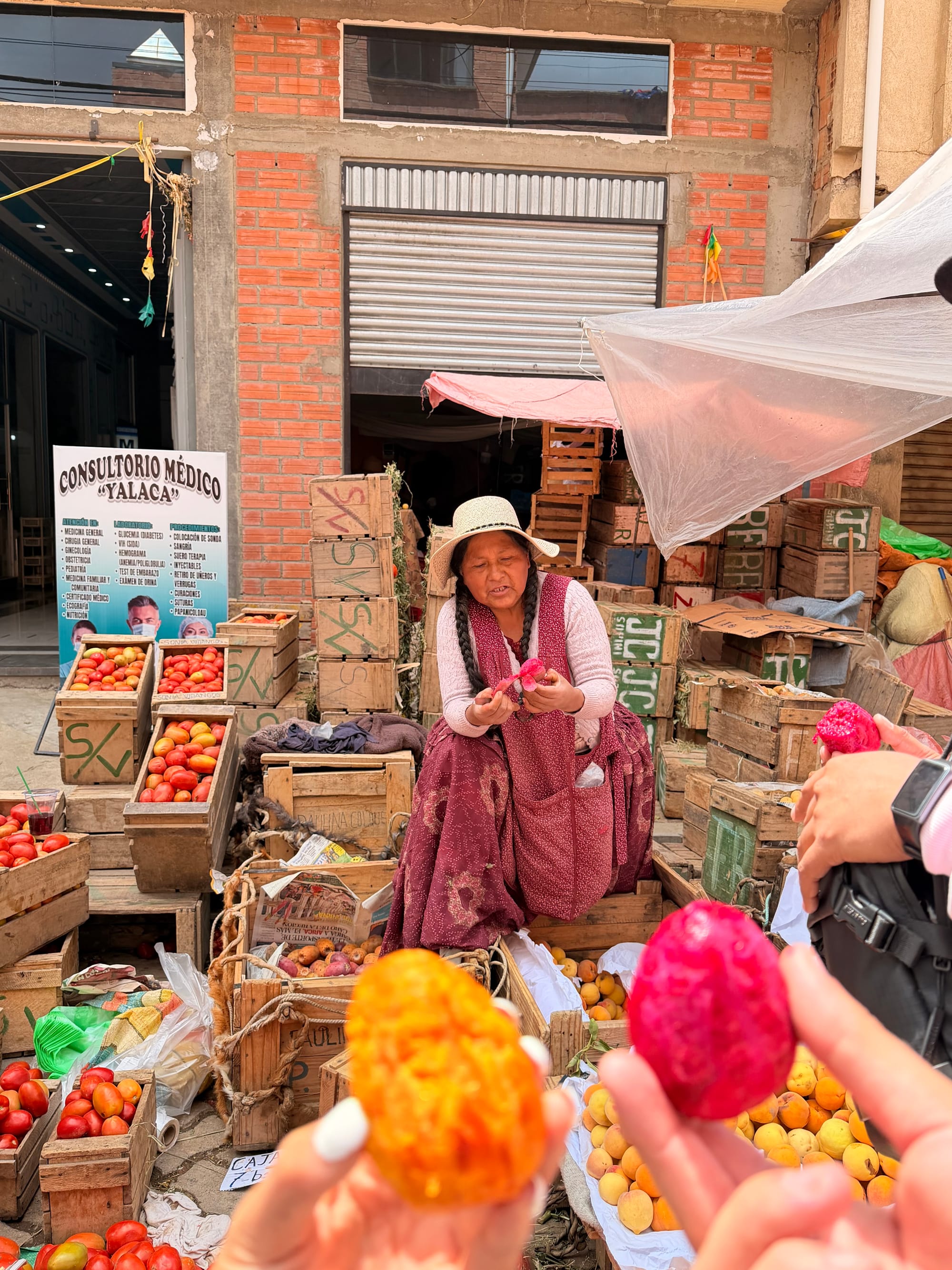
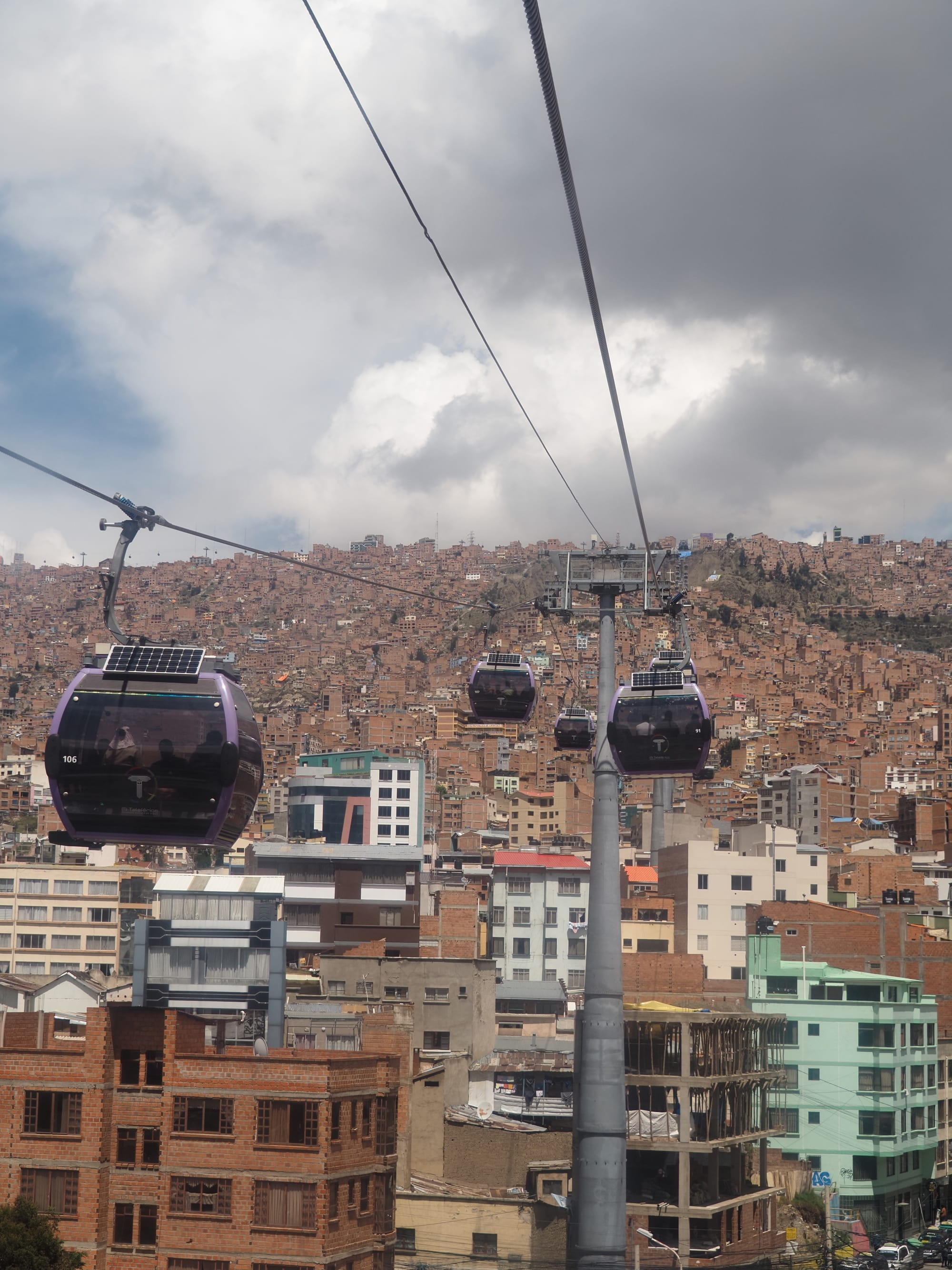
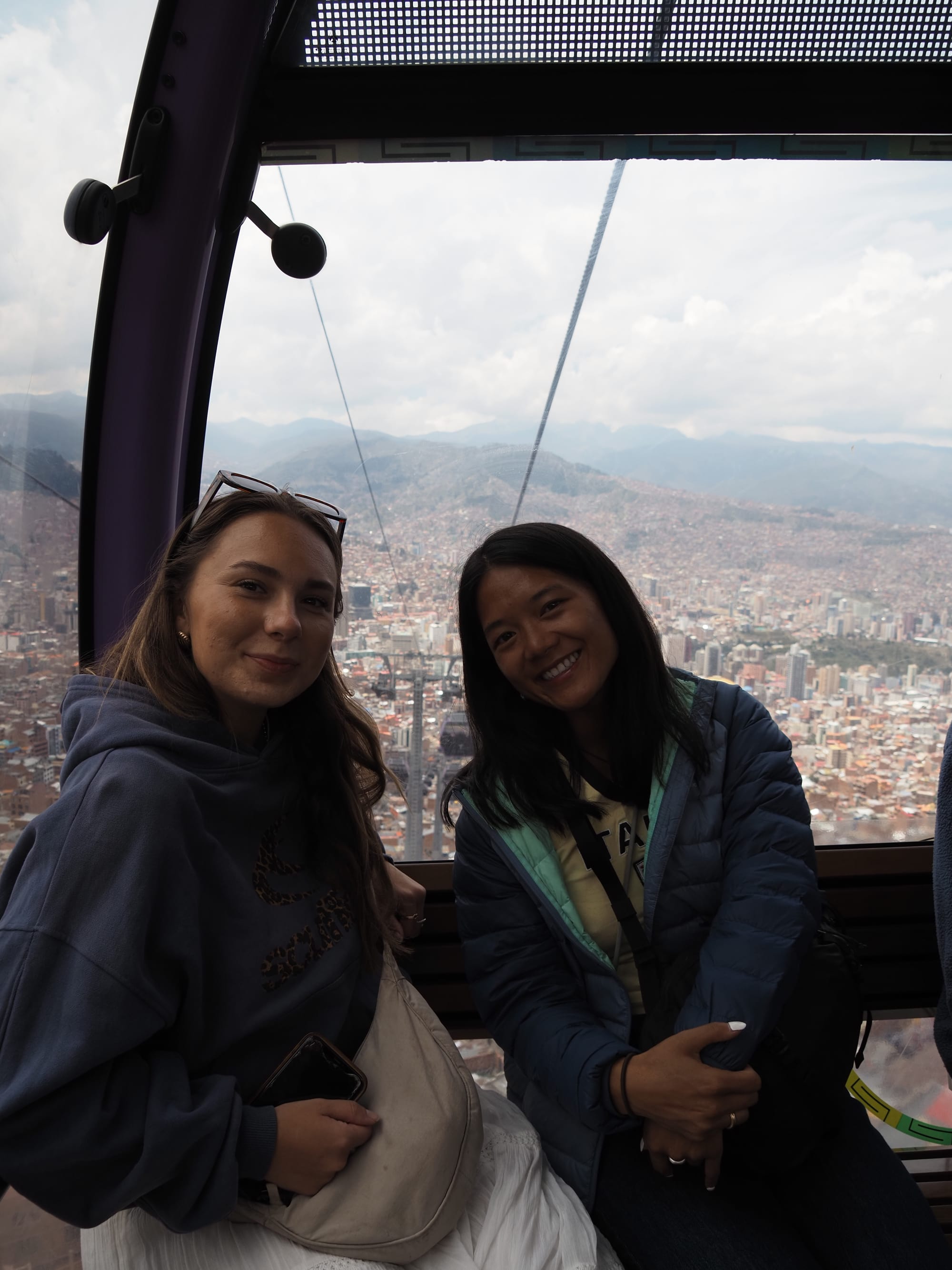
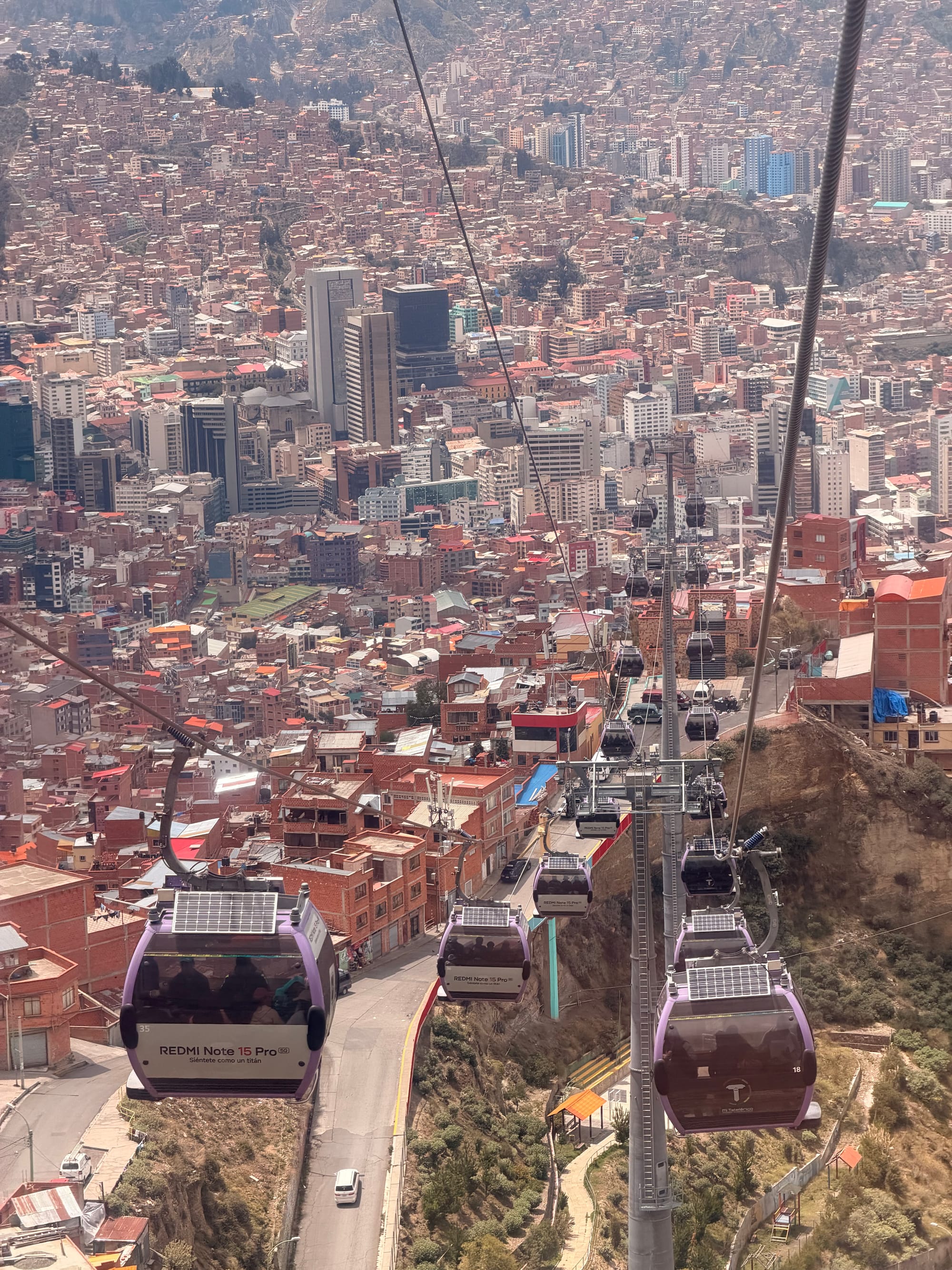
We also got the Cable Car up to El Alto, which is an indigenous city, with a larger population than La Paz and is where the original Witches Market resides. It cost us 6 BOB for a return journey back to La Paz and we saw incredible surrounding views of the city as we took the cable car up. This Witches Market is where all the locals buy their fresh produce and where we were able to finally try cactus fruit.
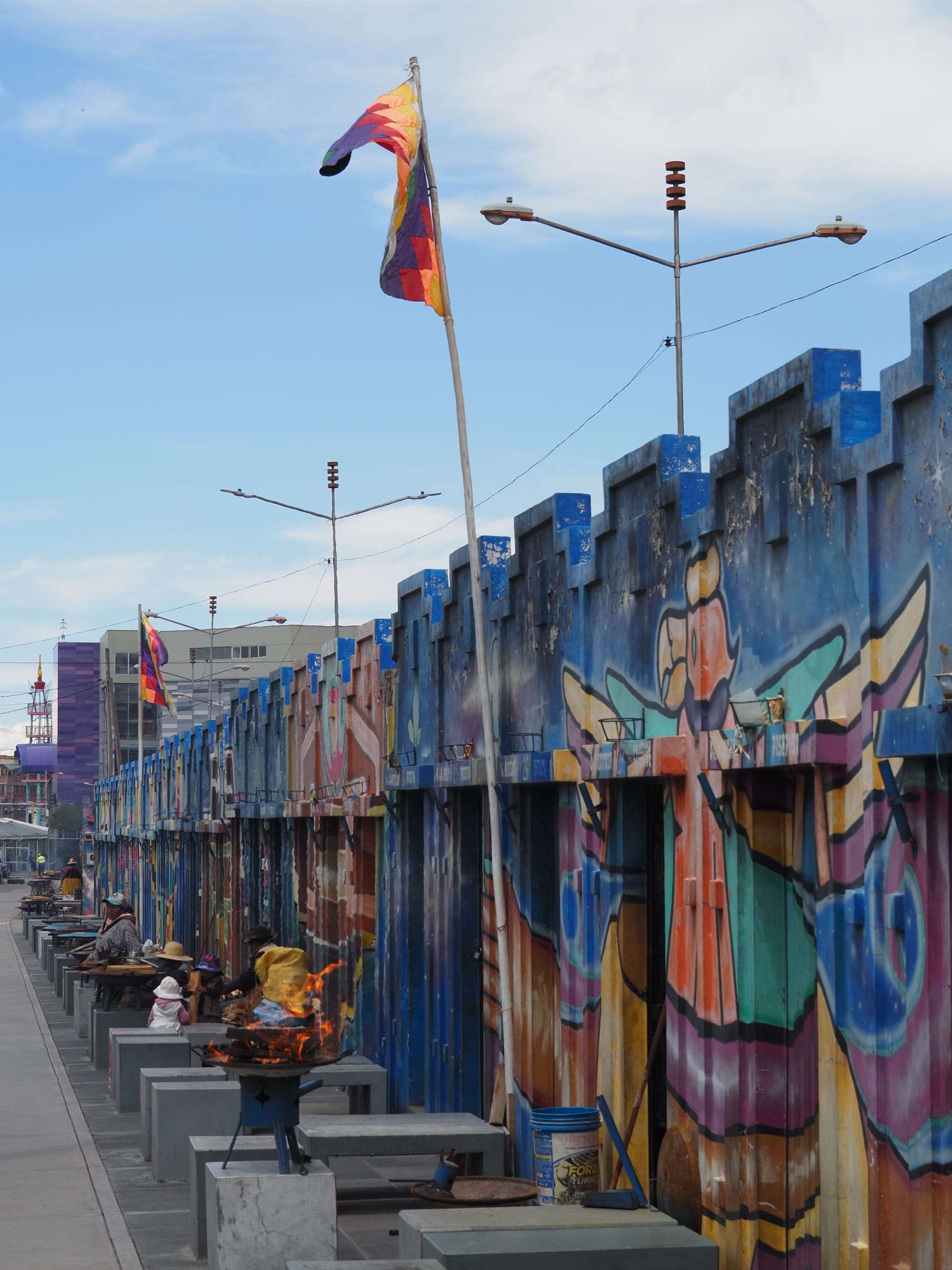
We were then brought to a line of shipping containers where local Witch Doctors practice their craft. We learnt how they perform rituals to tell people their past and future, and how new building constructions use the witchdoctors along with dead baby alpacas (buried under the building) to bring prosperity.
All in all, it was a really interesting Walking Tour, which I would highly recommend to do, as it was such a fun way to learn about the Bolivian history.
Cable Car
Another recommendation is to take the Cable Cars around the city to explore. We went on the Cable Car with the free walking tour but he also recommended that you can take the Cable Cars in a O-loop around the city, it only costs 13 BOB for a round trip and you can hop on and off exploring the city this way.
Witches Market
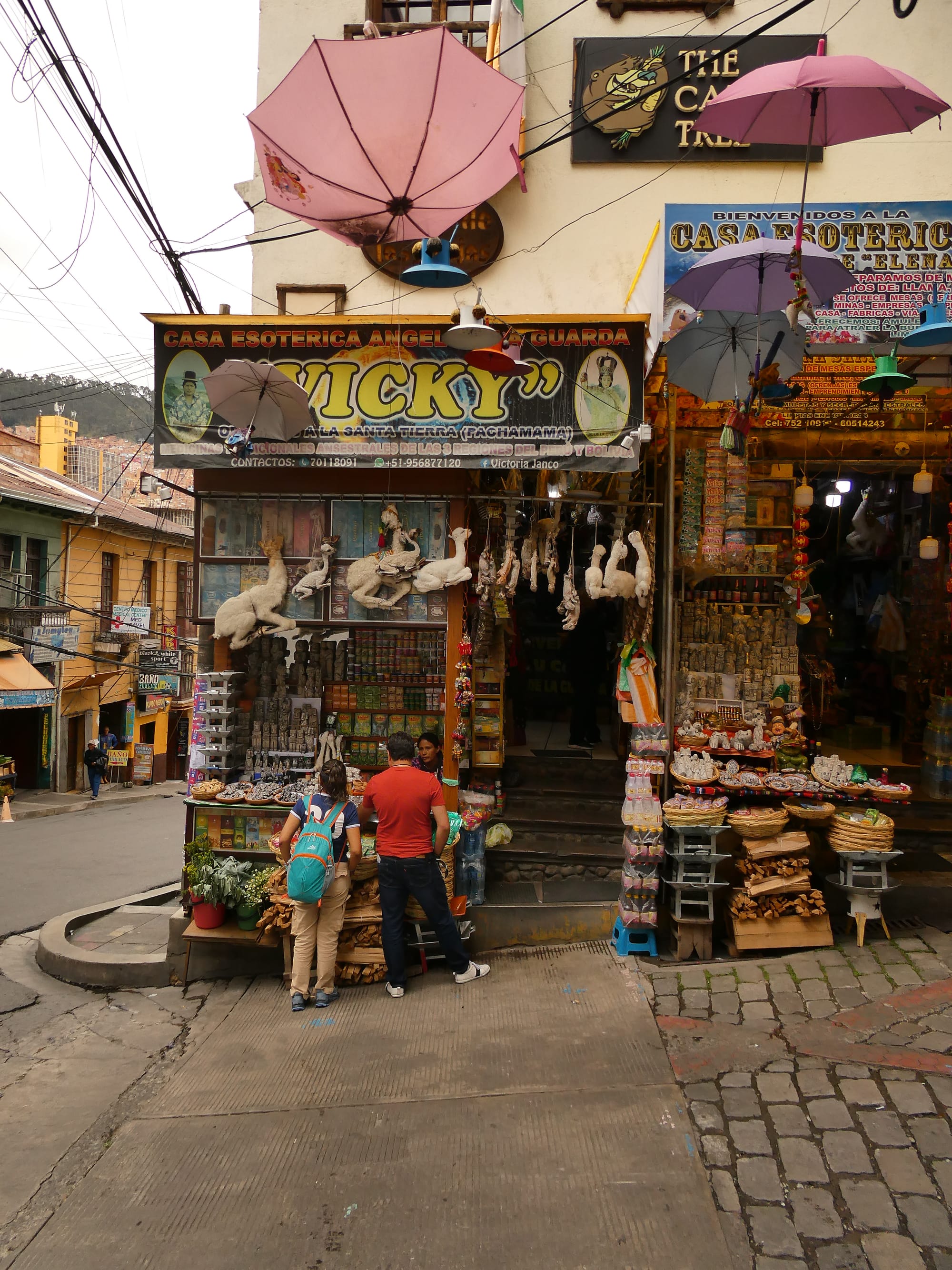
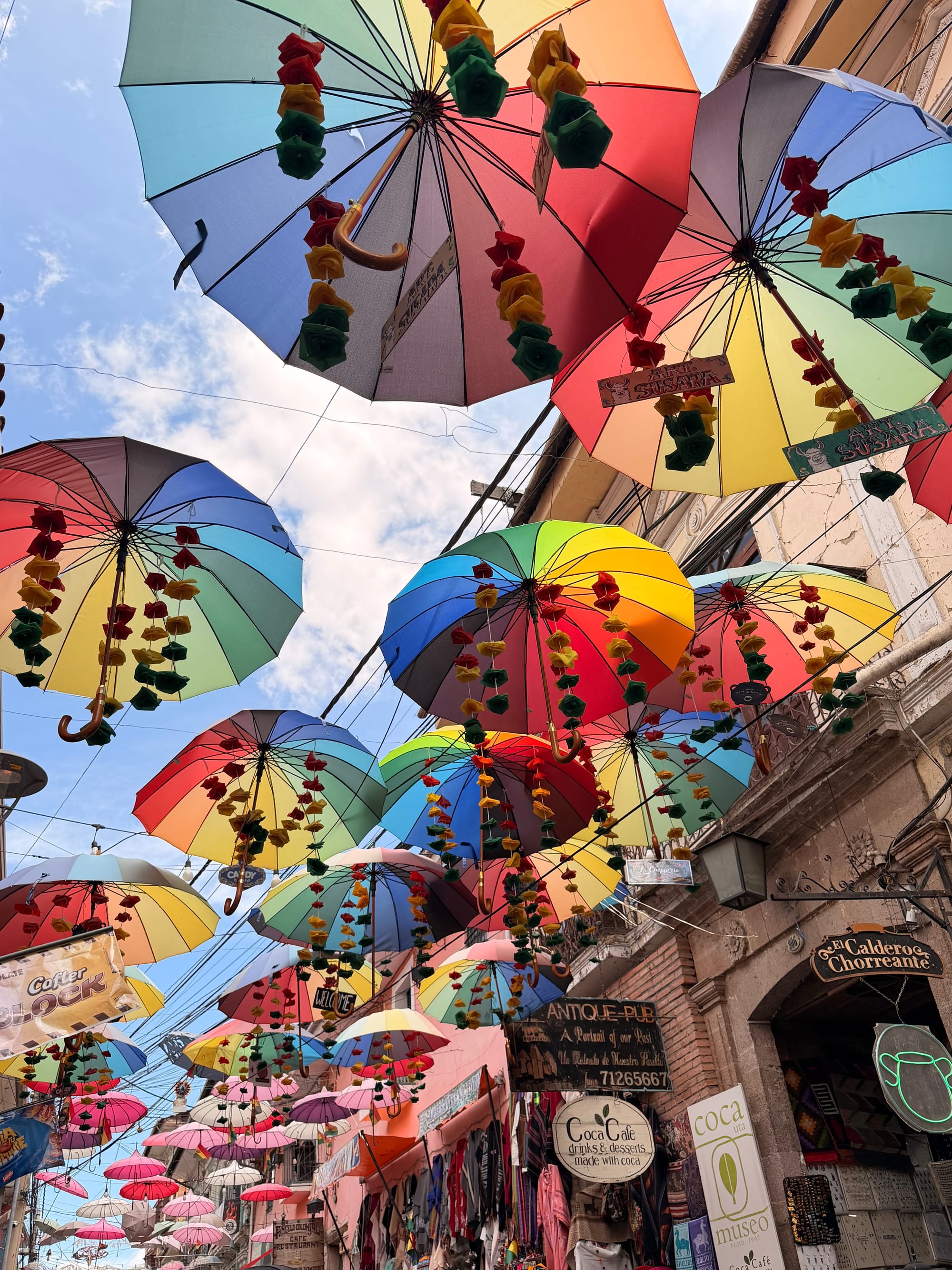
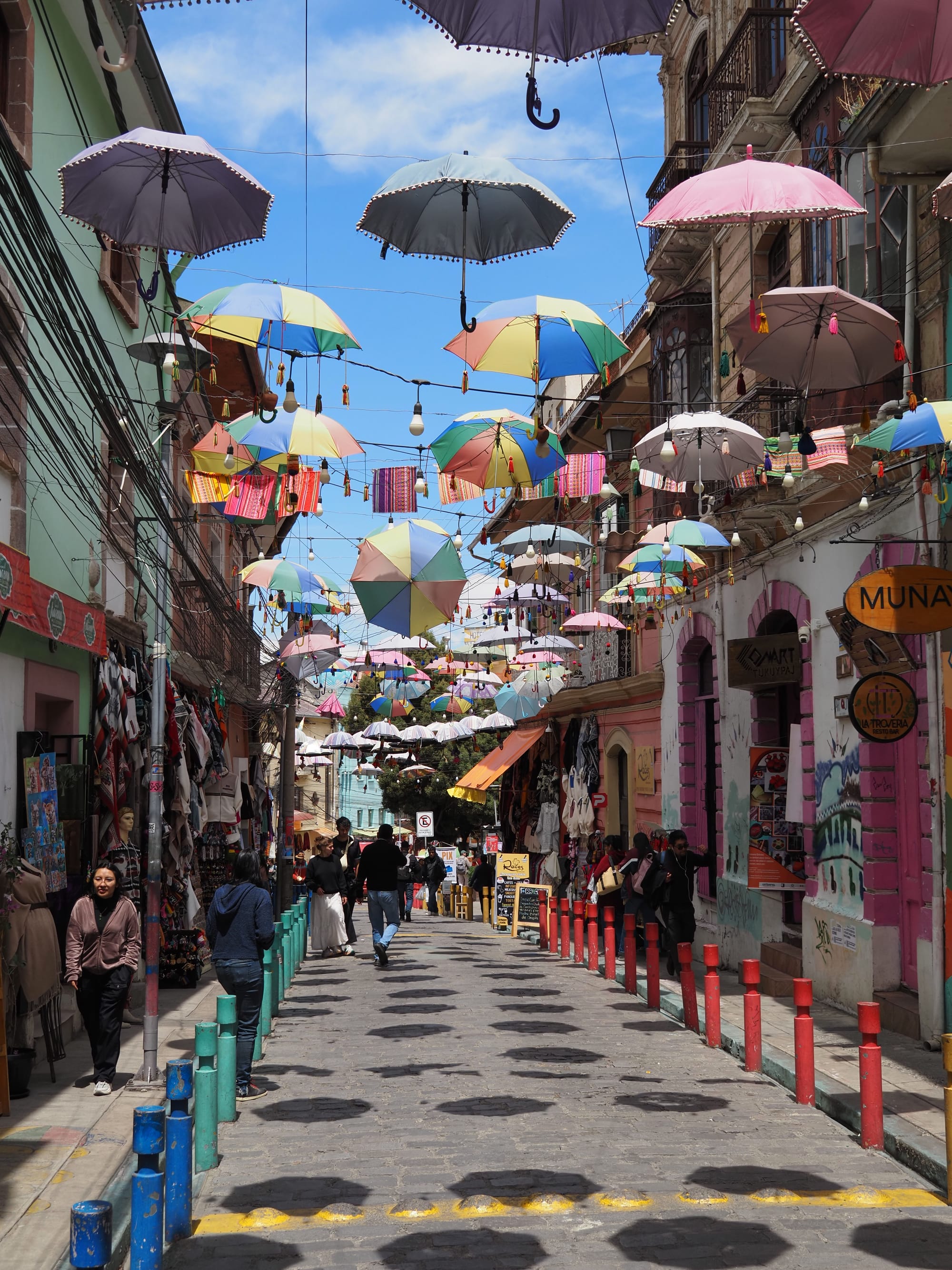
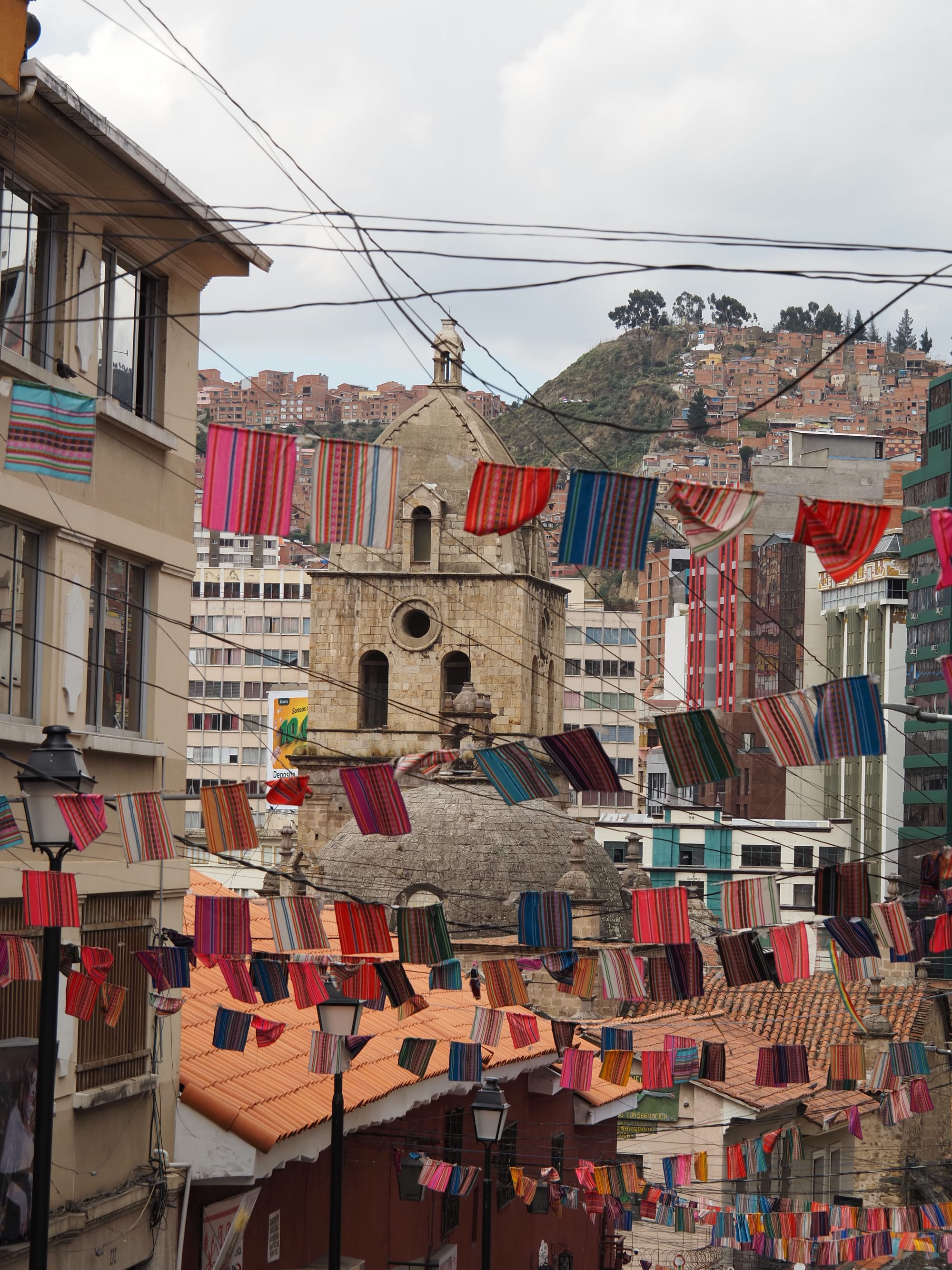
A highly popular market, known for its fake Patagonia fleeces, hiking gear and Bolivian souvenirs. You can spend a few hours mooching around all the different shops. We did this for a couple of hours and made a nice little dent in our Bolivia budget!
Shopping
Some recommended shops:
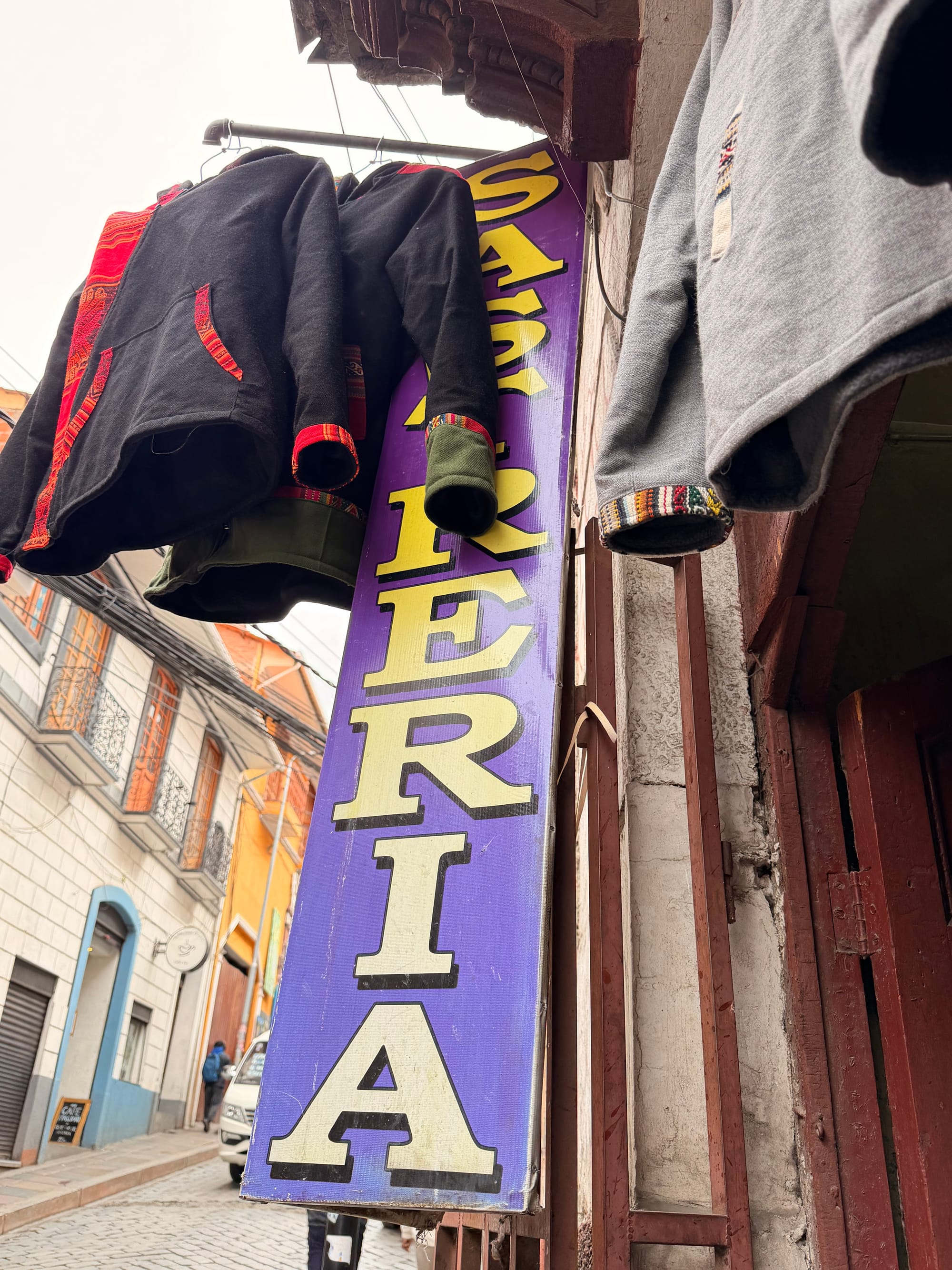
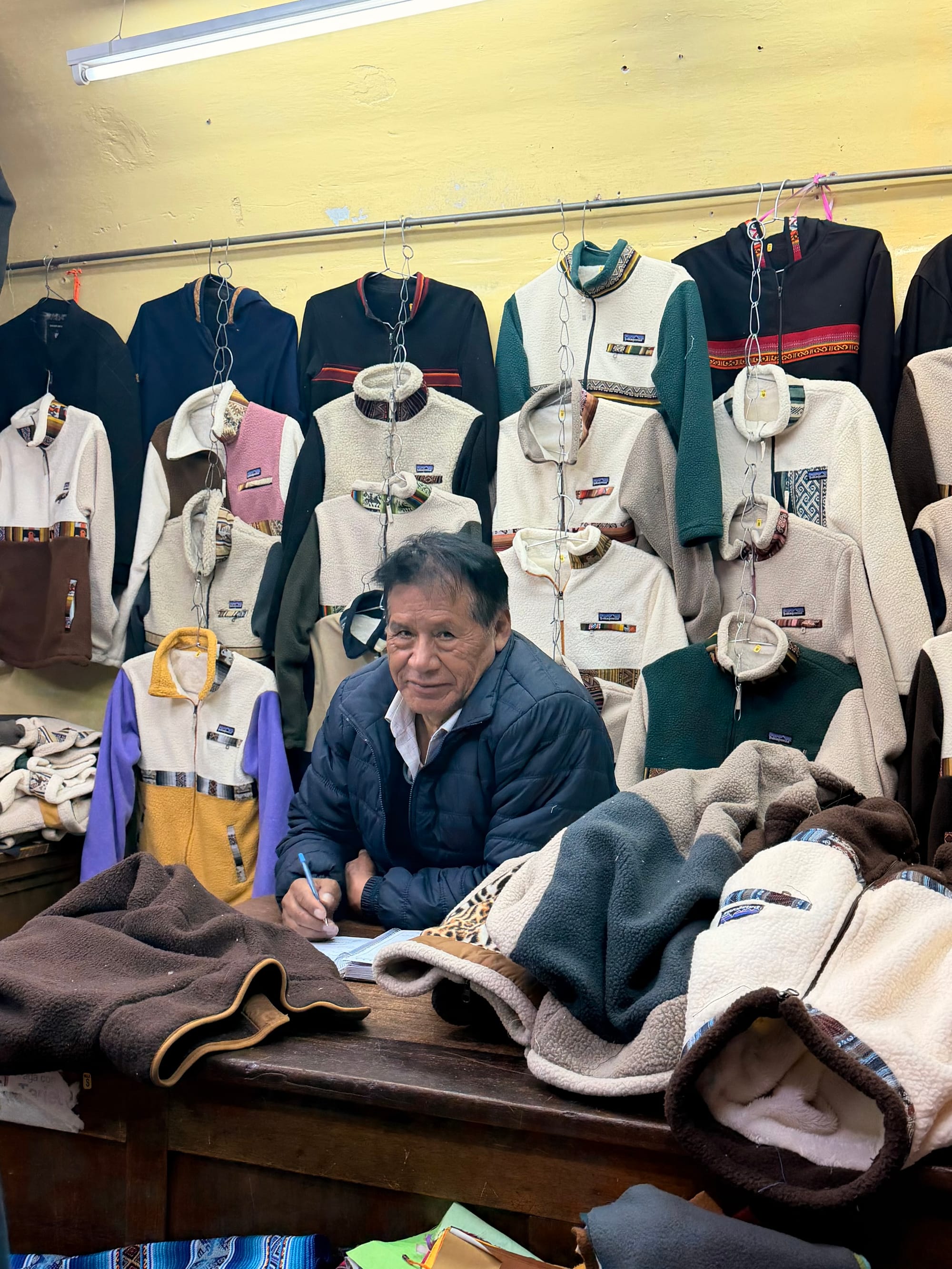
- Sastreria - a shop (first picture), where you can design your own Patagonia fleece. If you don’t want to buy one already made, this stall lets you choose your own design, colour and style. If you do decide to make your own, do this at the beginning of your trip as it can take three days to make a personalised fleece.
- North Face - there are a few hiking shops, where you can get hiking trousers and jackets, they are mostly fake but they are really good quality, so if you need more clothes, these shops are the place to buy them from.
- Sunglasses shop - next to the shop where I bought my North Face jacket, there was this really nice sunglasses shop where you can get really good quality fake sunglasses. All of us got some new ones perfect for our hikes in Peru.
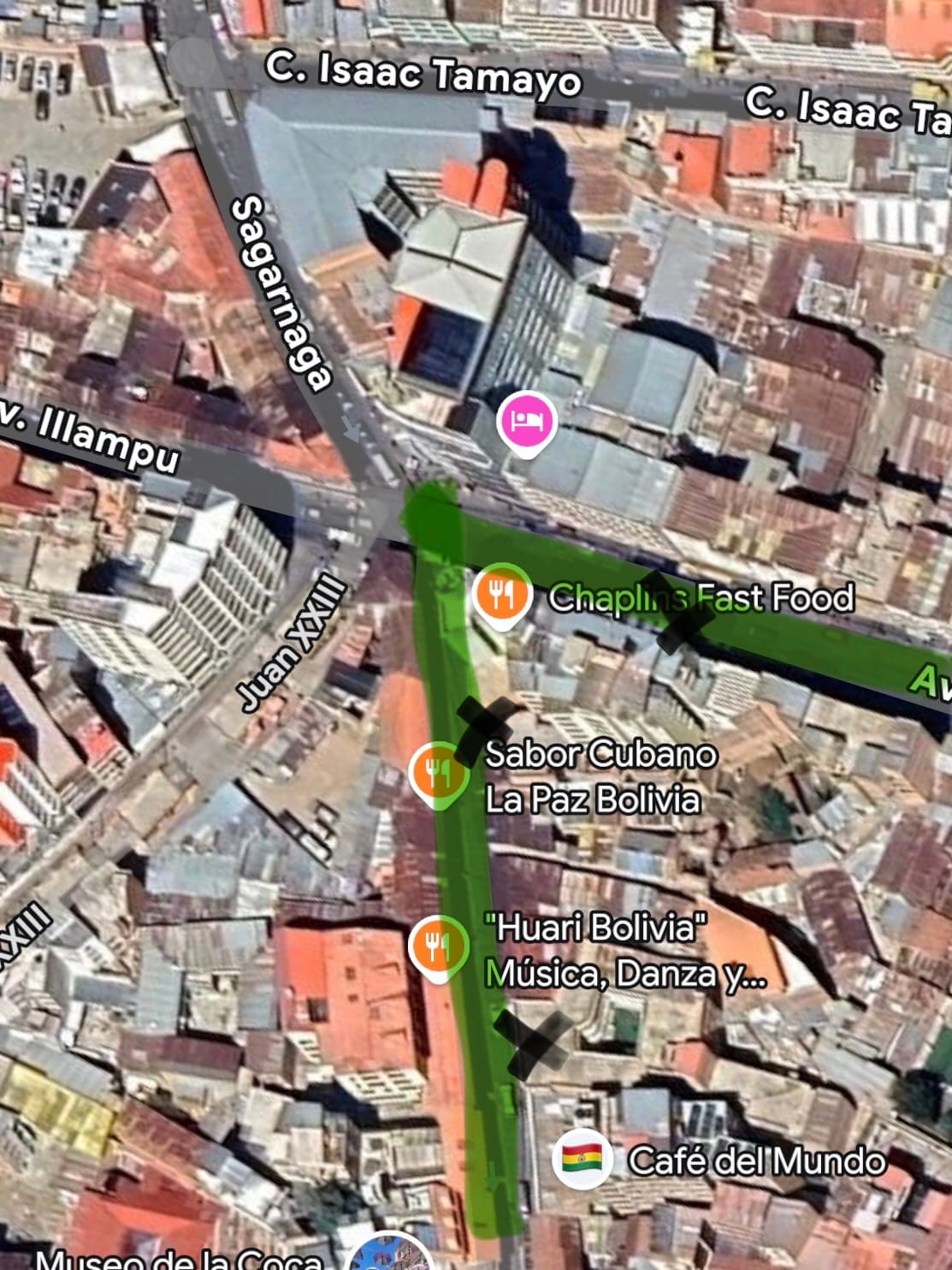
The middle picture below is a map of where you can find these stalls. If you head to Cafe del Mundo and then walk a bit further up, look for the sign (left photo) of Sastreria. This is where you will find the stall where you can design your own Patagonia Fleece, the man (right photo) is really cute and him and his family make all the fleeces.
Once you pass Sastreria, there are two North Face stalls further up the street, where you can find all the hiking goodies. Sadly for me they had run out of all the S sizes so I didn’t find anything here. If you continue up the road and head towards Sagarnaga, turn right at the junction and you will see a few more North Face stalls. If you turn right into a building complex you will see a few more hiking shops, this is where I got my North Face jacket from and next door you will find the sunglasses shop. Definitely pop into these two shops as they sell some good stuff, they also barter with you, so you can definitely get the products for lower than they ask if you keep bartering. I’m awful at this, so I let Ned do all the work for me haha!
Cholitas Wrestling
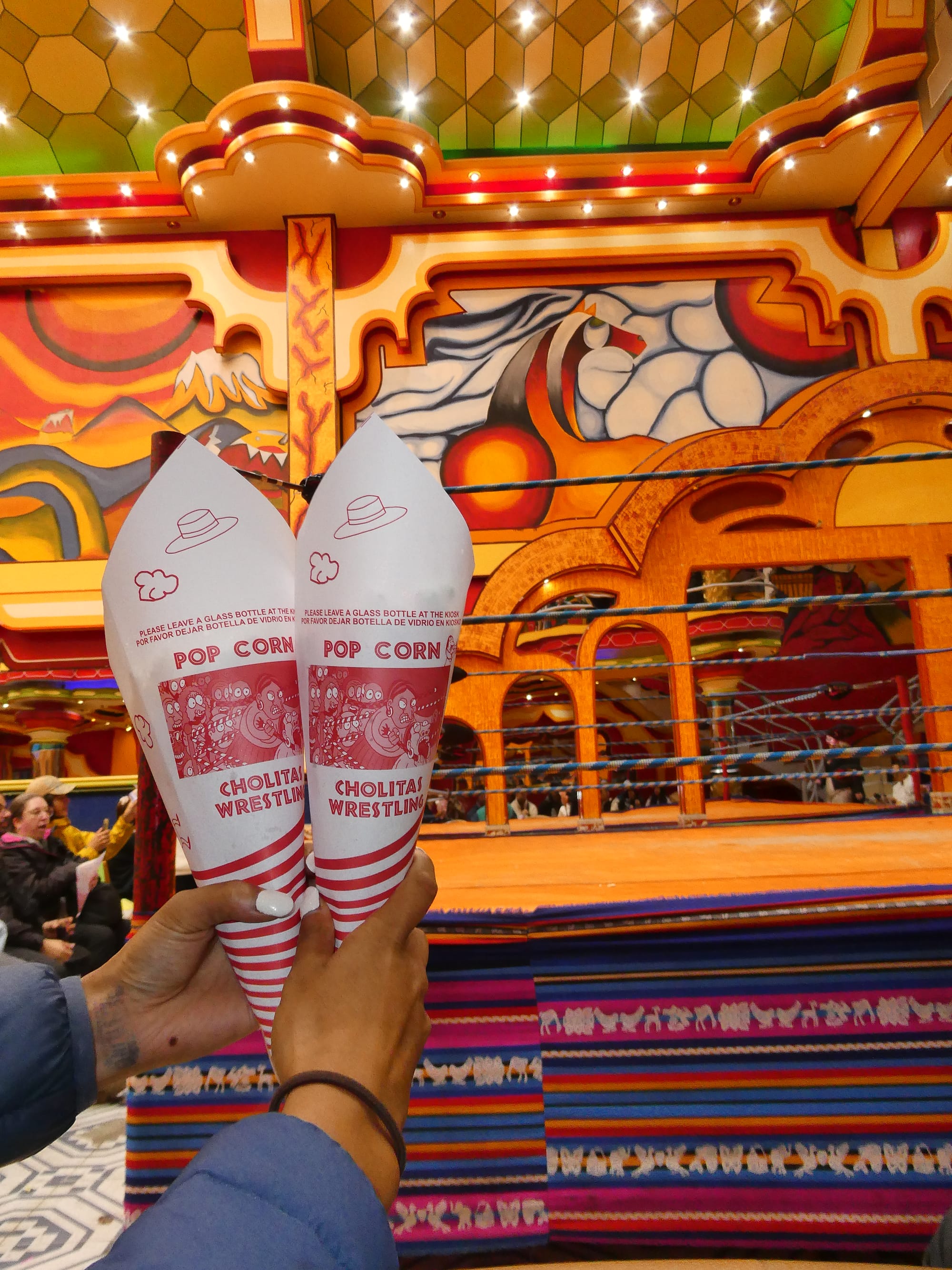
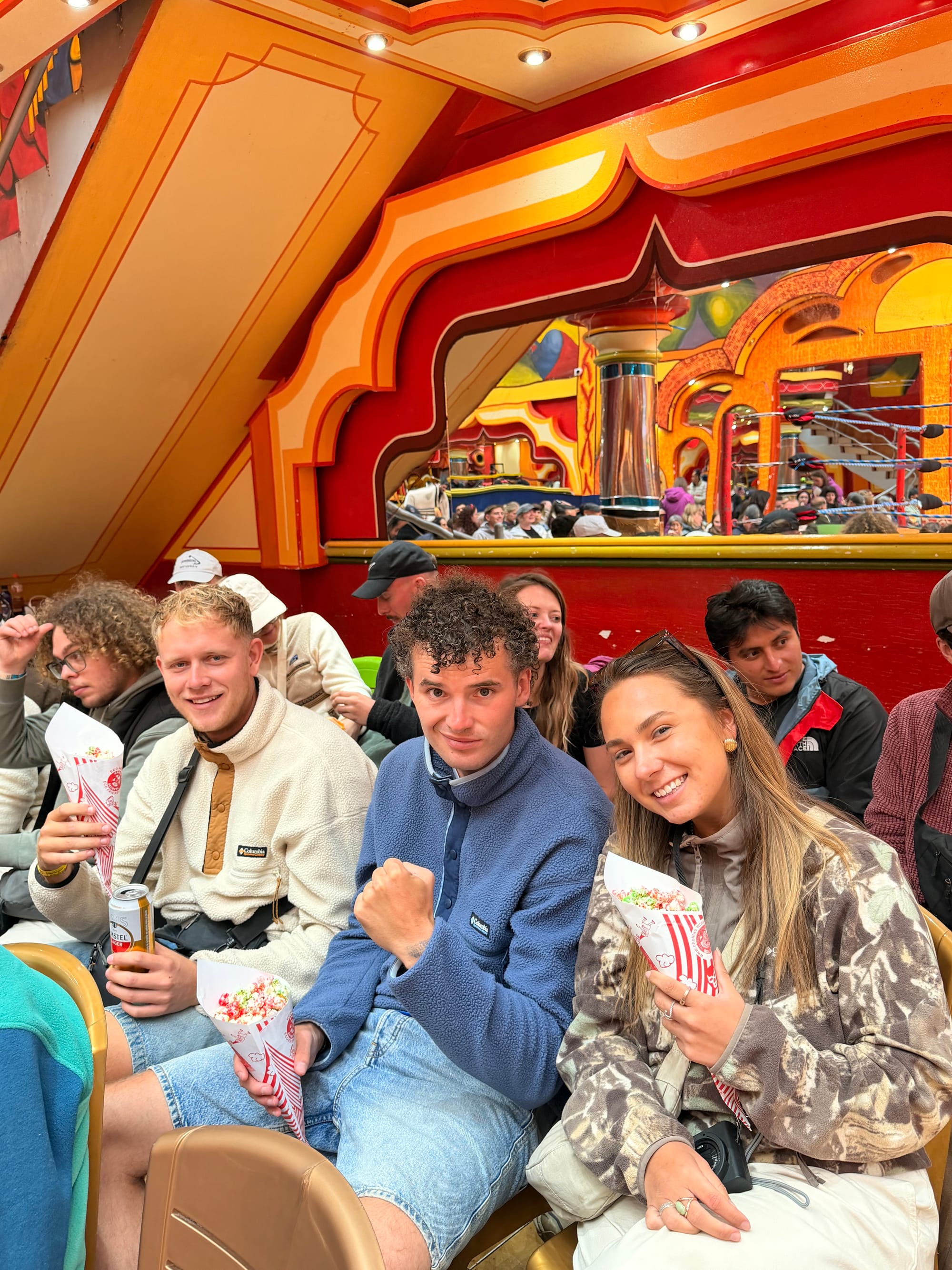
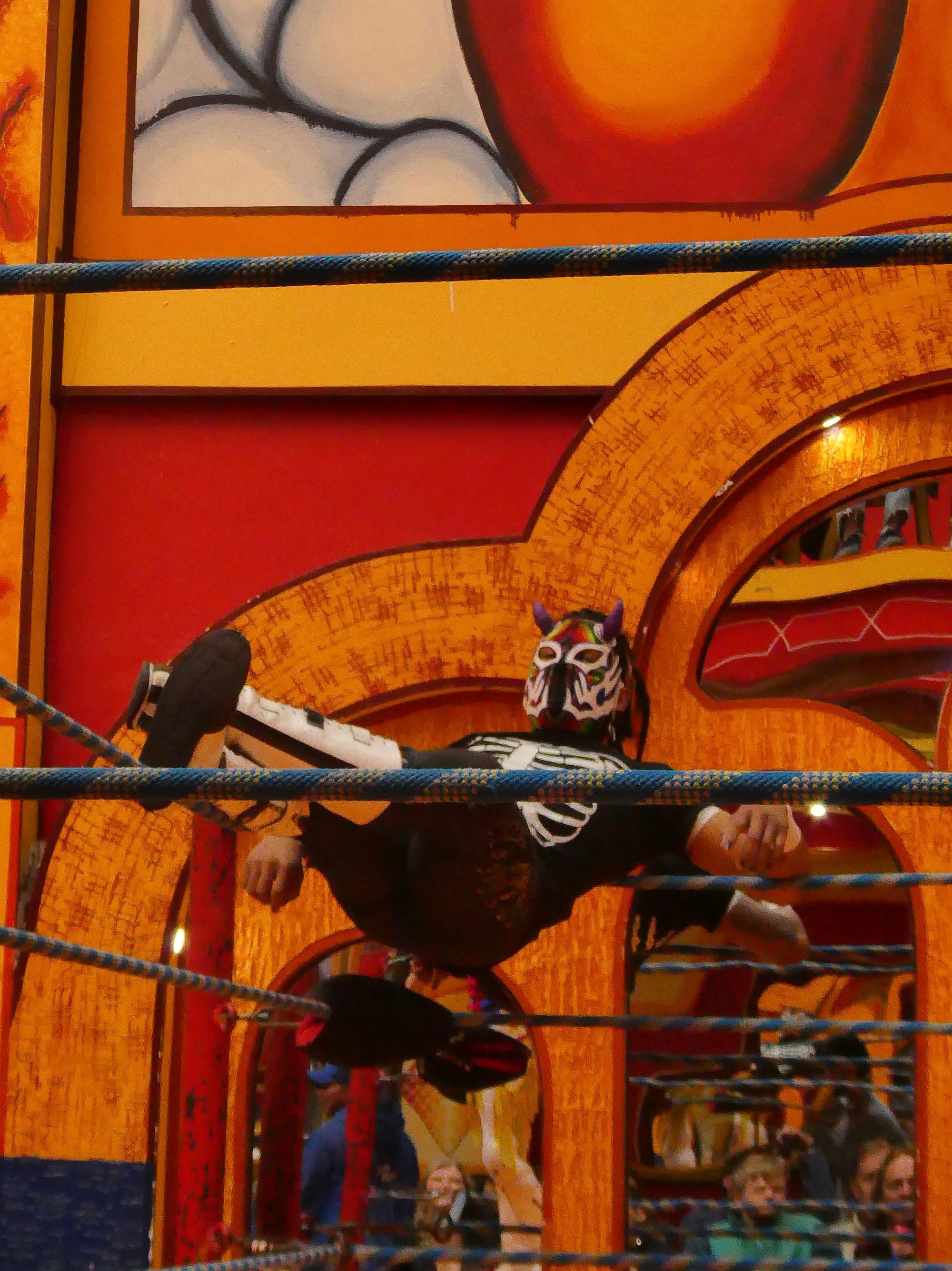
Another popular activity is to watch the Cholitas wrestle in traditional Bolivian outfits. Tuesday and Thursday are the normal touristy days where you can watch them and I think Sunday is when the locals go as well! We booked our tickets online on the Cat Hat website as this was the cheapest price we could find. The price of the ticket includes transfer there and back, a complimentary drink, popcorn and souvenir each. The event lasts two hours and we got to see four different performances, I’m not really a fan of fake wrestling but it was still an interesting evening!
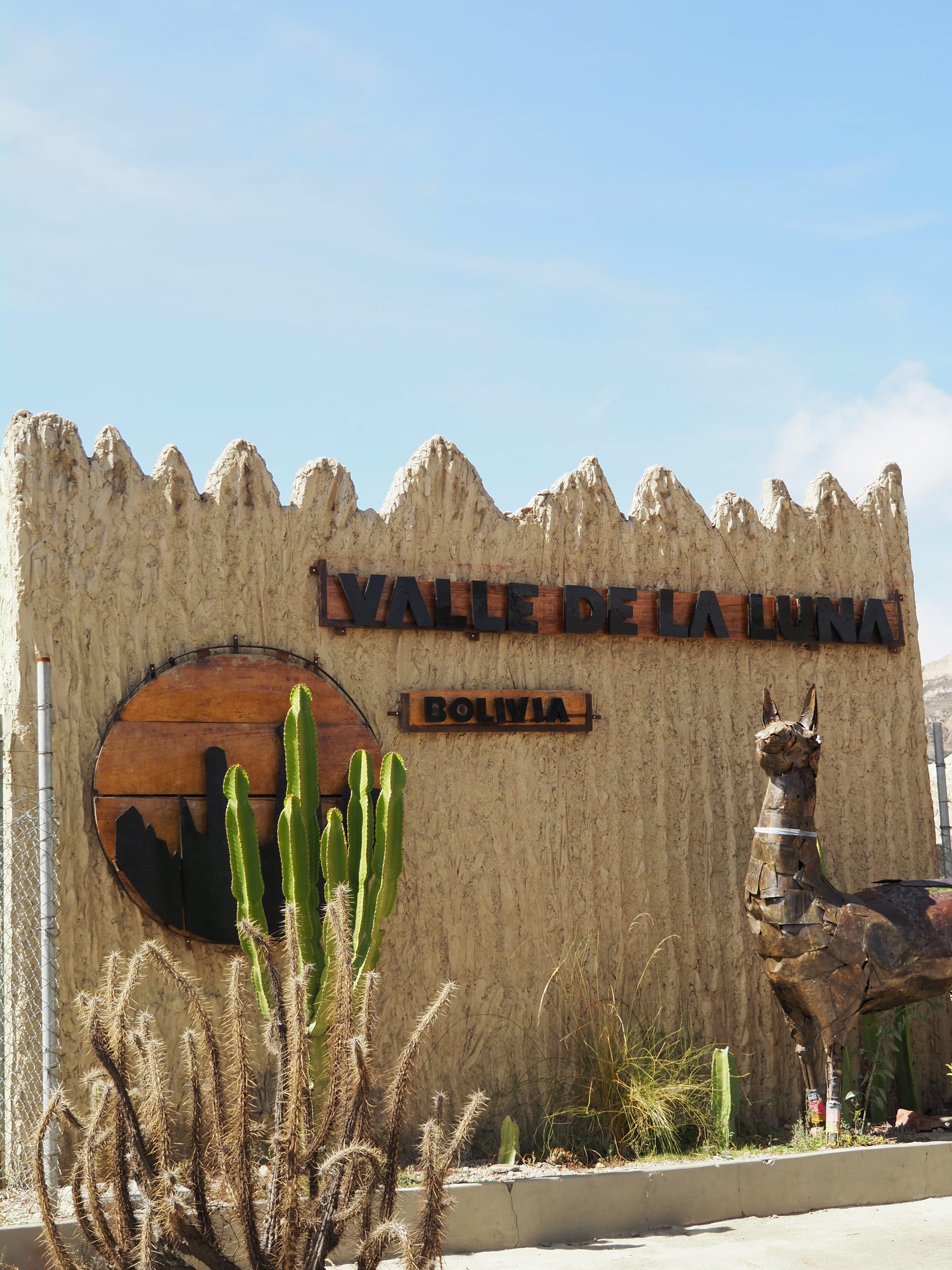
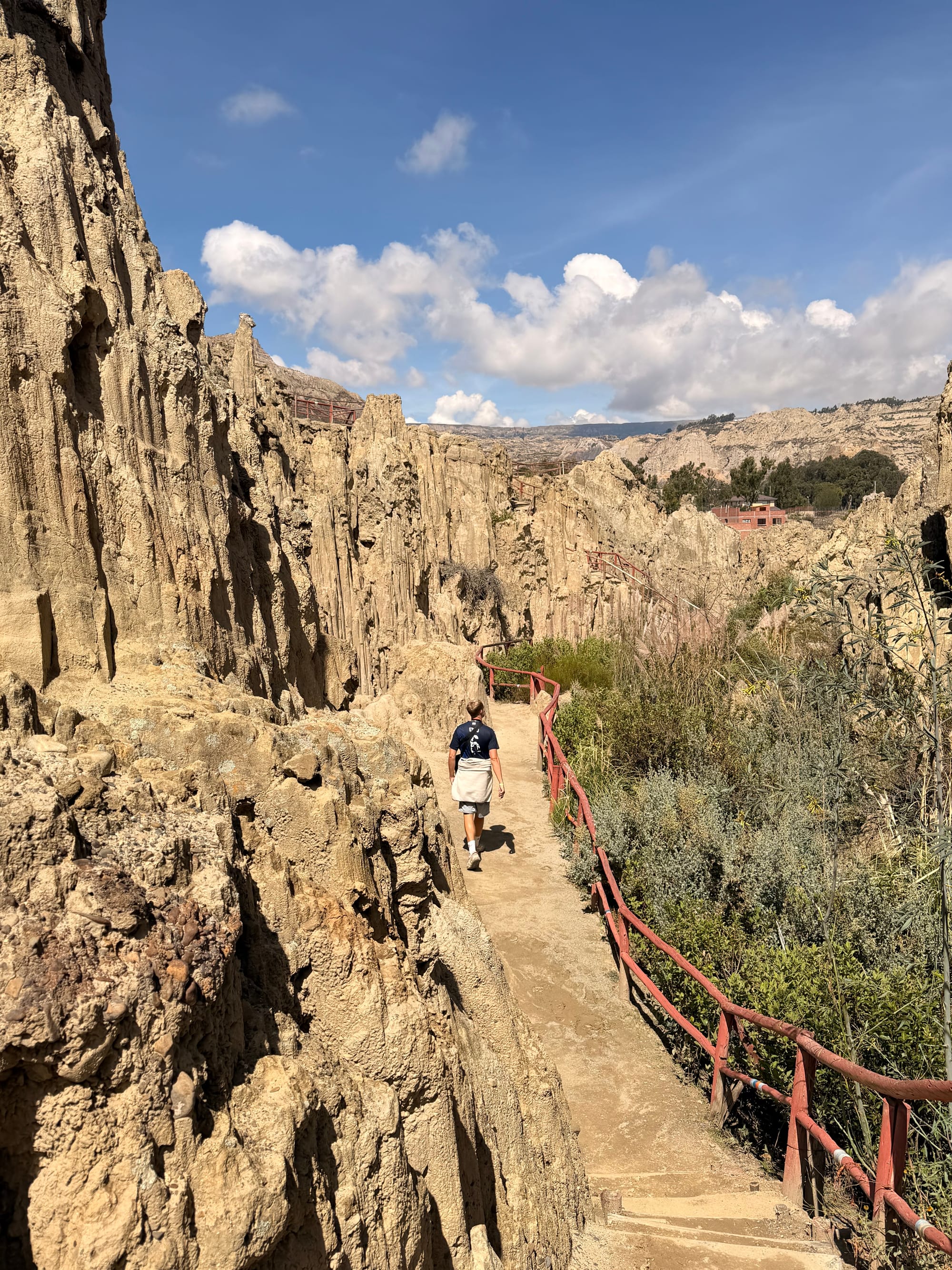
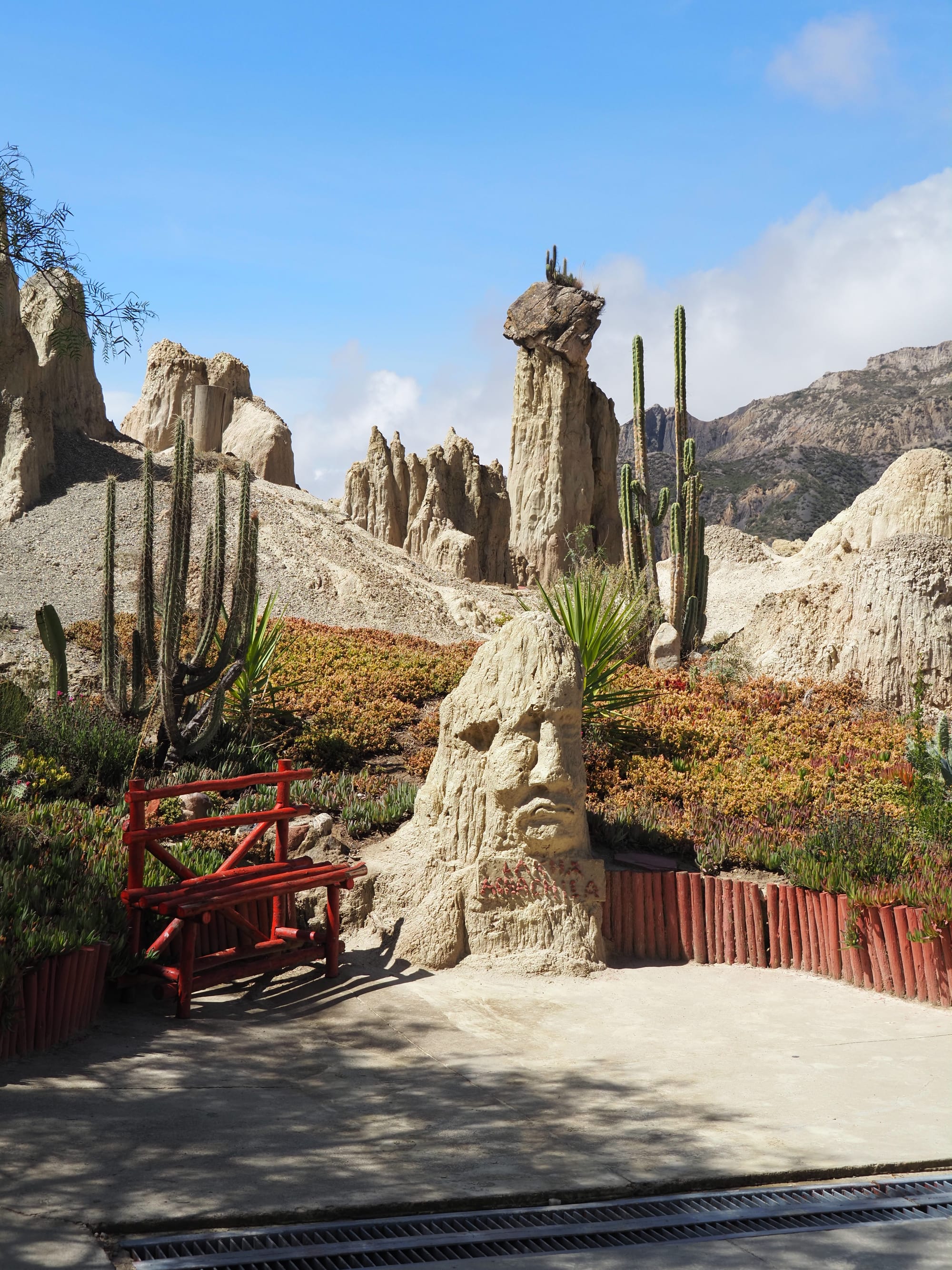
Valley de Luna
One sight to see is Valley de Luna, which is this whole area of huge sandstone structures in the middle of La Paz. We got the cable car from our hostel and it was pretty easy to do so. We also saw incredible views of La Paz and its surrounding mountains. Once we got to the closest station, we got a taxi to the entrance as it was all uphill, so we wanted to avoid that. The price for the entrance was 40 BOB together and we spent an hour or so walking the routes around the valley.
Foodie & Coffee Spots
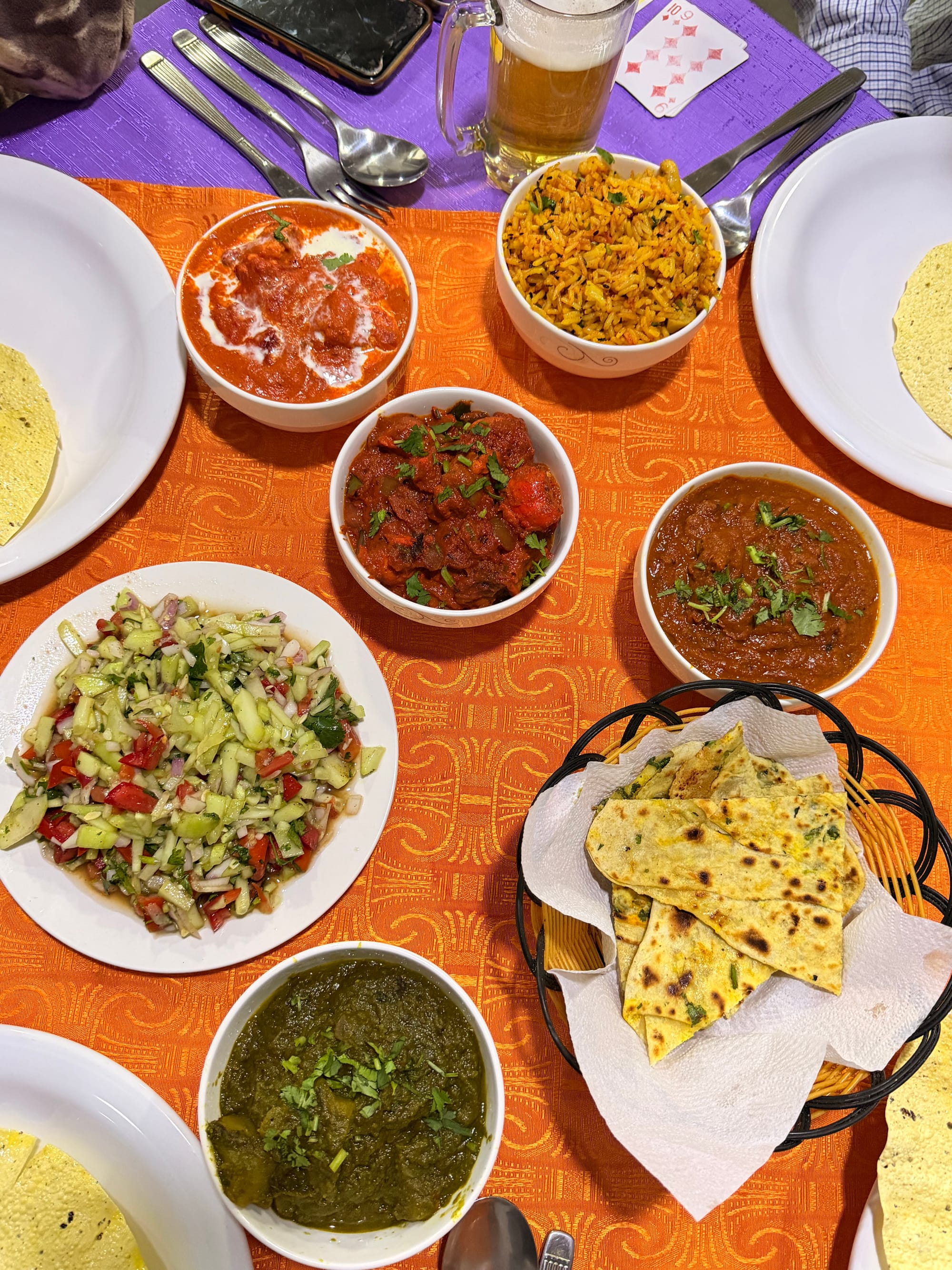
Around La Paz there are loads of different curry spots that you can choose from. We went to New Delhi (first photo), which is this small restaurant near the Witches Market. It doesn’t look that impressive inside, but the food is wow! We got four main dishes, rice, naan and salads to share and it was delicious!
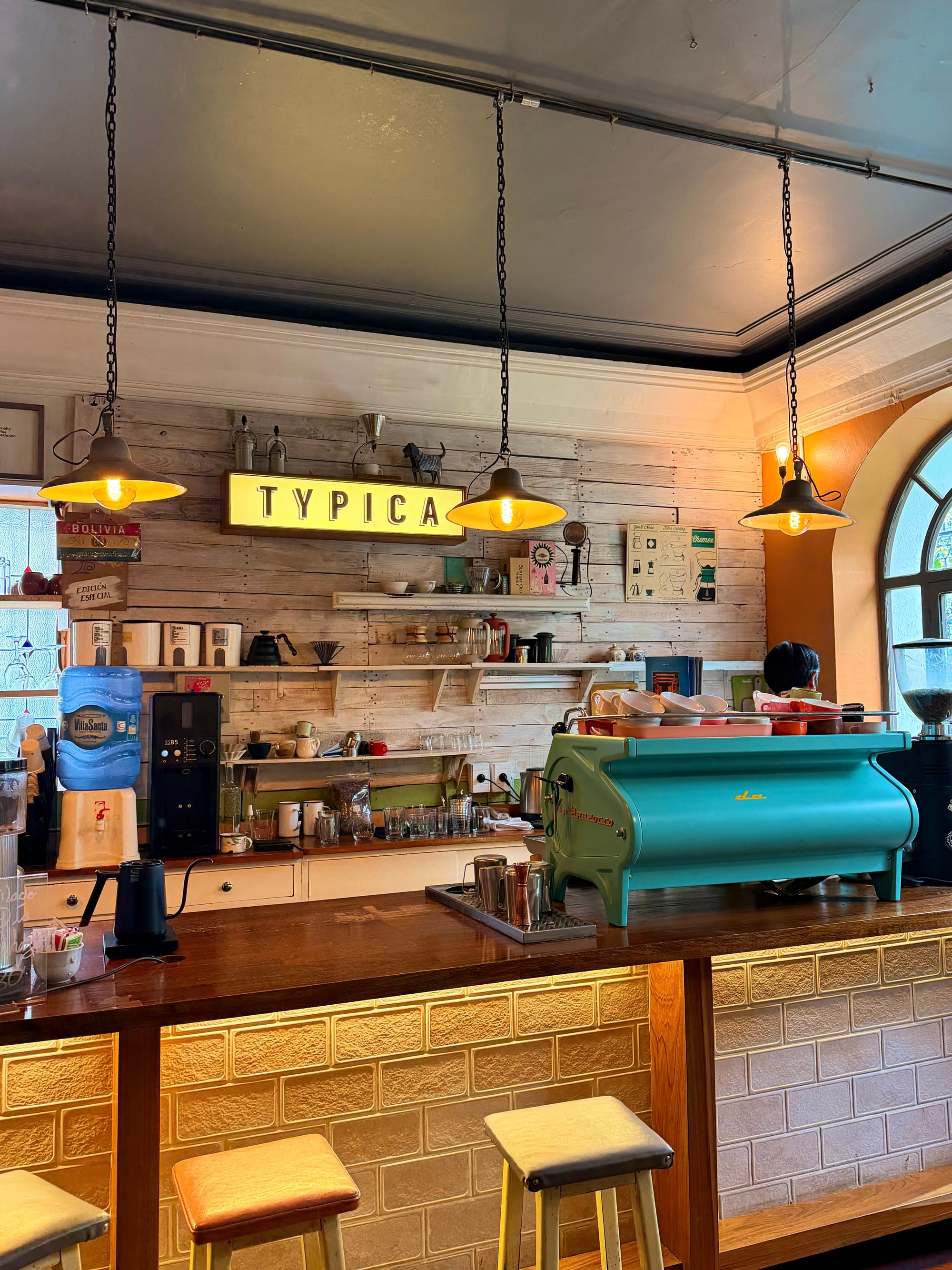
Also pop into Typica, which is number 33 of the best coffee shops in the world, and it deserves its title. It’s incredible interior and outside garden is perfect to spend the day lounging at. The coffees are really good and the food was so delicious we couldn’t help getting food every time we went!
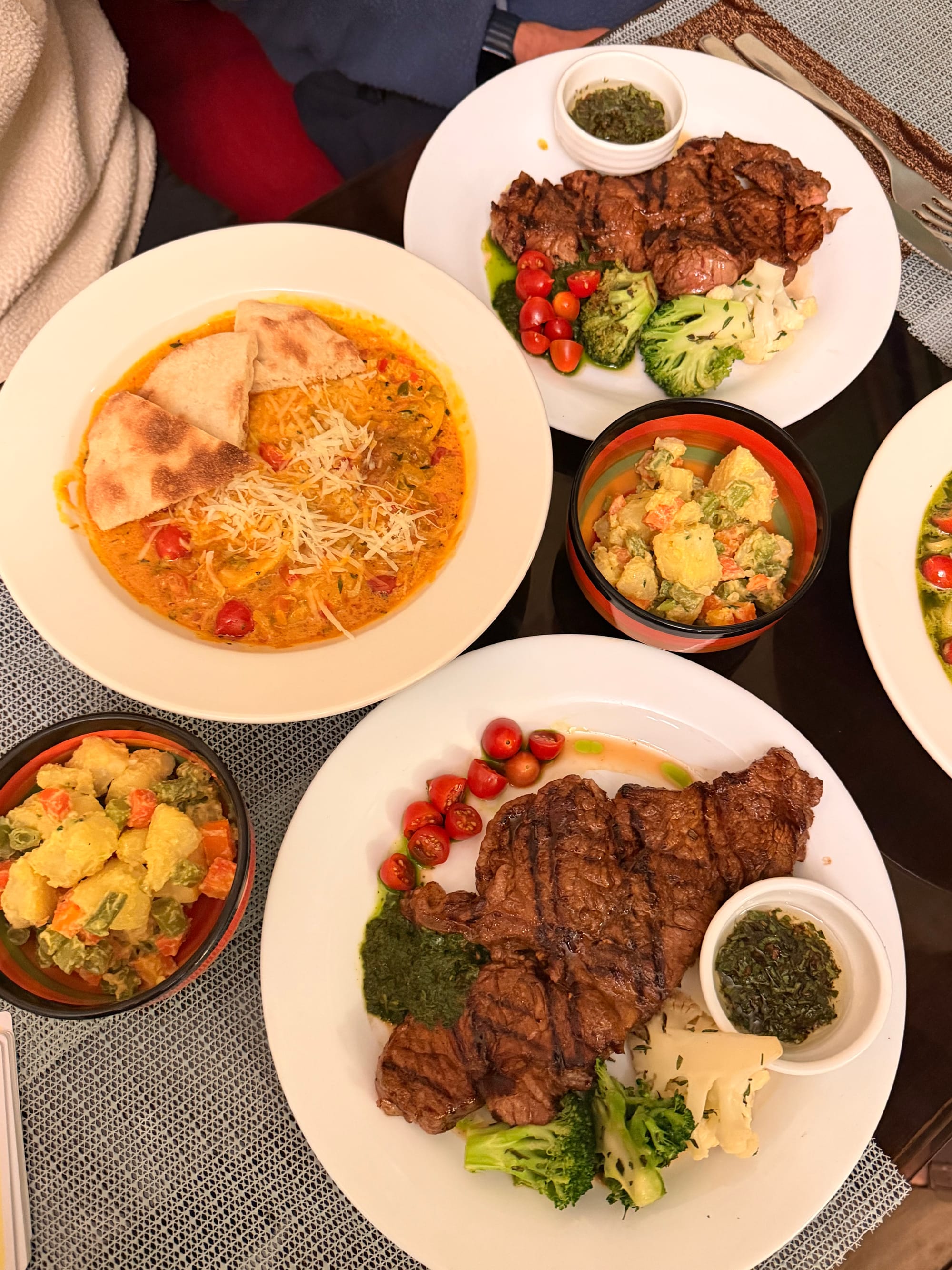
Lastly, we went to Olivia Restaurant, which is in the middle of the Witches Market and is an incredible cheap steakhouse. We went out for our last meal and it was amazing. The tacos and ceviche for starters were delicious and such huge portions, that we really did not need them! For mains, the boys of course got rib-eye steaks and we got different pasta dishes. My pumpkin ravioli was insane, the sauce was to die for and just cemented the fact that any South American dish, which has pumpkin somehow always tastes incredibly delicious!